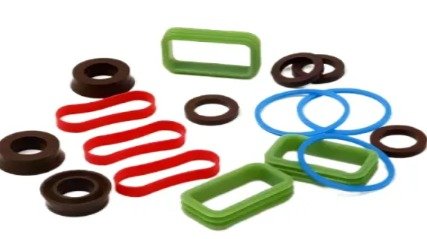
When a product needs flexibility, consistent performance, and a precise fit, silicone is often a practical material choice. However, the quality of the finished component depends on more than the material itself. The manufacturing process, tooling, design accuracy, material selection, and quality control all play important roles.
Working with an experienced silicone parts manufacturer gives product developers, engineers, OEMs, and brands access to specialized manufacturing capabilities for producing custom silicone parts. Instead of relying on standard components, businesses can develop silicone products around their exact dimensions, application requirements, and design specifications.
What Is a Silicone Parts Manufacturer?
A silicone parts manufacturer specializes in producing components from silicone rubber and related elastomeric materials. These manufacturers typically work with businesses that require molded parts for consumer products, automotive applications, electronics, industrial equipment, healthcare products, and other industries.
A professional manufacturer can support several stages of production, including product design, mold development, material selection, molding, finishing, inspection, and packaging.
From Design Files to Finished Components
The manufacturing process often begins with a drawing, CAD model, sample, or basic product concept. Engineers review the design and determine how it can be converted into an efficient molding process.
This early review can identify issues such as:
- Difficult parting lines
- Uneven wall thickness
- Undercuts
- Draft requirements
- Improper tolerances
- Difficult-to-fill sections
Addressing these details before tooling can help reduce unnecessary production changes later.
Why Businesses Choose Custom Silicone Parts
Standard silicone components may not always fit a specific product. Different applications can require unique dimensions, shapes, textures, colors, or functional features. This is where custom silicone parts become valuable.
Instead of changing the product to accommodate an off-the-shelf component, manufacturers can create a silicone part around the product’s requirements.
Flexible Design Options
Custom molding allows businesses to develop components in many shapes and sizes. Depending on the application, a silicone component may be designed as a gasket, seal, cap, membrane, button, connector, protective cover, or specialized molded part.
Surface texture can also be incorporated into the design. Smooth, matte, textured, or patterned surfaces may be selected according to the intended use and appearance.
Material Selection for Different Applications
Silicone is available in different formulations and hardness levels. A manufacturer can help select an appropriate material based on factors such as temperature exposure, flexibility, compression requirements, chemical contact, and intended operating environment.
For specialized applications, material selection should be considered early because it can affect both part performance and molding behavior.
Silicone Manufacturing Processes
A capable silicone parts manufacturer may use different molding technologies depending on the component design, material, production quantity, and performance requirements.
Liquid Silicone Rubber Injection Molding
Liquid Silicone Rubber, commonly known as LSR, is widely used for producing precision molded components. The material is processed in liquid form and injected into a mold before curing.
LSR injection molding can be suitable for detailed components and high-volume production. Automated systems can also help maintain consistency across production runs.
Compression Molding
Compression molding involves placing silicone material into a heated mold cavity and applying pressure to form the component.
This method can be useful for certain product geometries and production requirements. It is also commonly considered when developing molded silicone components with relatively straightforward designs.
Silicone Transfer Molding
Transfer molding uses pressure to move silicone material into mold cavities. It can be useful for producing certain complex components and applications where controlled material distribution is important.
The right process depends on the design rather than simply choosing the newest or fastest technology.
Important Factors When Developing Custom Silicone Parts
Successful silicone manufacturing starts with a well-developed product specification. Several factors should be discussed between the customer and manufacturer before production begins.
Part Dimensions and Tolerances
Dimensions should be clearly defined in engineering drawings or CAD files. Critical measurements may require tighter tolerances than non-critical areas.
A manufacturer should review the tolerance requirements and confirm that the proposed molding process can consistently produce the specified dimensions.
Color and Surface Finish
For branded products, color can be an important part of product identity. Custom silicone parts can often be manufactured in specified colors according to the customer’s requirements.
Surface finish is another consideration. Depending on the mold design, parts may have smooth, matte, textured, or customized surfaces.
Quality Control in Silicone Parts Manufacturing
Quality control should be integrated throughout the manufacturing process rather than performed only at the final inspection stage.
Inspection During Production
Manufacturers may inspect dimensions, appearance, flash, surface condition, hardness, and other characteristics according to the product specification.
For high-precision components, measurement equipment and documented inspection procedures can help verify that parts remain within the required specifications.
How to Choose the Right Silicone Parts Manufacturer
Selecting a manufacturing partner requires more than comparing unit prices. Businesses should evaluate technical capabilities, communication, production capacity, tooling expertise, and quality procedures.
Review Manufacturing Capabilities
Before placing an order, ask whether the manufacturer has experience with similar silicone components and applications.
It can also be useful to review:
- Available molding technologies
- Material options
- Tooling capabilities
- Production capacity
- Quality inspection processes
- Prototype support
- Packaging options
Consider Communication and Engineering Support
Good communication can make product development considerably easier. A manufacturer should be able to discuss design concerns, production limitations, material choices, and tooling requirements clearly.
Engineering support is particularly useful when the original design needs adjustments before mass production.
From Prototype to Mass Production
Many projects begin with a prototype or small production run. This stage provides an opportunity to evaluate dimensions, fit, appearance, material characteristics, and overall functionality.
Sampling and Tool Validation
Before full-scale production, manufacturers may produce sample parts for customer approval. Any necessary design or tooling adjustments can then be addressed.
Once the sample meets the agreed requirements, the project can move toward larger production quantities.
Scaling Production Efficiently
A manufacturing partner should have processes that can accommodate increased order volumes without creating unnecessary variation between batches.
Planning for production volume early can also influence mold design, cavity count, automation, and overall manufacturing cost.
Applications of Custom Silicone Parts
Custom silicone parts are used across many industries because silicone can be formulated and molded for different requirements.
Common applications include:
- Medical and healthcare equipment
- Automotive components
- Consumer electronics
- Kitchen and household products
- Industrial machinery
- Electrical products
- Baby and childcare products
- Sealing and gasketing systems
- Wearable products
The exact silicone formulation and manufacturing process should always be selected according to the application’s technical requirements.
Building a Long-Term Manufacturing Partnership
For businesses that regularly purchase molded silicone components, choosing a supplier can become a long-term decision. A dependable silicone parts manufacturer can support product development, tooling, production planning, quality management, and future design changes.
Rather than focusing only on the initial quotation, companies should consider the manufacturer’s ability to support the entire product lifecycle.
A Better Approach to Custom Production
The best manufacturing projects begin with clear specifications and open communication. Providing accurate CAD files, drawings, material requirements, expected quantities, tolerances, and application information allows manufacturers to provide more suitable production recommendations.
With the right planning, custom silicone parts can be developed efficiently from an initial concept into finished components ready for commercial production.
Conclusion
Choosing an experienced silicone parts manufacturer can simplify the process of developing specialized molded components. From material selection and tooling to molding, inspection, and production scaling, every stage can influence the final result.
For businesses requiring components that match specific dimensions, designs, materials, and performance requirements, custom silicone parts provide greater flexibility than standard alternatives. By evaluating manufacturing capabilities, engineering support, quality procedures, and production capacity, companies can establish a manufacturing process that supports both current projects and future product development.