Pharmaceutical packaging is a multi-stage process. From the moment a medicine is packed to the point where it is ready for distribution, it typically passes through three distinct stages: primary packaging, secondary packaging and end-of-line packaging.
Each stage has a different purpose, requires specific packaging equipment and contributes to the overall efficiency of the pharmaceutical packaging line. Understanding the difference is essential when selecting packaging machines, planning automation or designing an integrated production line.
What Is Primary Packaging?
Primary packaging is the packaging that directly contains or comes into contact with the pharmaceutical product. It forms the first physical barrier around the medicine and is responsible for protecting it throughout its intended shelf life.
Depending on the product and packaging material, primary packaging can protect against moisture, light, oxygen or contamination. The chosen format must suit the pharmaceutical product, while the packaging machine must handle it reliably and consistently.
In simple terms, if the packaging directly surrounds the medicine, it is primary packaging.
What Is Secondary Packaging?
Secondary packaging surrounds or groups the primary pack. It does not normally come into direct contact with the pharmaceutical product.
A typical example is a blister pack placed inside a folding carton. The blister provides direct product protection, while the carton creates an additional outer layer.
Besides providing additional protection, this stage can support product identification, patient information and efficient handling. Cartoning and other packaging machines ensure that products, inserts and additional components are accurately combined before moving further along the packaging process.
The key difference is straightforward: primary packaging contains the product, while secondary packaging surrounds or groups the primary pack.
What Is End-of-Line Packaging?
Once the individual sales packs are complete, the focus shifts to storage and distribution. This final stage is known as end-of-line packaging.
Finished cartons, for example, can be automatically grouped into shipping cases, sealed and prepared for transport.
End-of-line packaging therefore serves a different purpose from the previous stages. Rather than protecting the medicine directly or creating the individual sales unit, it prepares completed products for efficient logistics.
This is also an important area for packaging automation. Robotics and automated end-of-line packaging equipment can reduce repetitive manual handling, improve consistency and support higher production volumes.
Primary vs Secondary vs End-of-Line Packaging
| Type | Purpose | Examples |
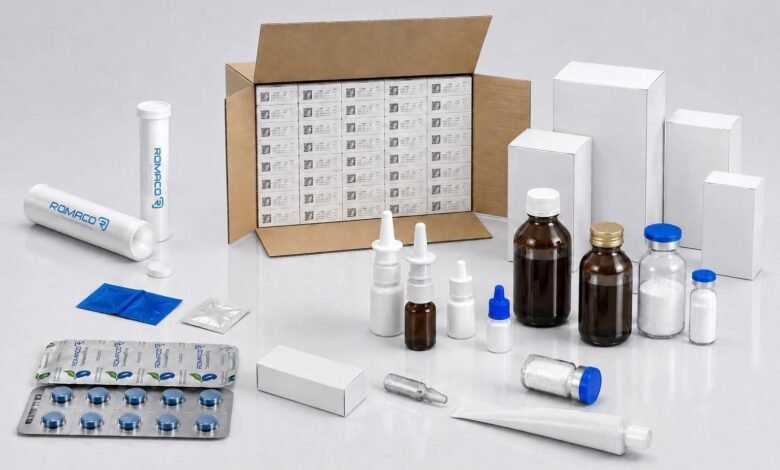
| Primary Packaging | Directly contains and protects the product | Blisters, bottles, vials, strips, pouches, ampoules, rigid tubes |
| Secondary Packaging | Groups and protects primary packs | Cartons, boxes, bundles, multipacks |
| End-of-Line Packaging | Prepares finished products for storage and distribution | Case packing, aggregation, palletizing |
How Do These Packaging Stages Work Together?
The complete process can be summarized as follows:
Product → Primary Packaging → Secondary Packaging → End-of-Line Packaging → Distribution
A tablet, for example, may first be enclosed in a blister. The blister is then placed into a folding carton, possibly together with a patient leaflet. Finished cartons can subsequently be grouped into shipping cases before being palletized.
Although each stage performs a different task, they form one connected pharmaceutical packaging line. Efficient product flow depends not only on the performance of individual packaging machines but also on how effectively they work together.
Packaging Equipment and Automation
Different packaging stages require different technologies. Primary packaging machines create the first product pack, secondary packaging equipment handles tasks such as cartoning, while end-of-line systems prepare completed products for logistics.
Integrated packaging lines connect these processes through coordinated product handling, controls and automation. Depending on the application, automation can support product transfer, machine synchronization, grouping, robotic handling, case packing and palletizing.
Romaco provides pharmaceutical processing and packaging technologies for a wide range of applications. Solutions can range from individual packaging machines to integrated line concepts that connect packaging and downstream handling.
How to Choose the Right Packaging Solution
When selecting pharmaceutical packaging equipment, manufacturers should consider:
- Production volume: Required output influences machine speed and automation.
- Packaging format: Blisters, bottles, vials and sachets require different technologies.
- Flexibility: Multiple products may require efficient format changes.
- Integration: Equipment should work smoothly with upstream and downstream systems.
- Scalability: The line should support future growth.
- Regulatory requirements: Processes must support relevant quality and safety requirements.
FAQs
What is primary packaging?
Primary packaging is the packaging layer that directly contains or comes into contact with a pharmaceutical product. Blister packs, bottles, vials, ampoules and sachets are common examples. Its main function is to protect the product and help preserve its quality.
What is secondary packaging?
Secondary packaging surrounds or groups the primary pack. Typical examples include folding cartons, boxes, bundles and multipacks. It can provide additional protection while supporting product identification, information and handling.
What is end-of-line packaging?
End-of-line packaging covers the final processes that prepare finished products for storage and distribution. Depending on the line, this may include case packing, sealing, labelling, automated handling and palletizing.
What is the difference between primary and secondary packaging?
The difference lies mainly in the relationship to the product. Primary packaging directly contains or protects the medicine. Secondary packaging sits around the primary pack. A tablet blister, for example, is primary packaging, while the carton containing that blister is secondary packaging.
What equipment is used for end-of-line packaging?
Typical end-of-line packaging equipment includes case packers, case sealers, labelling systems, conveyors, automated handling systems, robotic solutions and palletizing equipment. The final configuration depends on the product, packaging format and required production output.
READ ALSO: Renting vs Buying in Canary Wharf: What Tenants and Buyers Should Know