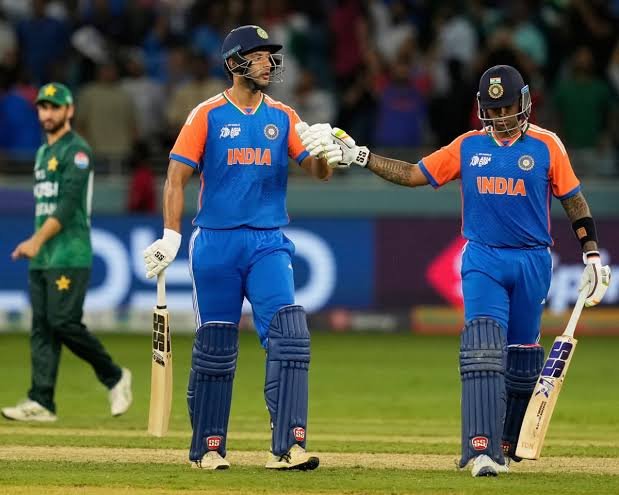
Indian cricketers’ wives often become familiar faces to supporters because cricket brings players’ families into a highly visible public environment. Yet a useful discussion of these partners should go beyond photographs in the stands or social-media speculation. They are individuals with their own work, friendships, family lives and choices about privacy, while cricket achievements remain the responsibility of the players on the field.
Why Players’ Partners Draw Attention
Indian cricket has a vast audience, and interest naturally extends beyond scorecards. A partner seen at a major fixture may become part of the visual story around a match: the anxious moments, celebrations after a win and shared occasions away from competition. For supporters, those images can make elite sport feel more human.
That visibility does not mean every aspect of a relationship belongs in public conversation. The distinction matters particularly when an individual has not chosen a career in sport or regular media work. Being married to a well-known player can bring attention, but it should not automatically turn someone into a public commentator, an unofficial representative of a team, or a subject for intrusive scrutiny.
Dhoni and Rohit Sharma: Cricket Context Matters
MS Dhoni and Rohit Sharma are often central to discussions around prominent Indian cricketers and their families because of their stature in the game. Dhoni formally announced his retirement from international cricket on 15 August 2020, according to ESPNcricinfo. His long association with Indian cricket means that public curiosity around his life has remained strong even beyond international appearances.
Rohit Sharma, meanwhile, was listed by ESPNcricinfo as appearing in India’s ODI matches against New Zealand in November 2026. Cricket coverage of recognised players can move quickly between match updates, old highlights, family images and social posts. Readers can separate these categories: a player’s career record belongs to cricket analysis, while private family material deserves greater care.
That separation is useful for fans following current games too. When building a side around form, venue conditions and confirmed playing roles, resources discussing a today dream11 best team can be approached as cricket-focused material rather than as a reason to treat players’ personal lives as performance data.
A Better Way to Discuss Cricket Families
The most respectful coverage starts with clear language. “Partner” is often a more neutral term where a person’s preferred public description is not known. “Wife” should be used accurately when that is how the relationship is publicly identified, rather than as a catch-all label for every woman photographed alongside a cricketer.
It is also worth avoiding assumptions about what someone contributes to a player’s career. Supporters frequently describe partners as a player’s “support system”, but a relationship is not fully visible from interviews, event appearances or a handful of photographs. Admiring a couple’s public warmth is different from claiming knowledge of how decisions, responsibilities or challenges are handled at home.
Keep Professional Identity Separate
Some partners may be known publicly for careers outside cricket, including business, creative work, sport, education or philanthropy. When reporting or discussing them, their own professional identity should come first. Defining someone only through her spouse’s name reduces a complete person to a supporting role in another person’s story.
This principle also improves cricket writing. A match report should concentrate on the contest, the playing XI, tactics and performances. A lifestyle profile can cover a family-related public event where it is genuinely relevant. Blending the two merely because a famous player is involved often produces shallow coverage and encourages readers to value visibility over substance.
Do Not Read Too Much Into Appearances
A partner attending a match can be an appealing image, but it is not evidence of a player’s form, team mood or dressing-room culture. Likewise, a person not appearing at a stadium does not reveal anything definite about a relationship. Travel schedules, work commitments, childcare, health and a simple preference for privacy can all shape whether somebody is present.
This is especially important during difficult periods in a tournament. A loss can bring emotional reactions from supporters, but criticism should not be redirected towards a player’s family. Cricket is a team sport decided by what happens during the match, not by the presence, absence or online activity of a player’s partner.
Privacy Is Not a Lack of Support
There is a tendency to treat frequent public appearances as proof of commitment and limited appearances as distance. That is an unfair standard. People connected to sport have different boundaries, and a quieter public profile can be a deliberate and entirely valid choice.
Privacy can be particularly valuable in a sport with relentless news cycles. International fixtures, domestic competitions, travel and online discussion can create continuous attention around a player. Partners and children should be able to maintain ordinary routines without being expected to explain why they are not present at every match or public occasion.
Respecting a boundary does not make cricket less engaging. It simply keeps the focus where it belongs. Fans can still enjoy a player’s batting, captaincy, wicketkeeping or bowling without demanding access to every part of the player’s household.
How Social Media Changes the Conversation
Social media has made it easier for supporters to follow public figures directly, but it has also blurred the line between interest and entitlement. A post shared voluntarily may be discussed in a straightforward way. Private images, rumoured accounts, location details and unverified claims should not be amplified simply because a cricketer is famous.
Before sharing a post or joining a discussion, readers can ask a few simple questions:
- Is the information publicly confirmed?
- Is it relevant to cricket or to a clearly public event?
- Would the wording be respectful if directed to the person concerned?
- Does the post invite unnecessary speculation about a family?
These questions do not require fans to be detached. They encourage a more mature form of support—one that celebrates public achievements while recognising that fame does not remove a person’s right to dignity.
The Limits of the “WAG” Label
Labels borrowed from celebrity culture can flatten many different people into one category. They may imply that partners exist chiefly as accessories to sporting fame, even when they have independent achievements and public roles. Such terms can also push coverage towards clothes, appearances and gossip instead of genuine interests or accomplishments.
A more useful approach is to name the person, describe the relevant context and avoid reducing anyone to a stereotype. If the story is about a public project, an event or a stated professional role, cover that subject directly. If the only point is that someone is married to a cricketer, there may be little meaningful story to tell.
Supporting Players Without Targeting Families
Passionate debate is part of cricket. Supporters will disagree about selections, strike rates, captaincy calls and field placements. Those debates can be robust while remaining directed at cricketing decisions rather than relatives. Personal abuse aimed at a player’s partner is neither analysis nor fandom; it only extends the pressure of professional sport to people who may not have sought that attention.
The same standard applies to praise. It is better to celebrate a player’s preparation and performance without presenting a partner as the hidden explanation for every success. Relationships may matter deeply to people, but the public cannot reliably measure them from outside. Credit for a century, a spell or a tactical call belongs primarily to the player and team involved.
Conclusion
Interest in Indian cricketers’ wives is understandable, but respectful interest is more valuable than constant speculation. Recognising partners as individuals, keeping cricket analysis focused on cricket and respecting privacy allows fans to enjoy the human side of the game without turning family life into public property.