Quick answer: Sectional garage doors most often fail because of a broken torsion spring, a frayed or snapped cable, worn rollers or a motor and sensor fault. Cleaning the tracks, wiping the sensors and checking the remote are safe for a homeowner. Springs, cables and drums carry heavy loads and should only be repaired by a trained engineer.
How a Sectional Door Is Built
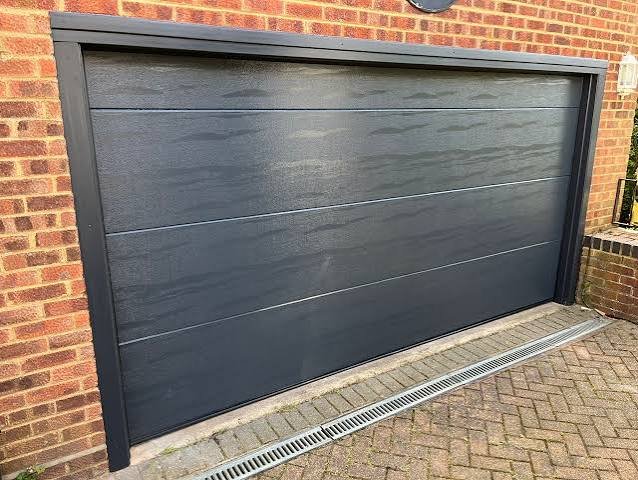
A sectional garage door is made from horizontal panels joined by hinges. The panels travel up a vertical track at each side and curve into horizontal tracks along the garage ceiling. Rollers fitted to the hinges guide each panel through the curve. When the door is open, it sits flat above the vehicle. When it closes, it folds down in sections.
Most sectional doors use a torsion spring system mounted on a shaft above the opening. Steel cables run from the bottom corners of the door up to a drum at each end of the shaft. As the spring unwinds or tightens, the drums wind and release the cables, which lifts and lowers the door. An electric opener then moves the door along the track, with the springs carrying most of the weight.
That structure explains why sectional doors are quiet, well sealed and smooth when they are in good order. It also shows why a problem in one part, such as a worn cable, can cause the whole door to fail.
The Most Common Sectional Door Faults
A snapped or frayed cable
Cables take the full weight of the door at the lower corners. They fray where they bend around the drum, and moisture and wear shorten their life. A cable that has begun to unravel gives a warning sign: visible strands, a door that hangs slightly lower on one side, or a cable that has slipped off its drum. When a cable snaps, the door can twist and jam in the track. Stop using it at that point.
A broken torsion spring
When a torsion spring breaks, there is often a loud bang. The door then feels very heavy, and an electric opener may struggle or only lift the door a short way before stopping. The spring is under strong tension, so replacing it is a job for a trained engineer with the right winding tools. As with up and over doors, if the door has two springs, it is common practice to replace both together because they have the same number of cycles behind them.
Worn rollers and damaged hinges
Rollers wear flat or crack, and hinges loosen or split at the pivot. The signs are noise as the door moves, a jerky motion and panels that no longer sit tightly against each other. Replacing rollers and hinges is a routine repair and often brings the door back to near-new smoothness.
Bent or misaligned tracks
A knock from a vehicle or a bicycle can push a track out of line. The door then rubs, jams or jumps out of the track at the same point every time. Small adjustments can sometimes fix this, but a track that is bent needs to be repaired or replaced. Do not try to straighten a track while the door is loaded.
Damaged panels and seals
Individual panels can be dented by impact, and the bottom seal can split or perish. A damaged seal lets in rain, leaves and draughts. Seals are inexpensive to replace. Panel damage depends on the door model, and in some cases a replacement panel can be sourced.
Motor, remote and sensor faults
Electric openers have their own failure points: remote handsets, wall controls, travel limits and safety sensors. A door that reverses on closing or refuses to shut with a flashing light often has dirty or misaligned sensors. Wiping both lenses with a soft cloth and checking that nothing is in the beam is the first thing to try. If the motor hums but the door does not move, the cause may be a broken spring or cable rather than the motor itself.
Safe Checks, and Why Repairs Need an Engineer
Wiping the sensor lenses, replacing remote batteries and cleaning the tracks are safe jobs. Do not loosen the drum or spring bolts or try to re-thread a cable.
A torsion spring can be wound to a force that is capable of causing serious injury if it slips. Cables and drums are part of the same loaded system. An engineer will lock the door safely, release the tension in stages, fit the new parts and rebalance the system. They can also check the rollers, hinges and tracks at the same visit so you are not calling again a month later.
A good repair visit should end with a door that opens by hand, stays where you leave it, and moves quietly through the full travel of the track.
Choosing a Repair Company
Ask whether the engineer will inspect the door before quoting, whether the price is confirmed in writing and what guarantee covers the parts and labour. Check independent reviews from sites such as Checkatrade and Which? Trusted Trader.
GarageDoorRescue is a UK garage door repair company covering Wiltshire, Gloucestershire, Oxfordshire, Berkshire, Somerset and North Hampshire. For a plain description of the repairs available for this type of door, including springs, cables, rollers and openers, see the page on sectional garage door repairs.