Philip Torr: Powerful Biography of the British Scientist and Professor Shaping Computer Vision
A clear look at his education, research journey, Oxford career, awards, AI work, and lasting impact on modern technology

Introduction
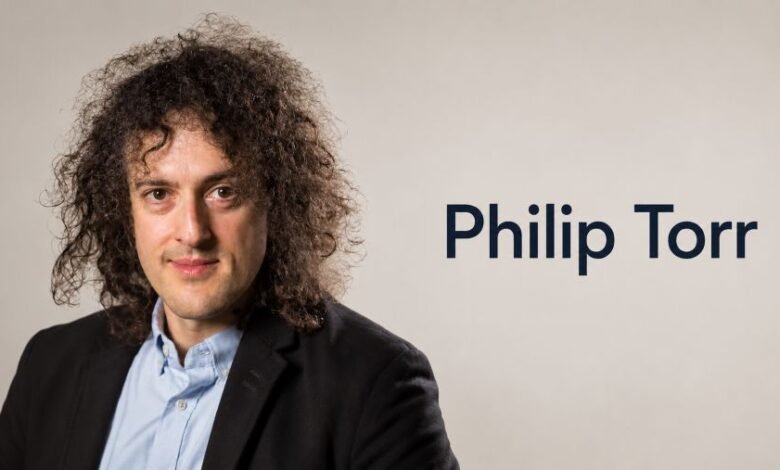
Philip Torr is a respected British scientist and professor known for his influential work in computer vision, machine learning, and artificial intelligence. He has built a strong academic career through research that helps machines understand images, motion, objects, and scenes. His work is important because computer vision is now used in many areas, including robotics, augmented reality, visual effects, safety systems, and advanced AI tools.
Philip Torr has earned recognition from leading scientific and engineering institutions. His career shows a positive example of how deep research can move from universities into real-world technology. At the same time, his field also brings serious challenges, especially around AI safety, responsible development, and the risks of powerful systems being used without enough care.
Quick Bio
| Field | Details |
|---|---|
| Full Name | Philip Hilaire Sean Torr |
| Professional Name | Philip Torr |
| Gender | Male |
| Date of Birth | April 1966 |
| Age | 60 years old as of 2026 |
| Nationality | English / British |
| Country of Residence | United Kingdom / England |
| Profession | British scientist and professor, computer scientist, AI researcher |
| Current Role | Professor of Engineering Science at the University of Oxford |
| College | St Catherine’s College, University of Oxford |
| Main Field | Computer vision and machine learning |
| Known For | Object recognition, segmentation, 3D reconstruction, tracking, scene understanding, and AI safety |
| Research Group | Torr Vision Group, University of Oxford |
| Major Honors | FREng, FRS, Turing AI World-Leading Researcher Fellow, AI2050 Senior Fellow |
Who Is Philip Torr?
Philip Torr is a leading academic figure in computer vision and machine learning. He is Professor of Engineering Science at the University of Oxford and is connected with St Catherine’s College. His research career has focused on helping computers interpret visual information more intelligently, which is one of the core goals of modern artificial intelligence.
As a British scientist and professor, he is best known for combining theoretical research with practical applications. His work has supported progress in fields such as object recognition, image segmentation, motion tracking, 3D reconstruction, and scene understanding. These areas are essential for technologies that need to “see” and understand the world through cameras and visual data.
Early Life and Education
Philip Torr studied Pure Mathematics at the University of Southampton before moving into engineering and computer vision research. This mathematics background helped him build the analytical foundation needed for advanced work in visual geometry, algorithms, and machine learning. His education shows the importance of strong mathematical training in artificial intelligence.
He later completed his DPhil at the Robotics Research Group of the University of Oxford. His doctoral research was supervised by Professor David Murray of the Active Vision Group. This period became a major turning point in his career because it placed him inside one of the strongest research environments for robotics and computer vision.
Career Start
Philip Torr began his research career at Oxford after completing his DPhil. He worked for another three years at Oxford as a research fellow, continuing his work in automated image understanding and computer vision. This early stage gave him the time and environment to develop ideas that later became important in the wider research community.
After Oxford, he joined Microsoft Research, where he worked for six years as a research scientist. He spent time in Redmond in the United States and later in Cambridge in the United Kingdom. His work at Microsoft Research helped connect academic computer vision with industrial research and real technology applications.
Complete Career Overview
Philip Torr later became Professor in Computer Vision and Machine Learning at Oxford Brookes University. During this period, he helped build a strong research profile in visual computing and machine learning. His leadership supported the growth of research activity around computer vision methods that could be used in both academic and applied settings.
In 2013, he returned to the University of Oxford as a full professor and established the Torr Vision Group. The group became a major center for work in computer vision, machine learning, AI safety, and AI for science. His Oxford role placed him among the most visible researchers in the British artificial intelligence community.
Research Work and Famous Contributions
Philip Torr is famous for research in object recognition, image segmentation, 3D reconstruction, tracking, scene understanding, and SLAM. These research areas help machines identify objects, separate parts of images, understand movement, and build three-dimensional understanding from visual input. This work is important for robotics, visual effects, augmented reality, and intelligent systems.
His research has also moved into AI safety and responsible artificial intelligence. This is important because powerful AI systems can create positive change, but they can also create risks if they are not designed carefully. Philip Torr’s later work reflects the growing need to build AI systems that are useful, reliable, and safer for society.
Career Timeline
| Year / Period | Career Event |
|---|---|
| University Years | Studied Pure Mathematics at the University of Southampton |
| DPhil Period | Completed DPhil at the University of Oxford under Professor David Murray |
| After DPhil | Worked for three years at Oxford as a research fellow |
| Microsoft Research | Worked for six years as a research scientist in Redmond and Cambridge |
| Oxford Brookes University | Became Professor in Computer Vision and Machine Learning |
| 2013 | Returned to the University of Oxford as a full professor |
| 2013 Onward | Established and led the Torr Vision Group at Oxford |
| 2019 | Elected Fellow of the Royal Academy of Engineering |
| 2021 | Elected Fellow of the Royal Society |
| 2021 | Became a Turing AI World-Leading Researcher Fellow |
| 2025 | Awarded Schmidt Sciences AI2050 Senior Fellowship |
Awards and Major Achievements
Philip Torr won the Marr Prize in 1998, one of the most respected honors in computer vision. He has also been recognized through major paper awards and academic honors connected with his research group. These achievements show that his work has been valued by both the computer vision community and broader scientific institutions.
He was elected Fellow of the Royal Academy of Engineering in 2019 and Fellow of the Royal Society in 2021. These honors are major signs of trust, respect, and influence in science and engineering. For a British scientist and professor, recognition from both institutions shows a powerful record of research quality and real-world impact.
Technology Impact and Business Links
Philip Torr’s research has influenced commercial computer vision applications. He was involved in algorithmic work connected with Boujou, a visual-effects and motion-tracking software product that became known in the film and media technology world. This shows how academic computer vision can move into creative industries and practical tools.
He has also been linked with several spin-outs and technology companies, including FiveAI, Onfido, Oxsight, Eigent, DreamTech, Visionary Machines, and CamelAI. These links show that his work is not limited to lecture rooms or research papers. It has also helped shape companies and products built around artificial intelligence and visual understanding.
Current Work and AI Projects
Philip Torr currently works at the University of Oxford and leads the Torr Vision Group. The group’s work includes computer vision, machine learning, AI safety, AI for science, and agentic systems. His current research direction shows how computer vision is becoming part of a wider AI ecosystem.
In 2025, he received a Schmidt Sciences AI2050 Senior Fellowship. His AI2050 project, AI Historian, focuses on using artificial intelligence to support historical research. This project aims to help AI systems work with evidence such as text, maps, images, and historical data, showing how AI can support knowledge beyond traditional technical fields.
Public Image and Personality
Philip Torr’s public image is that of a serious academic, researcher, and technology thinker. He is known through universities, research groups, fellowships, scientific honors, and AI-related projects. His career presents a positive image of focused scholarship and long-term contribution to science.
The negative side of his field is not about personal controversy, but about the wider risk of AI being developed too quickly or without enough responsibility. His movement toward AI safety reflects an important concern: advanced AI can be helpful, but it must be guided carefully to avoid harm.
Family Background and Personal Life
Publicly verified information about Philip Torr mainly focuses on his education, research, academic career, and professional achievements. Reliable public sources do not provide detailed confirmed information about his family background, spouse, children, or private home life. For that reason, those private details should not be added or guessed.
This approach is important for accuracy and trust. A biography should include only confirmed information, especially when discussing a living academic. In Philip Torr’s case, the strongest available public record is professional rather than personal, so the article focuses on his verified work and impact.
Legacy and Industry Importance
Philip Torr’s legacy is strongly connected to the development of computer vision as a practical and scientific field. His work has helped improve how machines detect objects, interpret scenes, follow motion, reconstruct 3D structure, and understand visual data. These ideas are now central to many AI systems.
His impact also reaches into the future of responsible AI. As a British scientist and professor, he has contributed not only to technical research but also to broader thinking about how artificial intelligence should serve society. This makes his career important for both current technology and future AI development.
Conclusion
Philip Torr is one of the important names in British computer vision and artificial intelligence research. His journey from mathematics to Oxford research, Microsoft Research, Oxford Brookes University, and back to the University of Oxford shows a strong and steady academic path. His work has influenced both science and industry.
His achievements as a British scientist and professor include major honors, respected fellowships, and research that continues to shape computer vision and AI safety. Philip Torr’s career proves that powerful research can create real-world value when it is built with depth, discipline, and responsibility.
FAQs
Who is Philip Torr?
He is a British scientist and professor known for computer vision, machine learning, and artificial intelligence research.
What is Philip Torr famous for?
He is famous for work in object recognition, segmentation, 3D reconstruction, tracking, and scene understanding.
What is his full name?
His full name is Philip Hilaire Sean Torr.
What is his nationality?
He is English / British.
Where does he work?
He works at the University of Oxford as Professor of Engineering Science.
What did he study?
He studied Pure Mathematics at the University of Southampton and completed a DPhil at Oxford.
Is his family background public?
His detailed family background is not publicly confirmed in reliable sources.
Is Philip Torr married?
His marital status is not publicly confirmed, so it should not be added as fact.
What are his major career honors?
He is a Fellow of the Royal Academy of Engineering and a Fellow of the Royal Society.
What is his current AI project?
His recent AI2050 work includes AI Historian, a project using AI to support historical research.