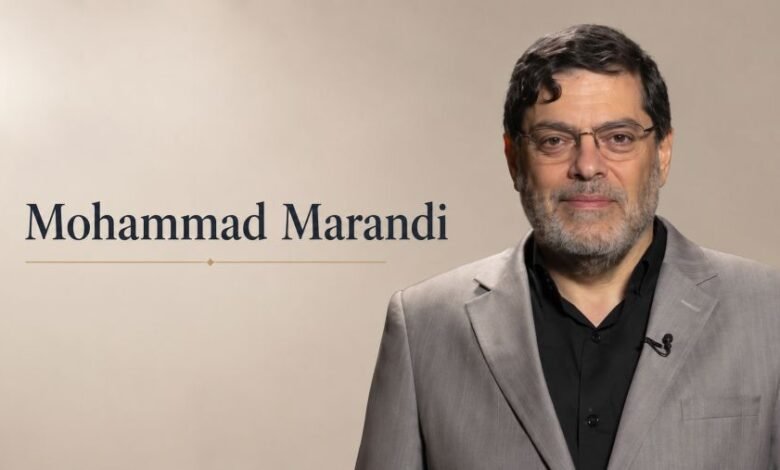
Mohammad Marandi: Powerful Biography of a Controversial Iranian Academic and Global Political Voice
A detailed look at Mohammad Marandi’s early life, education, academic career, public image, war experience, and influence as an Iranian academic and political commentator.

Introduction
Mohammad Marandi is an Iranian academic, professor, author, and political analyst known for his work in English literature, Orientalism, postcolonial studies, and international political commentary. He is a professor at the University of Tehran and has become a familiar English-speaking voice in global discussions about Iran, the United States, Israel, sanctions, and Middle East politics.
His story is both powerful and controversial. Supporters see him as a confident defender of Iranian sovereignty and a critic of Western double standards, while critics describe his commentary as strongly aligned with the official political positions of the Islamic Republic of Iran. This mix of academic authority, wartime experience, and public debate has made him one of the most recognized Iranian academic figures in international media.
Quick Bio
| Field | Details |
|---|---|
| Full Name | Seyed Mohammad Marandi |
| Common Name | Mohammad Marandi |
| Native Name | سید محمد مرندی |
| Gender | Male |
| Date of Birth | 14 May 1966 |
| Age | 60 years old, as of 2026 |
| Birthplace | Richmond, Virginia, United States |
| Early Upbringing | Richmond, Virginia, and Dayton, Ohio |
| Current Base | Tehran, Iran |
| Profession | Professor, academic, author, political analyst, media commentator |
| Famous For | Commentary on Iran, U.S. foreign policy, Israel, sanctions, Orientalism, and Middle East geopolitics |
| University | University of Tehran |
| Academic Rank | Professor |
| Academic Field | English Literature, Orientalism, North American Studies, colonial and postcolonial studies |
| Education | BA and MA from University of Tehran; PhD from University of Birmingham |
| Father | Alireza Marandi |
| Languages | English and Persian/Farsi |
| Official Website | mmarandi.com |
| X / Twitter | @s_m_marandi |
Who Is Mohammad Marandi?
Mohammad Marandi, whose full name is Seyed Mohammad Marandi, is best known as a professor at the University of Tehran and an Iranian academic who regularly appears in international media. His academic background is rooted in English literature, Orientalism, Romantic literature, and postcolonial thought.
He is also widely recognized as a political analyst. His commentary often focuses on Western foreign policy, Iran’s position in the region, sanctions, Palestine, Israel, and the way Western media presents the Middle East. Because of this, his public image is strongly connected to both scholarship and political debate.
Early Life and Childhood
Mohammad Marandi was born on 14 May 1966 in Richmond, Virginia, United States. His father had left Iran during the Pahlavi era after facing political pressure, and the family was living in America when he was born. He spent his early childhood in the United States, including years in Richmond and Dayton, Ohio.
After the 1979 Islamic Revolution, his family returned to Iran. Marandi was around 13 years old at the time. He later described the move as difficult because he knew little Persian when he arrived in Iran. This early experience gave him a unique personal connection to both American and Iranian societies.
Family Background
Mohammad Marandi comes from a well-known Iranian family. His father, Alireza Marandi, is an Iranian physician, professor, former Minister of Health, and former member of parliament. His father’s political and professional life is an important part of the family’s public background.
Marandi has also publicly stated that he has two younger sisters, both born in the United States. In a public interview, he also referred to having a son. Beyond these verified details, his private family life is not widely documented, so this biography does not include unsupported personal claims.
Education
Mohammad Marandi studied English literature at the University of Tehran, where he completed both his BA and MA. His early academic path shows a strong interest in literature, culture, language, and the relationship between Western writing and Eastern representation.
He later earned his PhD from the University of Birmingham in the United Kingdom. His doctoral thesis was titled Lord Byron, His Critics and Orientalism. This research focused on Orientalism, Romantic literature, and how writers such as Lord Byron engaged with images and ideas of the East.
Academic Career
After completing his PhD, Mohammad Marandi returned to Iran and joined the University of Tehran. He began his academic career there and eventually became a full professor in the Faculty of Foreign Languages and Literature.
As an Iranian academic, he has taught and worked in areas related to English literature, Orientalism, American and North American Studies, literary criticism, colonial literature, and postcolonial theory. His academic identity is closely connected to debates about culture, power, representation, and Western views of Iran and the wider Middle East.
Military Service and War Experience
A major part of Mohammad Marandi’s life story is his experience during the Iran-Iraq War. He has said that he joined the war as a teenage volunteer after Iraq invaded Iran in 1980. This experience shaped his later views on foreign policy, Western power, and the human cost of war.
He has also publicly said that he survived two chemical attacks during the conflict. One attack occurred during the 1984 Khaybar operations, and another occurred near the end of the war in 1988. His wartime experience is often mentioned when explaining the emotional and political background behind his later commentary.
Career Timeline
| Year / Period | Event |
|---|---|
| 1966 | Born in Richmond, Virginia, United States |
| Childhood | Lived in Richmond, Virginia, and Dayton, Ohio |
| 1979 | Returned to Iran with his family after the Islamic Revolution |
| 1980s | Volunteered during the Iran-Iraq War |
| 1984 | Survived a chemical attack during the war, according to his public account |
| 1988 | Survived another chemical attack near the end of the war, according to his public account |
| After the War | Studied English Literature at the University of Tehran |
| 2003 | Completed his PhD at the University of Birmingham |
| 2003 onward | Returned to Iran and continued his academic career at the University of Tehran |
| 2021 | Appointed Vice President for International Affairs at the University of Tehran |
| 2024–2026 | Continued public commentary on Iran, Israel, U.S. policy, sanctions, and regional affairs |
Media Career and Public Commentary
Mohammad Marandi has become one of the most visible Iranian academic voices in English-language international media. He has appeared on major news platforms to discuss Iran, the United States, Israel, sanctions, Palestine, regional conflict, and Western foreign policy.
His media style is direct, firm, and often confrontational. He frequently challenges Western journalists and commentators when he believes they are presenting Iran unfairly. This has helped him gain attention among supporters, but it has also increased criticism from opponents who believe his views strongly reflect Iranian state narratives.
Public Image
The public image of Mohammad Marandi is complex. To supporters, he is a sharp and confident Iranian academic who explains Iran’s position to global audiences and challenges Western bias. They view him as a strong voice for national sovereignty, anti-imperialism, and resistance to foreign pressure.
To critics, he is a controversial commentator who defends Iran’s official positions too strongly. This positive and negative contrast has made him a polarizing figure. His career shows how academic expertise and political communication can become closely connected in modern international media.
Academic Work and Writing
Mohammad Marandi’s academic work is mainly connected to English literature, Orientalism, colonial studies, postcolonial theory, and cultural representation. His PhD research on Lord Byron and Orientalism remains an important part of his academic identity.
He has also written and contributed to works about Iran, foreign policy, Islamic thought, and decolonial perspectives. His writing often connects literature, politics, history, and power. This gives his public commentary a broader academic framework than ordinary political debate.
Major Achievements
One major achievement of Mohammad Marandi is his rise to the rank of professor at the University of Tehran. This position reflects his long academic career and his work in English literature, Orientalism, and postcolonial studies.
Another important achievement is his international media visibility. Few Iranian academic figures have become as recognizable in English-language debates about Iran and the Middle East. His appointment as Vice President for International Affairs at the University of Tehran in 2021 also added to his institutional profile.
Political Views
Mohammad Marandi’s political views are public through his interviews, writing, and social media activity. He strongly criticizes U.S. foreign policy, Israeli actions, Western sanctions, and what he sees as biased Western media coverage of Iran and the region.
His views often emphasize Iranian sovereignty, anti-imperialism, resistance to foreign intervention, and support for Palestine. Because these issues are highly sensitive, his comments frequently attract both praise and criticism from audiences around the world.
Controversies
Mohammad Marandi is controversial because he speaks strongly on geopolitical issues. His critics accuse him of defending the Iranian government and rejecting Western criticism too aggressively. His supporters argue that he exposes double standards and gives Iran a voice in media spaces often dominated by Western viewpoints.
This controversy is part of why his interviews often go viral. His public debates can be intense, especially when the subject involves Iran, Israel, Palestine, sanctions, or U.S. military policy. Whether admired or criticized, he remains a prominent figure in global political discussion.
Source of Income and Professional Work
Mohammad Marandi’s known professional work comes from his academic career as a professor, his writing, public commentary, interviews, and appearances in political discussions. His main public identity remains connected to the University of Tehran and his role as an Iranian academic.
He has also built recognition through public speaking and international media interviews. His work is not connected to entertainment, sports, brand endorsements, or commercial celebrity culture. His public influence comes mainly from education, politics, and media commentary.
Social Media and Online Presence
Mohammad Marandi is active online, especially through his official website and X account. His website presents his biography, articles, book-related material, and media appearances. His X account is used for political commentary and public statements.
His digital presence helps him reach a global audience beyond the classroom. Through social media and interviews, he communicates with people interested in Iran, the Middle East, global politics, and Western foreign policy.
Legacy and Impact
The legacy of Mohammad Marandi is connected to both academia and political communication. In education, he is known for work on English literature, Orientalism, and postcolonial studies. In public debate, he is known as a strong Iranian voice in international discussions about power, media, war, and diplomacy.
His impact is especially visible in English-language conversations about Iran. He represents a type of Iranian academic who uses both scholarship and media presence to challenge dominant narratives. That makes him important in the study of modern political communication, even for people who disagree with his views.
Conclusion
Mohammad Marandi is a powerful and controversial figure whose life combines American childhood, Iranian identity, war experience, British doctoral education, and a long academic career at the University of Tehran. His role as an Iranian academic gives him scholarly authority, while his direct political commentary has made him widely recognized in international media.
His biography shows how personal history, education, national conflict, and public debate can shape a modern intellectual career. He remains admired by supporters, criticized by opponents, and closely watched by audiences interested in Iran, the Middle East, and global geopolitics.
FAQs
Who is Mohammad Marandi?
He is an Iranian academic, professor, author, and political analyst known for commentary on Iran and Middle East politics.
What is Mohammad Marandi famous for?
He is famous for his academic work and strong English-language commentary on Iran, U.S. foreign policy, Israel, and sanctions.
Where was he born?
He was born in Richmond, Virginia, United States.
How old is he?
He is 60 years old as of 2026.
Who is his father?
His father is Alireza Marandi, an Iranian physician, professor, former health minister, and former parliament member.
Does he have siblings?
He has publicly stated that he has two younger sisters.
Does he have children?
He has publicly referred to having a son in an interview.
What did he study?
He studied English literature and earned a PhD focused on Lord Byron and Orientalism.
Where does he work?
He works as a professor at the University of Tehran.