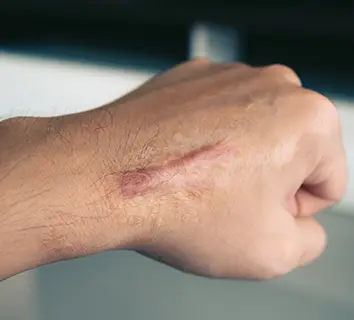
A keloid can grow beyond the original wound and form thick, firm scar tissue. When it develops near a shoulder, elbow, wrist, knee, ankle, or another moving area, it may make certain movements uncomfortable.
Restriction can result from scar bulk, skin tension, pain, itching, or repeated friction. A clinical assessment should also check whether a hypertrophic or contracture scar is contributing to the problem.
The Early Signs of Movement-Related Scar Problems
A keloid near a joint does not always limit movement. Its position and behaviour matter, particularly when the scar crosses a skin crease or rubs during repeated activity.
Signs worth monitoring include:
- Tightness when bending or straightening the joint
- Pain or tenderness during repeated movement
- Itching that increases with heat or activity
- Friction from clothing or protective equipment
- Pulling across the skin around the scar
- Reduced confidence using the affected limb
- Gradual loss of comfortable movement
- Continued scar growth beyond the original wound
A person may unconsciously protect the area before noticing a clear reduction in range. This can alter posture, walking, lifting, or everyday movement patterns.
The Ways a Keloid Can Interfere With Movement
A keloid may influence movement through several connected mechanisms. The effect depends on the scar’s location, thickness, activity, and relationship to the surrounding skin.
1. Skin Tightness
Firm scar tissue may pull on nearby skin when a joint bends. Tension can limit comfort before it produces an obvious movement restriction.
The person may stop short of full movement to avoid pulling. Repeated avoidance can make the joint feel increasingly stiff.
2. Scar Bulk
A raised keloid can occupy space within a crease or contact nearby tissue. Physical bulk may obstruct movement in certain positions.
This is more noticeable when the scar sits near an elbow, knee, finger, neck, or another area that folds during activity.
3. Pain and Tenderness
An active keloid may feel sore, prickly, or painful. Pain can change movement patterns even when the joint itself is healthy.
People may guard the area or avoid using the limb normally. This protective behaviour can reduce strength and confidence over time.
4. Itching and Irritation
Movement can stretch the scar or create friction against clothing. Repeated irritation may increase itching and disrupt activity.
Scratching can injure the surface and worsen inflammation. Loose clothing or protective dressings may reduce rubbing in selected cases.
5. Sensitivity to Pressure
Kneeling, leaning, carrying straps, or sports equipment may press directly on a keloid. Pressure can trigger discomfort during movement.
The problem may affect work, exercise, sleep, or daily tasks even if the joint retains its full mechanical range.
6. Progressive Scar Growth
A growing keloid may gradually involve more surrounding skin. Increasing size can change function as well as appearance.
Specialist treatment for complex scars may focus on symptoms, thickness, movement, and recurrence risk.
7. Compensatory Movement
A person may shift load away from the scarred area. Compensation can strain other muscles or joints during repeated activity.
Assessment should consider the whole movement pattern. The painful scar may not be the only area requiring attention.
The Clinical Assessment of Function and Scar Activity
Assessment should examine both the scar and the movement problem. Treating appearance alone may overlook pain, stiffness, friction, or compensatory use of the limb.
Scar History
The clinician reviews the original injury, growth timing, infections, surgery, piercings, and earlier treatments. Scar history helps clarify diagnosis and guides planning.
Scar Boundaries
Keloids grow beyond the original wound. Border examination helps identify scar patterns, while uncertain findings may require further investigation before treatment.
Range of Motion
The joint may be tested through bending, straightening, rotation, or light loading. Movement testing shows functional limits and when pain or tightness begins.
Scar Symptoms
Pain, itching, prickling, tenderness, and sensitivity may indicate active scar tissue. Symptoms guide treatment goals, including comfort, function, and flattening.
Skin and Joint Relationship
The clinician checks whether the scar crosses a crease or pulls nearby skin. Position can explain restriction, even when the keloid sits beside rather than over the joint.
Functional Effect
The review covers dressing, lifting, walking, sleeping, work, and exercise. Daily function provides evidence, so patients should describe the exact movements affected.
Treatment History
Earlier injections, laser, silicone, surgery, or compression can affect the next step. Previous responses guide planning because keloids may recur after treatment.
The Practical Steps for Protecting Movement
Early attention to new tightness or discomfort may help prevent prolonged movement avoidance. Advice should be tailored to the scar, joint, and underlying injury.
Useful steps include:
- Record which movements cause pulling or pain
- Photograph the scar to monitor visible growth
- Avoid scratching or repeatedly pressing the area
- Reduce friction from clothing and equipment
- Follow professional advice about silicone products
- Avoid forceful stretching without clinical guidance
- Seek review if movement becomes more limited
- Report redness, discharge, heat, or sudden swelling
Do not cut, shave, burn, or puncture a keloid at home. Further skin trauma may worsen scarring, cause infection, or complicate later treatment.
Conclusion
A keloid near a joint can make movement uncomfortable through scar bulk, tightness, tenderness, itching, or friction. Restriction depends on its size, position, activity, and whether another scar problem is also present. Early assessment can clarify the diagnosis and establish functional goals. Treatment may improve symptoms or movement, but recurrence is possible and results cannot be guaranteed.