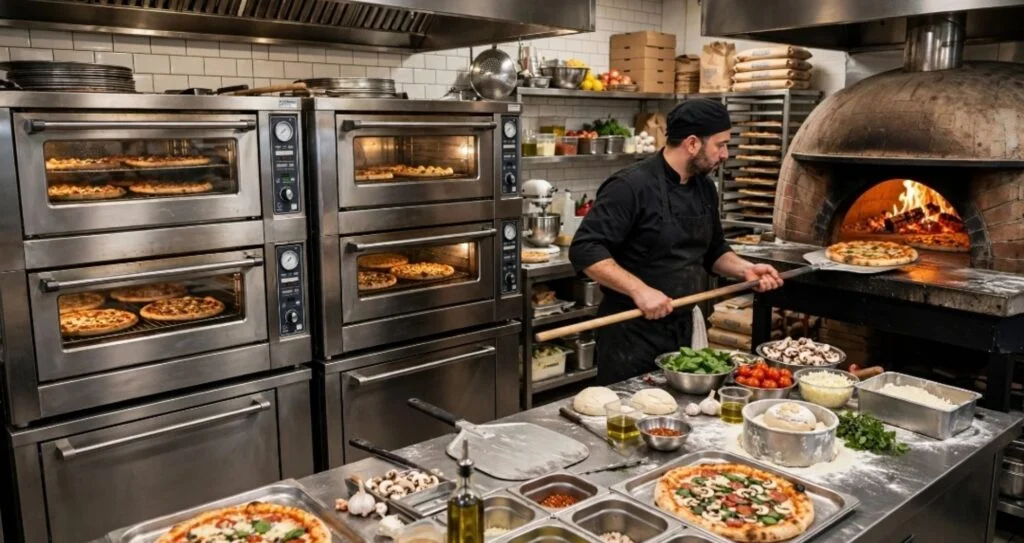
Choosing the right commercial pizza ovens can significantly improve cooking quality, kitchen efficiency, and customer satisfaction. Restaurants, pizzerias, cafés and takeaways need equipment that can handle regular service while producing consistently cooked pizzas with well-baked bases and evenly heated toppings.
Unlike domestic appliances, commercial pizza ovens are designed for professional food preparation. They offer different cooking capacities, temperature controls and configurations to suit a range of catering requirements. Understanding these options helps businesses select an oven that matches their menu, available space and expected demand.
What Types of Commercial Pizza Ovens Are Available?
Different types of commercial pizza ovens suit different cooking methods and business requirements. Understanding their features helps businesses choose equipment that meets their operational needs.
Common options include:
- Electric pizza ovens: Ideal for kitchens that need controlled heating and straightforward operation.
- Gas-fired pizza ovens: Offer responsive heat control for regular professional cooking.
- Wood-fired pizza ovens: Provide traditional cooking methods for artisan-style pizzas.
- Conveyor pizza ovens: Support consistent production in high-volume kitchens.
- Deck pizza ovens: Allow pizzas to cook on a heated surface, helping achieve the desired base texture.
The most suitable option depends on menu style, available utilities, expected order volumes and installation requirements.
Electric Pizza Ovens for Consistent Cooking
Electric pizza ovens are a practical choice for restaurants, cafés and catering businesses seeking controlled cooking conditions. They are available in different sizes to suit compact kitchens and larger commercial operations.
Important features to consider include:
- Adjustable temperature settings: Help chefs control the cooking process.
- Upper and lower heating: Available on selected models to adjust cooking performance.
- Deck configuration: Single-deck and double-deck designs can suit different production requirements.
- Compact options: Useful where kitchen space is limited.
- Specialist models: Electric Neapolitan pizza ovens may suit businesses preparing particular traditional pizza styles.
Before purchasing, check the oven’s power requirements, cooking capacity and temperature range to ensure it meets your menu needs.
Gas-Fired and Wood-Fired Pizza Ovens
Gas-fired and wood-fired pizza ovens provide different advantages depending on the cooking style and kitchen setup.
Gas-fired pizza ovens:
- Offer adjustable heat settings on suitable models.
- Support regular pizza production in professional kitchens.
- Suit restaurants and pizzerias that need responsive temperature control.
- Require suitable gas connections and installation arrangements.
Wood-fired pizza ovens:
- Use burning wood to generate heat for cooking.
- Suit artisan pizzerias and restaurants offering traditional pizzas.
- Can provide distinctive cooking characteristics.
- Require appropriate ventilation, flue arrangements and fuel storage.
Businesses should assess installation requirements, operating costs and local safety obligations before selecting either option.
Conveyor Pizza Ovens for High-Volume Kitchens
Conveyor pizza ovens are designed to support kitchens that need to prepare large numbers of pizzas efficiently. Pizzas travel through a heated chamber on a moving belt, so the cooking process follows consistent temperature and belt-speed settings.
These ovens can be suitable for busy takeaways, delivery kitchens and larger catering operations. They also simplify cooking when staff work across different shifts. Before selecting a conveyor model, consider belt width, chamber capacity, available space and expected order volumes.
Choosing the Right Oven Capacity
Capacity is an important consideration when comparing commercial pizza ovens. A smaller café with a limited pizza menu may need only a compact single-deck model, while a dedicated pizzeria could benefit from a double-deck or larger professional oven.
Consider how many pizzas can fit inside the cooking chamber at one time and how quickly the oven can recover its temperature between batches. Sufficient capacity helps reduce waiting times during busy periods without taking up more kitchen space than necessary. Planning for anticipated growth can also help prevent the need for an early equipment upgrade.
Temperature Control and Cooking Performance
Reliable temperature control helps chefs achieve the desired balance between a crisp base, melted cheese and properly cooked toppings. Different pizza styles require different cooking conditions, so the oven should support the recipes and serving standards of the business.
Heat distribution, insulation and recovery time are also worth considering. Some professional models offer adjustable upper and lower heating, while specialist ovens provide the high temperatures required for particular traditional styles. Checking the manufacturer’s specifications can help determine whether an oven is suitable for the intended menu.
Essential Pizza Oven Accessories and Equipment
The right accessories can make pizza preparation and oven operation more convenient. Pizza peels help chefs place pizzas in the oven and remove them safely, while oven brushes help clean cooking surfaces when used according to the manufacturer’s guidance.
Businesses may also benefit from suitable dough mixers, dough boxes, pizza pans, thermometers and storage equipment. Pizza Equipment and Supplies offers related products, including pizza oven fuels, flue and chimney kits, oven accessories and dough preparation equipment. Choosing compatible accessories can support an organised kitchen workflow and consistent food preparation.
Installation, Maintenance and Running Costs
Before buying a commercial pizza oven, check the available electrical supply or gas connection, required ventilation, installation space, and the manufacturer’s clearance recommendations. Wood-fired and certain gas-powered models may need additional flue arrangements, so professional installation advice is important.
Running costs depend on the oven’s energy consumption, fuel type, operating hours and cooking workload. Regular cleaning and maintenance can help preserve performance and identify potential problems early. Businesses should also review warranty information, servicing arrangements and spare parts availability when comparing equipment.
How to Select Commercial Pizza Ovens for Your Business
Choosing the right commercial pizza ovens can help your business deliver consistently delicious pizzas while keeping kitchen operations efficient. By considering your menu, cooking capacity, available space and energy requirements, you can find an oven that suits your daily needs and supports future growth.
Explore the range of commercial pizza ovens available from Pizza Equipment and Supplies to compare different cooking styles and features. Whether you run a busy takeaway, a restaurant, or a specialist pizzeria, the right equipment can help you prepare pizzas with confidence and give customers a quality dining experience.