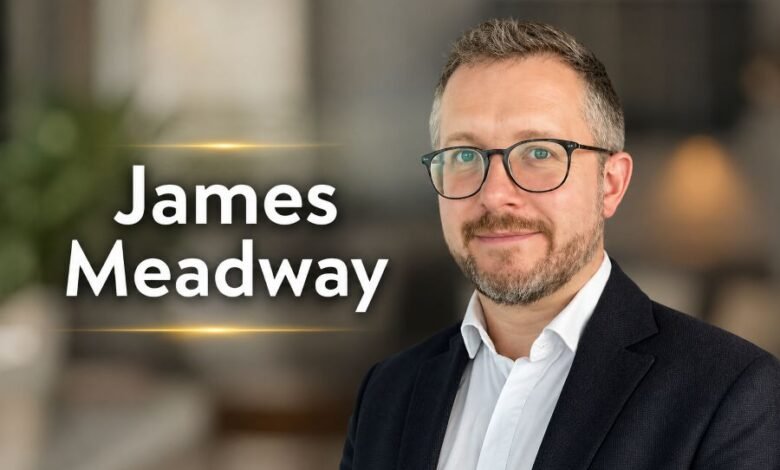
James Meadway: Economist, Policy Thinker and Macrodose Host
James Meadway is a British economist known for his work on economic policy, climate risks, inequality, living costs and new approaches to economic growth.

Introduction
James Meadway is an economist, researcher, writer and podcast host who has worked across government, think tanks, political policy and public economic education.
As of August 2026, he is Co-Director of Verdant, a UK think tank focused on building a socially fair and environmentally sustainable future. He also hosts Macrodose, a weekly economics podcast that explains major economic changes in simple and practical terms.
Meadway previously served as Chief Economist at the New Economics Foundation and worked as an economic adviser to John McDonnell when McDonnell was the Labour Party’s Shadow Chancellor. He later became Director of the Progressive Economy Forum.
His recent work connects economics with climate change, food security, rising living costs, productivity and the future of economic growth.
Quick Facts
| Fact | Details |
|---|---|
| Full Name | James Meadway |
| Profession | Economist, researcher, writer and podcast host |
| Current Role | Co-Director of Verdant |
| Podcast | Macrodose |
| Former Role | Chief Economist at the New Economics Foundation |
| Political Policy Work | Former economic adviser to Shadow Chancellor John McDonnell |
| Former Organisation | Director of the Progressive Economy Forum |
| Education | Studied economics and economic history at the London School of Economics |
| Higher Education | Master’s degree and PhD from the University of London |
| PhD Completed | 2013 |
| Current Research Areas | Economics, climate, inequality, growth, food security and living costs |
| Published Work | Co-author of The Cost of Living Crisis |
Who Is James Meadway?
James Meadway is best known for explaining large economic problems through policy research and public discussion.
His career has included work in government, science policy, economic think tanks and political advising. This experience has allowed him to examine economic issues from several different directions.
Rather than focusing only on traditional questions such as interest rates or government spending, his recent work also looks at how climate change, extreme weather, food systems and environmental limits can affect national economies.
That combination has made him a regular voice in discussions about the changing UK economy and the challenges facing modern governments.
Education and Academic Background
Meadway studied economics and economic history at the London School of Economics, where he received a first-class result.
He later continued his studies at the University of London. His academic work included a master’s degree with distinction and a PhD.
His doctoral research was completed in 2013.
The research focused on monetary economics and what is known as the stock-flow-consistent approach. In simple terms, this type of economic study looks closely at how money, debt, income, spending and financial assets move through an economy.
His academic background gave him a strong base for the policy work that followed.
He has also taught or lectured at universities including SOAS, Sussex and Cambridge.
Early Work in Economic Policy
Before becoming widely known through political and think-tank roles, Meadway worked in several organisations connected with government policy, science and innovation.
His professional experience has included work involving:
- HM Treasury
- The Royal Society
- Nesta
- UN Trade and Development
At HM Treasury, his work included policy areas connected with regional economic development, science and innovation.
He also worked on economic and innovation research at Nesta.
During the period around the global financial crisis, Meadway was already contributing to discussions about recession, economic recovery and the need for different approaches to growth.
This early work helped shape the economic-policy career that followed.
Work at the New Economics Foundation
One of the most important stages of his career came at the New Economics Foundation, often known as NEF.
The organisation researches alternatives to traditional economic policies and studies subjects such as inequality, public services, employment, environmental sustainability and economic reform.
Meadway became Chief Economist at NEF.
His work there covered major economic questions, including austerity, employment, investment, industrial policy and Britain’s response to weak economic growth.
The position also increased his public profile because he regularly took part in debates about how governments should respond to financial and economic problems.
Economic Adviser to John McDonnell
James Meadway later entered a major political-policy role.
In 2015, John McDonnell became Shadow Chancellor after Jeremy Corbyn was elected leader of the Labour Party. Meadway joined McDonnell’s team as an economic adviser.
He worked on economic questions during a period when Labour was proposing major changes to investment, public spending and economic management.
His advisory work connected him directly with some of the most important UK economic-policy debates of that period.
Meadway has described the role as lasting for just over four years.
This part of his career remains one of the main reasons people searching his name may recognise him.
Progressive Economy Forum
After his Labour policy work, Meadway also became closely connected with the Progressive Economy Forum, an organisation that promotes discussion about alternative economic policies.
He served as its Director during 2021 and 2022.
The organisation brought economists and policy researchers together to discuss subjects such as inequality, public investment, employment, government finances and economic reform.
His role at the forum continued his move toward public-facing economic research and debate.
What Is Macrodose?
Macrodose is a weekly economics podcast hosted by Meadway.
The programme began in 2022 and continues to cover major economic and political developments.
Episodes examine subjects such as:
- Inflation
- Global trade
- Interest rates
- Climate risks
- Government policy
- Financial markets
- Energy
- Food systems
- International economic changes
The podcast aims to explain complicated economic topics in a form that ordinary listeners can follow.
Macrodose has become an important part of Meadway’s public work because it allows him to respond quickly to changing economic events rather than relying only on longer research reports.
Current Role at Verdant
As of August 2026, James Meadway is Co-Director of Verdant.
Verdant is a UK policy organisation that researches ways to create an economy that is both socially fair and environmentally sustainable.
His current research reflects a growing focus on how environmental problems can create direct economic costs.
For example, his 2026 research examined how extreme summer heat could reduce worker productivity and create wider financial losses.
This type of work connects climate science with everyday economic questions such as wages, employment, productivity and government planning.
His research fits into the wider conversation around UK economics and public affairs, where economic decisions increasingly overlap with energy, climate and household costs.
The Cost of Living Crisis
Meadway is also a published author.
He co-authored The Cost of Living Crisis: (and how to get out of it) with economists Costas Lapavitsas and Doug Nicholls.
The book was published in 2023.
It examines why households faced sharply increasing costs and discusses subjects including wages, inflation, company profits, productivity and economic policy.
The publication reflects one of the main themes in Meadway’s wider work: understanding how large economic decisions affect ordinary people’s daily lives.
Climate and Economic Research
A major part of Meadway’s recent work involves the relationship between economics and environmental change.
Traditional economic debates often concentrate on growth, inflation, borrowing and taxation.
His newer research asks another important question: what happens to an economy when environmental conditions themselves become less stable?
This can include:
- Extreme heat reducing productivity
- Climate events disrupting food production
- Higher energy costs affecting households
- Supply problems raising prices
- Environmental damage affecting long-term economic growth
In August 2026, Verdant published his analysis of the economic effect of UK heatwaves during May, June and July.
The research estimated billions of pounds in productivity losses connected with extreme heat.
It also discussed possible policy responses, including better workplace protection and investment in cooling infrastructure.
Rethinking Economics International
Meadway is also involved with Rethinking Economics International.
He serves as a trustee of the organisation.
Rethinking Economics supports changes in how economics is taught and discussed. It encourages students and universities to examine a wider range of economic ideas rather than relying on only one school of thought.
His involvement matches his broader interest in developing alternative ways of understanding economic problems.
What Does James Meadway Focus On Today?
His current work covers several connected areas.
These include macroeconomics, climate risks, economic growth, food security, inequality and the cost of living.
A key theme is that modern economic problems cannot always be separated from environmental and social pressures.
For example, higher food prices may be connected with weather events. Worker productivity may change because of heat. Energy costs may influence inflation. Environmental disruption can also affect government budgets and economic planning.
This wider approach helps explain why Meadway’s recent work often moves between economics, climate policy and social questions.
Why Is James Meadway Known?
He is mainly known for four parts of his professional career.
First, he served as Chief Economist at the New Economics Foundation.
Second, he became an economic adviser to Shadow Chancellor John McDonnell.
Third, he later led the Progressive Economy Forum.
Fourth, he developed a larger public role through Macrodose and his current work at Verdant.
Together, these positions have made him a recognised voice in British economic-policy discussions.
Is James Meadway Still Working in Politics?
Meadway is no longer presented as a current Labour Party economic adviser.
His present work is focused on research, policy discussion, writing and economic communication.
As of August 2026, his main verified role is Co-Director of Verdant.
He also continues his work through Macrodose and other economic-policy organisations.
Is James Meadway an Academic Economist?
He has a strong academic background, including a PhD in economics, and has taught or lectured at universities.
However, much of his professional career has taken place outside a traditional full-time university position.
His work is mainly associated with public policy, think tanks, political advising, research and economic communication.
What Makes His Work Different?
One notable feature of Meadway’s career is the range of organisations in which he has worked.
His experience stretches across government, scientific institutions, economic research organisations, political policy teams and public media.
His recent work also shows how economic research is changing.
Issues such as climate change, food supply and extreme weather are increasingly treated as economic questions because they can affect prices, jobs, productivity and government spending.
This connection between economics and environmental change is now central to much of his public work.
Final Overview
James Meadway has built a career around economic research, policy advice and public explanation.
He has worked with HM Treasury, the Royal Society, Nesta, the New Economics Foundation, the Labour Shadow Chancellor’s team and the Progressive Economy Forum.
Today, he is best identified as Co-Director of Verdant and host of Macrodose.
His work now looks beyond traditional economic measures and examines how climate change, inequality, food security, living costs and environmental limits may shape the future economy.
For readers trying to understand who he is, the simplest answer is that Meadway is an economist who has moved from government and political policy work into research and public discussion about some of the biggest economic challenges facing society today.