Anil Agarwal: The Man Who Built Vedanta From a Small Scrap Business
From a modest childhood in Patna to building an international mining business, his story is filled with big decisions, difficult years, and remarkable business growth.

Introduction
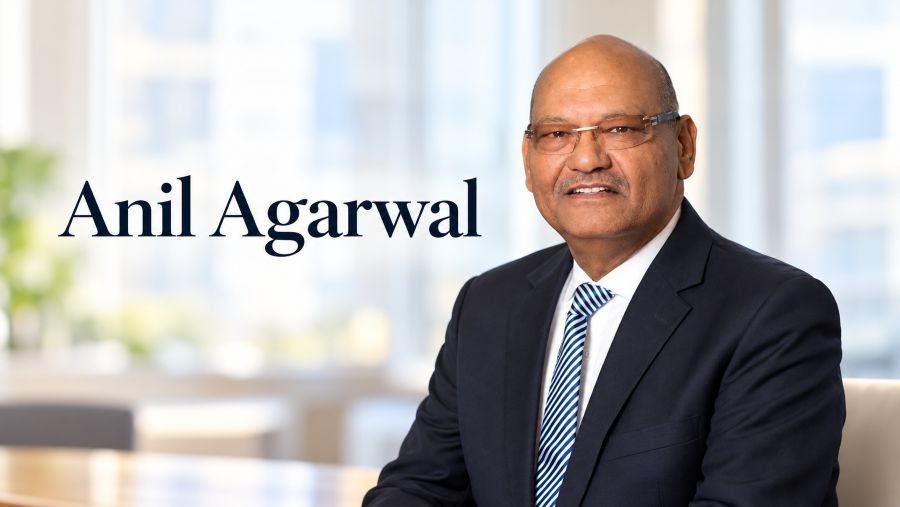
Anil Agarwal is an Indian billionaire businessman. He founded the Vedanta Group. Today, his businesses operate across several countries, with interests in metals, mining, oil, gas, and power.
But his career started small.
He once traded scrap metal in Mumbai. There was no international mining business then. He had limited money and no university degree. Still, he wanted to build something bigger.
Years later, Vedanta became a major name in India’s natural resources industry.
His journey includes major acquisitions, billion-dollar investments, family tragedy, and public disputes. Here is his life story, based on company records, interviews, and financial reports.
Quick Facts
| Detail | Information |
|---|---|
| Full Name | Anil Agarwal |
| Date of Birth | 7 September 1952, according to an SEC-filed corporate notice |
| Age | 74 years, as of October 2026 |
| Birthplace | Patna, Bihar, India |
| Nationality | Indian |
| Profession | Businessman and industrialist |
| Known For | Founder of Vedanta Group |
| Father | Dwarka Prasad Agarwal |
| Mother | Ved |
| Wife | Kiran Agarwal |
| Children | Agnivesh Agarwal and Priya Agarwal Hebbar |
| School | Miller High School, Patna |
| University Degree | None |
| Business Career | Began in scrap-metal trading |
| Group Founded | 1976 |
| Main Company | Vedanta Resources |
| Current Role | Executive Chairman, Vedanta Resources |
| Residence | London, United Kingdom |
| Forbes 2026 India Rich List | $6.4 billion, family estimate |
| Philanthropy | Pledged 75% of family wealth |
Note: Some published biographies report a different birth year. A corporate filing submitted to the US Securities and Exchange Commission records September 7, 1952. Forbes also reports a different age. The date above follows the corporate filing.
Early Life and Family Background
Anil Agarwal grew up in Patna. His family ran a small business.
His father, Dwarka Prasad Agarwal, made aluminium conductors. His mother, Ved, managed the household.
Money was often tight.
In an interview with India Today, Agarwal recalled his mother’s struggle to manage household expenses and support four children.
The family lived in Goria Toli, Patna. He saw financial difficulties around him.
These experiences shaped his early thinking. He understood the value of work before entering the business world.
At around 15, he joined his father’s business.
He learned how materials were bought. He watched how customers were handled. He also saw the problems small traders faced.
Those lessons stayed with him.
Education and School Years
He studied at Miller High School. The school is located in Patna.
He completed his matriculation there.
University was not his next step. He chose to work with his father instead.
That decision changed his future.
His education came through practical experience. He learned about products, suppliers, customers, and payments while working in the family business.
He later became known for his business judgment rather than academic qualifications.
Moving to Mumbai With Big Plans
At 19, Agarwal moved to Mumbai. The city was then called Bombay.
He wanted better business opportunities.
According to Vedanta’s account of his early life, he arrived carrying bedding and a tiffin box.
Getting started was difficult.
He tried several businesses. Many attempts did not work.
But he kept trying.
He eventually began trading scrap metal. The work involved buying discarded materials and selling them to businesses that could use them.
It was not glamorous work. Still, it helped him understand the metals market.
He learned about supply and demand. He also learned how prices changed.
These basic lessons later helped him make much larger business decisions.
Starting His First Industrial Business
Vedanta traces its beginnings to 1976.
Agarwal moved beyond simple scrap trading and began building a business in industrial materials.
An important acquisition followed in 1979.
He acquired Shamsher Sterling Corporation, which made electrical cables, conductors, and copper wire.
The purchase gave him a manufacturing base.
He could now work with finished industrial products rather than depend entirely on trading scrap.
This was a major change.
He began building the businesses that would later develop into Sterlite Industries.
Building Sterlite Industries
During the 1980s, India’s telecommunications sector needed more cables.
Agarwal saw an opportunity.
His business expanded into cable manufacturing, including products used in telecommunications and electricity networks.
Sterlite Industries became an important part of his growing group.
In 1988, Sterlite completed an initial public offering in India.
The company continued expanding.
It commissioned a copper rod plant in 1991 and entered other manufacturing activities.
Copper soon became a major interest.
In 1995, Sterlite acquired an 80% interest in Madras Aluminium Company.
In 1997, it commissioned a privately developed copper smelter at Tuticorin, Tamil Nadu.
The business was now operating on a much bigger scale.
How the Vedanta Business Grew
Agarwal’s next major move involved buying established industrial companies.
Some were previously government-controlled businesses. Others operated in mining and energy.
His group invested in different metals.
Each purchase brought new factories, mines, or production assets.
Buying BALCO in 2001
In March 2001, Sterlite acquired a 51% stake in Bharat Aluminium Company, known as BALCO.
The stake was purchased from the Government of India.
The transaction gave the group control of a major aluminium producer.
It also increased its presence in India’s manufacturing sector.
Entering Hindustan Zinc in 2002
The next year brought another large deal.
Sterlite acquired an initial 26% government stake in Hindustan Zinc Limited.
Further purchases increased its ownership.
By November 2003, the group’s interest had reached approximately 64.9%.
Hindustan Zinc became an important part of its mining business, producing zinc, lead, and silver.
Listing in London in 2003
December 2003 marked another big moment.
Vedanta Resources listed on the London Stock Exchange.
The company became the first Indian business to obtain a primary listing there.
The listing increased access to international investors and financial markets.
It also helped Vedanta pursue bigger acquisitions.
Agarwal later became Executive Chairman of Vedanta Resources in March 2005.
Expansion Beyond India
The group continued growing overseas.
It acquired a majority stake in Konkola Copper Mines in Zambia in 2004.
In 2007, it acquired control of Sesa Goa, adding to its iron ore interests.
The company expanded its zinc operations in southern Africa and elsewhere.
In 2011, Vedanta completed the acquisition of control of Cairn India.
That brought major oil and gas assets into the group.
A business that began with metal trading now had interests in several natural resources industries.
Major Career Milestones
| Year | Business Milestone |
|---|---|
| 1976 | Began building the business that became Vedanta Group |
| 1979 | Acquired Shamsher Sterling Corporation |
| 1988 | Sterlite completed its Indian IPO |
| 1995 | Acquired a major stake in Madras Aluminium |
| 1997 | Commissioned the Tuticorin copper smelter |
| 2001 | Acquired control of BALCO |
| 2002 | Purchased an initial government stake in Hindustan Zinc |
| 2003 | Listed Vedanta Resources in London |
| 2004 | Entered Zambia’s copper mining sector |
| 2007 | Acquired control of Sesa Goa |
| 2011 | Acquired control of Cairn India |
| 2013 | Combined Sesa Goa and Sterlite operations |
| 2018 | Vedanta Resources was delisted from London |
| 2021 | Joined the Giving Pledge |
| 2026 | Four Vedanta businesses began separate stock-market trading |
Companies Connected With His Business Career
His business interests extend beyond one company.
Vedanta Resources operates as the UK-based holding business.
Vedanta Limited is a separately listed Indian company. It remains associated with Hindustan Zinc and other metals businesses.
Sterlite Industries played an important historical role in the group’s expansion.
Other important businesses include BALCO, Cairn India, Sesa Goa, and Konkola Copper Mines.
Sterlite Technologies is also connected with the group’s earlier cable-manufacturing operations.
These companies do not all have the same ownership structure. Some are listed independently. Others are subsidiaries or were acquired and combined over time.
The Major Business Split in 2026
In 2026, Vedanta completed a major restructuring.
The company separated four business divisions from Vedanta Limited.
The newly listed companies began trading on Indian stock exchanges on June 15, 2026.
The five listed businesses were:
- Vedanta Limited
- Vedanta Aluminium Metal Limited
- Vedanta Oil and Gas Limited
- Vedanta Iron and Steel Limited
- Vedanta Power Limited
Each business now has its own listed shares.
The arrangement gives investors the choice to invest in particular sectors instead of purchasing shares in one large mixed business.
Vedanta Limited continues to hold interests including Hindustan Zinc.
For Agarwal, the split marked another big change in the structure of the business group.
Wife and Married Life
Anil Agarwal is married to Kiran Agarwal.
The couple has appeared together at company and community events.
Kiran has also been associated with social and community programmes.
Although Agarwal often discusses his business journey publicly, he shares fewer details about his private family life.
His family has supported his work across several decades.
Children and Family Tragedy
Agarwal had two children: Agnivesh Agarwal and Priya Agarwal Hebbar.
Both became associated with the family’s businesses.
His Son Agnivesh Agarwal
Agnivesh worked in the Vedanta Group’s business operations.
He held responsibilities connected with companies in the metals and power sectors.
On January 7, 2026, he died at the age of 49.
Reports said he suffered a cardiac arrest while recovering from a skiing accident in the United States.
His death was a painful family loss.
Agarwal publicly spoke about his grief and renewed his commitment to charitable work.
His Daughter Priya Agarwal Hebbar
Priya Agarwal Hebbar works in business leadership.
She serves as Chairperson of Hindustan Zinc and is a Non-Executive Director of Vedanta Limited.
She studied Psychology with Business Management at the University of Warwick.
Her work also includes social programmes, environmental projects, and animal welfare.
She has been involved in the Anil Agarwal Foundation’s activities.
Net Worth and Wealth in 2026
Anil Agarwal is among India’s wealthy industrialists.
His fortune comes mainly from mining, metals, and investments.
According to Forbes’ 2026 India Rich List, Anil Agarwal and his family had an estimated fortune of US$6.4 billion.
He ranked 41st on that list.
That figure relates to the annual ranking. It should not be treated as a fixed daily value.
Forbes’ real-time profile showed approximately US$4.1 billion on October 25, 2026.
Why the difference?
Much of his wealth is connected to business ownership. Share prices and company valuations change regularly.
His family’s assets are also held through investment structures, including Volcan Investments.
The estimated value of those interests can rise or fall with financial markets.
His wealth is not simply money held in a bank account.
Philanthropy and Social Work
Giving back became another major part of Agarwal’s public life.
In 2014, he pledged to donate 75% of his family wealth to charitable causes.
He formally joined the Giving Pledge in 2021, alongside his daughter Priya.
The commitment focuses on helping people through education, nutrition, healthcare, and opportunities for women.
Nand Ghar Programme
Nand Ghar is a major social project supported by the Anil Agarwal Foundation.
It works with Anganwadi centres in India.
The programme provides support for early childhood education, nutrition, healthcare, and women’s skills.
Hindustan Zinc has reported that more than 8,000 Anganwadi centres have been improved through the programme.
These figures come from company reporting.
Other Charitable Work
The foundation has also supported healthcare, rural development, and animal welfare.
The Giving Pledge records Agarwal’s commitment to giving away most of his family wealth.
It is a promise covering future giving, rather than proof that the full amount has already been donated.
Awards and Recognition
Agarwal has received recognition for his business work.
In 2008, he won the EY Entrepreneur of the Year India award.
In 2022, the Canada India Foundation selected him for its Global Indian Award.
His business career has attracted attention from international financial publications and industry organisations.
He is particularly known for expanding from small-scale trading into large industrial acquisitions.
Challenges and Controversies
His business record also includes difficult disputes.
Some concern the environment. Others involve local communities, financial pressure, and industrial operations.
Sterlite Copper Plant Closure
Vedanta’s Sterlite Copper plant in Thoothukudi, Tamil Nadu, faced opposition over pollution concerns.
In May 2018, police firing during public protests killed 13 people.
The plant was closed that year.
Vedanta disputed the pollution allegations and sought permission to reopen the facility.
In February 2024, India’s Supreme Court rejected its reopening request.
The court also rejected a review petition later that year.
Niyamgiri Mining Dispute
Vedanta’s proposed bauxite mining project in Odisha faced resistance from Indigenous communities.
Residents raised concerns about the proposed mining area and their cultural and religious rights.
Village meetings held in 2013 rejected the mining proposal.
In January 2014, India’s environment ministry rejected the request for mining approval.
Mining Disputes in Zambia
Vedanta also faced legal disputes involving operations in Zambia.
Residents brought claims concerning alleged water pollution linked to Konkola Copper Mines.
In 2019, the UK Supreme Court allowed the claims to proceed through English courts.
That ruling concerned where the case could be heard. It did not establish that Vedanta was responsible for the alleged pollution.
Financial Pressure
Vedanta Resources has also faced debt and refinancing challenges.
Large acquisitions require substantial funding. Commodity prices can change sharply.
The group has worked on refinancing and restructuring its businesses.
These issues show that even large industrial groups face financial and operational risks.
Business Thinking and Leadership
Agarwal often talks about determination.
His career includes many risky decisions.
He bought businesses others had struggled to run. He also moved into industries that required heavy investment.
Some decisions worked well. Others brought disputes and financial pressure.
He has spoken publicly about the value of paying attention to small tasks.
That approach began early.
He spent years dealing with traders, suppliers, and factories before running international companies.
His story shows how business experience can grow over time.
It also shows that building a large company brings responsibilities to workers, local communities, investors, and regulators.
Where Is He Now?
As of October 2026, Agarwal remains active in business leadership.
He is Executive Chairman of Vedanta Resources and Non-Executive Chairman of Vedanta Limited.
He also holds chairmanship roles within the group’s newly separated businesses.
London remains his reported place of residence.
His recent public comments have focused on expanding India’s domestic minerals production, industrial investment, and the future of the Vedanta businesses.
His family also continues to be involved in company leadership and charitable work.
Final Thought
Anil Agarwal started with little money.
His early life was far from luxurious.
He learned through practical work. Then he took bigger business risks.
Over several decades, he helped build Vedanta into an international natural resources group.
But the story has difficult chapters too.
Environmental disputes, debt problems, and family tragedy have all been part of his life.
His business achievements are substantial. So are the responsibilities that come with controlling major industrial operations.
Today, his career remains one of India’s best-known examples of a trader becoming a global industrialist.
Frequently Asked Questions
Who is Anil Agarwal?
He is an Indian businessman and the founder of Vedanta Group, known for its mining, metals, and energy businesses.
What is his age in 2026?
He is 74 years old as of October 25, 2026, using the birth date recorded in an SEC-filed corporate notice.
Where was he born?
He was born in Patna, Bihar, India.
Who is his wife?
His wife is Kiran Agarwal.
What is his educational qualification?
He studied at Miller High School in Patna and did not attend university.
What is his net worth in 2026?
Forbes’ 2026 India Rich List estimated his family’s wealth at US$6.4 billion. Real-time estimates change.
How many children does he have?
He had two children, Agnivesh Agarwal and Priya Agarwal Hebbar. Agnivesh died in January 2026.
What company did he start?
He founded the business group that became Vedanta. Its origins date to 1976.
Where does he live?
Forbes lists London, United Kingdom, as his residence.
Is he still working in business?
Yes. He continues to hold senior chairmanship roles across Vedanta Group.