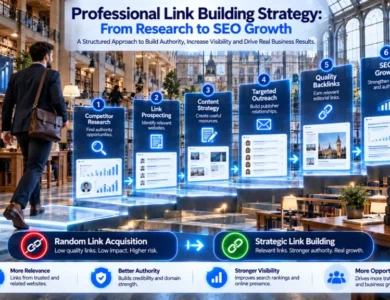
Understanding what helps competing websites earn visibility can give businesses useful insights for improving their own SEO strategies. While competitors may rank well because of strong content, technical performance, brand recognition, or other factors, their backlink profiles can reveal websites and publications worth exploring.
A structured approach to competitor research helps businesses identify relevant opportunities, understand industry publishing trends, and develop a more focused outreach plan. With professional Link Building Services, companies can turn these insights into practical actions that support long-term organic growth.
What Is Competitor Backlink Analysis?
Competitor backlink analysis involves reviewing links pointing to competing websites to understand where their external references originate. The purpose is not to copy every backlink but to identify opportunities that align with your business, audience, and content.
For example, if several competitors receive links from industry publications, resource pages, or expert interviews, those sources may be worth investigating. However, each website should be assessed individually because a backlink that benefits one business may not be relevant to another.
Why Competitor Backlink Research Matters
Competitor research can reveal gaps in your existing SEO strategy. You may find relevant publications you have not approached, topics that deserve more comprehensive content, or industry resources where your business could contribute useful information.
It can also help prioritise outreach efforts. Instead of contacting hundreds of unrelated websites, businesses can focus on a smaller group of relevant publishers with a clear reason to consider their content.
Backlink analysis does not reveal every factor behind a competitor’s rankings, and copying its link profile will not guarantee similar results. The findings should inform a wider strategy rather than replace independent research.
Five Steps to Find Better Backlink Opportunities
1. Identify Relevant Competitors
Begin by selecting businesses that compete with you in organic search. These may include direct commercial competitors or websites that publish content for the same target audience.
Review the pages competing for your important search terms rather than relying only on familiar brand names. A specialist blog may compete with your service page for an informational keyword even if it does not sell the same products or services.
2. Review Referring Domains
Use a reliable SEO tool to examine the websites linking to your competitors. Look for industry relevance, editorial standards, audience alignment, and the context in which links appear.
Prioritise sources that publish useful material and have a legitimate reason to reference your business. Do not assume that a website is valuable simply because it has a high authority score in a third-party tool.
3. Investigate Linkable Content
Review which competitor pages attract external links. These could include original research, practical guides, industry statistics, useful tools, or detailed educational resources.
Study what makes those pages useful, then identify how your business could create something more relevant or distinctive. Reproducing the same content without adding value is unlikely to create a compelling reason for publishers to link to your website.
4. Find Content and Outreach Gaps
Look for publishers that discuss your industry but have not yet referenced your business. Consider whether you can contribute expert commentary, original data, a guest article, or a useful resource that addresses an information gap.
Personalised outreach should explain why the proposed contribution is relevant to the publication’s audience. Generic messages requesting backlinks are less likely to establish meaningful relationships.
5. Track and Prioritise Opportunities
Organise potential websites in a spreadsheet or outreach platform. Record the publication’s topic, relevant page, contact details where publicly available, proposed contribution, outreach status, and outcome.
Prioritise opportunities based on relevance and realistic editorial fit. This makes it easier to allocate resources and avoid spending time on websites that offer little value.
How Link Building Services Turn Research into Action
Professional Link Building Services can help businesses assess backlink profiles, identify suitable prospects, develop link-worthy content, and coordinate outreach campaigns.
The process should include more than collecting competitor backlinks. A quality-focused campaign evaluates each opportunity, checks for potentially manipulative link patterns, and ensures that outreach aligns with search engine guidelines.
Agencies may also monitor acquired links and report on campaign progress. Businesses should expect transparent reporting about the work completed rather than guarantees of specific rankings or traffic increases.
Choosing SEO Packages for Competitor Research
When comparing SEO Packages, check whether competitor backlink analysis is included and how the findings will be used. Some plans may provide a one-time backlink audit, while others may include ongoing research, content development, outreach, and performance reviews.
Ask the provider how it evaluates referring websites, identifies relevant opportunities, and distinguishes valuable editorial links from low-quality placements. You should also understand which activities are included in the fee and whether content creation or outreach tools involve additional costs.
The right package should match your website’s current backlink profile, competitive environment, budget, and business objectives. Link building is generally most effective when combined with technical SEO, on-page optimisation, and helpful content.
Mistakes to Avoid During Competitor Analysis
One common mistake is attempting to reproduce every backlink a competitor has earned. Some links may be irrelevant, outdated, or generated through practices your business should avoid.
Another mistake is evaluating opportunities solely through domain authority scores. These third-party metrics can provide context, but they do not replace a review of relevance, editorial quality, and the actual page linking to your website.
Businesses should also avoid automated mass outreach, manipulative link schemes, and low-quality paid placements intended to influence rankings. A smaller number of relevant, editorially appropriate links can be more useful than a large collection of questionable links.
Measuring the Results of Your Strategy
Track referring domains acquired, the quality and relevance of new backlinks, referral visits, and organic search performance. Google Search Console can help monitor impressions, clicks, and search queries, while analytics tools can measure visits arriving through referral links.
Compare results over time and consider other SEO changes that may influence performance. Competitor analysis can improve decision-making, but it cannot establish that a particular backlink caused a ranking change.
Regular reviews help businesses identify successful outreach approaches, refine content priorities, and allocate resources more effectively.
Build a More Focused Link Building Strategy
Competitor backlink analysis can uncover useful publishing opportunities and reveal ways to make your content more valuable to the industry. Its real benefit comes from using the research to guide original content, relevant outreach, and ethical link acquisition.
By combining informed competitor research with reliable Link Building Services and suitable SEO Packages, businesses can create a more organised approach to improving search visibility. The priority should remain earning relevant links through genuine value rather than copying competitors or chasing backlink numbers.