Men, Muscle and Metabolism: What Tirzepatide Research Is Teaching Us
Men, Muscle and Metabolism

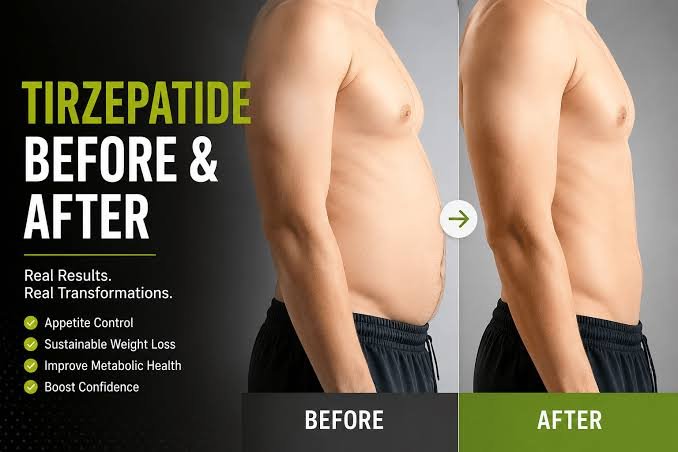
For The Good Men Project · 2 links: Tirzepatide product, Tirzepatide UK guide
Talk to men about their health and the conversation often turns to the gym, the scales or the doctor’s appointment they keep putting off. Less often does it turn to metabolism, the quiet chemistry that decides how the body stores fat, builds muscle and handles sugar. Yet some of the most important health research of the last decade has been about exactly that, and one molecule in particular, tirzepatide, has become central to it.
A different kind of molecule
Tirzepatide is a synthetic peptide that mimics two gut hormones at once: GLP-1 and GIP. Both are released after a meal and help regulate blood sugar, appetite and how nutrients are stored. Earlier medicines targeted only GLP-1. By combining the two signals in a single molecule, tirzepatide produced larger effects in clinical trials than its predecessors, and it changed how scientists think about treating metabolic disease.
It is now a licensed medicine. Sold as Mounjaro, it was approved for type 2 diabetes in 2022 and later for weight management, including by the UK’s MHRA. In the SURMOUNT-1 trial, participants on the highest dose lost around a fifth of their body weight on average over 72 weeks. Those are remarkable figures, but the story that interests researchers most goes beyond the number on the scales.
The muscle question
For men in particular, one question comes up again and again: when people lose weight on these medicines, how much of it is fat and how much is muscle? It matters because muscle is not just about appearance. It drives metabolism, protects joints, supports blood sugar control and is one of the strongest predictors of healthy ageing.
Any significant weight loss, whether through diet, surgery or medication, involves losing some lean tissue as well as fat. Body-composition data from the SURMOUNT-1 trial, measured with DEXA scans, found that the majority of weight lost was fat, with fat mass falling much more sharply than lean mass. That ratio is broadly similar to what is seen with diet-based weight loss, but researchers are keen to understand it better.
This has opened up a whole field of study. Laboratories are investigating how GLP-1 and GIP signalling affect muscle cells directly, whether the GIP component influences how fat tissue behaves, and how resistance training and protein intake interact with these pathways. Pharmaceutical companies are even developing new compounds designed to be paired with incretin medicines specifically to protect muscle.
There is also a practical lesson in this research for men who are not part of any trial. The factors that protect muscle during weight loss, namely adequate protein, regular strength training and good sleep, are the same ones that protect it during ageing. Scientists studying incretin medicines are, in effect, building a detailed map of how hormones and lifestyle work together to preserve lean tissue. That map is likely to prove useful far beyond the medicines that prompted it, informing advice on everything from recovery after illness to staying strong into later life.
It is also a reminder that the scales tell only part of the story. Two men of the same weight can have very different health profiles depending on how much of that weight is muscle and how much is fat stored around the organs. Body composition, waist measurement and blood markers often say more about long-term risk than weight alone.
Beyond weight
Tirzepatide research has also spread into areas many people would not expect. Trials have looked at obstructive sleep apnoea, a condition far more common in men and closely linked to excess weight, with results strong enough for regulators to approve the medicine for that use in some countries. Other studies are examining heart failure, kidney disease and fatty liver disease.
There is growing interest in the brain too. Because GLP-1 and GIP receptors are found in regions that control hunger and reward, researchers are exploring how these signals shape cravings and eating behaviour. It is a reminder that metabolism is not just about willpower; it is a conversation between the gut, the brain and the body’s fat stores.
The role of research compounds
Much of this science begins in the laboratory long before it reaches a clinical trial. Cell cultures, tissue samples and biochemical assays allow researchers to test specific questions about how tirzepatide binds to its receptors and what happens inside cells afterwards. For that work, labs use research-grade tirzepatide: a freeze-dried peptide supplied in sealed vials for in vitro use only.
Specialist suppliers such as Revial Labs provide research-grade tirzepatide with independent third-party testing. For laboratory work, quality is not optional. A reliable research compound should come with a purity figure from HPLC testing, ideally above 98%, identity confirmation by mass spectrometry, and a batch-specific Certificate of Analysis from an independent lab that can be verified directly.
A word of caution
Research-grade peptides are not medicines. They are not manufactured, licensed or labelled for human use, and buying them as a shortcut to weight loss carries real risks, from incorrect strength to contamination. In the UK, tirzepatide is available as a licensed prescription medicine through the NHS and registered pharmacies, with proper medical assessment and follow-up. For a clear explanation of the difference between the licensed medicine and research-grade material, this guide to tirzepatide in the UK sets out the facts.
Any man thinking about his weight, blood sugar or metabolic health should start with a GP. A simple blood test can reveal a great deal, and the licensed options available today are backed by years of clinical evidence.
Why it matters
For a generation of men who grew up being told that health was simply about eating less and moving more, tirzepatide research offers a more nuanced picture. Metabolism is shaped by hormones, genetics, sleep, stress and muscle, not just effort. Understanding those signals better could lead to treatments that help people lose fat while keeping the strength and muscle that matter so much as we age.
That is a goal worth pursuing, and it is being pursued in laboratories right now, one experiment at a time.
Compounds discussed in this article are supplied strictly for laboratory research use and are not for human or veterinary use.