Jeanette Kwakye: Olympic Sprinter Turned Broadcaster
The remarkable journey of the British Olympic finalist who moved from world-class athletics into television, radio and sports journalism

Introduction
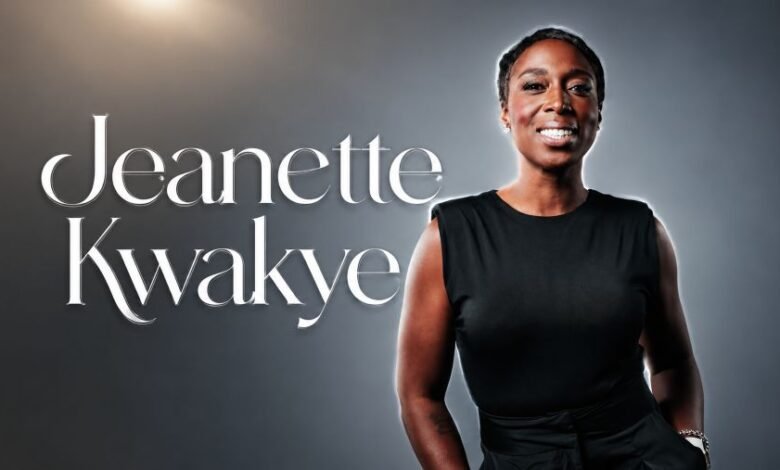
Jeanette Kwakye MBE is a British sports broadcaster, journalist, author and retired Olympic sprinter. She is best known for reaching the women’s 100-metre final at the 2008 Beijing Olympic Games, where she finished sixth with a personal-best time of 11.14 seconds.
She also won a silver medal in the 60 metres at the 2008 World Indoor Championships. After leaving professional athletics, Jeanette built a successful broadcasting career across the BBC, ITV, Sky Sports and Channel 5.
Her journey is special because she reached the highest level in two very different careers. She first competed against the fastest women in the world and later became a trusted voice explaining sport to millions of viewers and listeners.
Jeanette Kwakye Quick Facts
| Detail | Verified information |
|---|---|
| Full name | Jeanette Boahemaa Kwakye |
| Professional name | Jeanette Kwakye |
| Date of birth | March 20, 1983 |
| Age | 43 years old, as of July 2026 |
| Birthplace | London, England |
| Nationality | British |
| Family background | Ghanaian heritage |
| Profession | Broadcaster, journalist, author and retired sprinter |
| Main athletics events | 60 metres, 100 metres, 200 metres and 4×100-metre relay |
| Olympic achievement | Sixth in the 100-metre final at Beijing 2008 |
| 100-metre personal best | 11.14 seconds |
| Major medal | 60-metre silver at the 2008 World Indoor Championships |
| Education | Politics and Economics at Loughborough University |
| Honour | MBE for services to sport and sports broadcasting |
| Retirement from athletics | 2014 |
Who Is Jeanette Kwakye?
Jeanette Kwakye is a former elite British sprinter who became a television and radio presenter after retiring from competition.
She represented Great Britain at international championships and competed in the 2008 Beijing Olympics. Her greatest outdoor result came when she reached the Olympic 100-metre final and finished sixth.
Reaching that final was an important moment for British athletics. Jeanette became the first British woman in 24 years to qualify for an Olympic women’s 100-metre final.
She later used her knowledge of professional sport to build a career in journalism and broadcasting. Instead of only discussing athletics, she expanded into football, boxing, basketball, the Olympic Games and general current-affairs programmes.
Jeanette Kwakye’s Age and Date of Birth
Jeanette Kwakye was born on March 20, 1983.
She is 43 years old as of July 2026.
Her birth date is listed by official athletics records and her Team GB athlete profile.
Some sports databases spell her first name as “Jeannette.” However, she uses “Jeanette” throughout her professional broadcasting career and public profiles.
Where Is Jeanette Kwakye From?
Jeanette was born in London, England.
Some public sources identify Hammersmith as her birthplace, while others connect her early life with Waltham Forest and Woodford Green in East London.
She has Ghanaian family roots. Her parents moved to Britain from Ghana before she was born.
Her London upbringing played an important part in her development. She joined a local athletics club and received the coaching and competition experience needed to move from school-level sprinting into elite British athletics.
Early Life and Interest in Running
Jeanette showed strong running ability during childhood.
She began structured sprint training at around 14 years old with Woodford Green with Essex Ladies. The club became an important part of her sporting development and remained connected to her throughout her senior career.
In 1997, she won the English Schools under-15 100-metre title.
This victory showed that she had the speed to compete against the best young runners in the country. However, reaching international level required years of training, careful coaching and regular competition.
Jeanette had to improve several parts of her performance, including:
- Starting speed
- Running technique
- Physical strength
- Race control
- Confidence under pressure
- Recovery between competitions
Her progress was gradual. She moved through junior athletics before becoming one of Britain’s leading senior sprinters.
Education
Jeanette attended Loughborough University, one of the United Kingdom’s best-known institutions for high-performance sport.
She studied Politics and Economics.
University allowed her to continue her education while developing as an athlete. She trained in a competitive sporting environment and competed against other talented runners.
Her education later became useful in broadcasting. Presenters need to understand complex subjects, prepare questions, study background information and communicate clearly to a wide audience.
Jeanette also completed professional journalism training after her athletics career was affected by injuries. She earned a qualification accredited by the National Council for the Training of Journalists.
Her training included reporting, media law, interviewing and shorthand.
Start of Jeanette Kwakye’s Athletics Career
Jeanette progressed from school competitions into junior international athletics.
One of her first important international achievements came at the 2002 World Junior Championships. She helped Great Britain win a bronze medal in the women’s 4×100-metre relay.
She later developed into a successful individual sprinter over 60, 100 and 200 metres.
Her early senior years included difficult races and close results. However, she continued training and gradually became faster and more consistent.
Her major national breakthrough arrived in 2007.
British Championship Success
Jeanette became British champion in both the 100 metres and 200 metres in 2007.
Winning both sprint titles at the same championship showed her range. The 100 metres requires explosive speed, while the 200 metres also demands strong bend running and the ability to maintain speed for longer.
She successfully defended her British 100-metre title in 2008.
After injuries interrupted her career, she returned and won the British 100-metre title again in 2011.
Across indoor and outdoor competitions, Jeanette became a five-time British champion.
Her domestic success helped her earn places on Great Britain teams for major international championships.
World Indoor Silver Medal
One of Jeanette’s greatest achievements came at the 2008 World Indoor Championships in Valencia, Spain.
She competed in the women’s 60 metres.
Jeanette ran 7.08 seconds in the final and won the silver medal. The performance was a British record at the time.
The race showed her excellent starting ability and acceleration. Indoor 60-metre races are extremely short, so even a small mistake can decide the result.
Winning a world silver medal confirmed that Jeanette was one of the fastest women in international indoor athletics.
Beijing 2008 Olympic Games
Jeanette represented Great Britain at the 2008 Beijing Olympics.
She competed in the women’s 100 metres and successfully moved through the qualifying rounds.
In the final, she ran a personal-best time of 11.14 seconds and finished sixth.
Although she did not win a medal, reaching the final was a historic British achievement. No British woman had competed in an Olympic women’s 100-metre final since 1984.
Running her personal best in the final was also important. It showed that she could produce her fastest performance during the biggest race of her life.
Jeanette also competed in the 4×100-metre relay. The British team reached the final but failed to complete the race successfully after a changeover problem.
Her Olympic performance remains the best-known achievement of her athletics career.
Readers interested in other Olympic athletes breaking barriers can also explore how representation and sporting success can influence future generations.
Jeanette Kwakye’s Personal Best Times
Jeanette recorded strong performances across three sprint distances.
60 metres
Her indoor 60-metre personal best was 7.08 seconds.
She achieved the time at the 2008 World Indoor Championships, where she won silver.
100 metres
Her 100-metre personal best was 11.14 seconds.
She recorded the time in the Olympic final in Beijing on August 17, 2008.
200 metres
Her 200-metre personal best was 23.11 seconds.
She achieved the result in Cuxhaven, Germany, in July 2007.
Injuries and Career Challenges
Jeanette’s athletics career was affected by serious injury problems after the Beijing Olympics.
She experienced Achilles tendon and knee injuries. These problems interrupted her training and caused her to miss important competitions.
She did not compete during much of the 2010 season.
Jeanette returned in 2011 and won another British 100-metre championship. She also reached the 100-metre semifinals at the World Championships in Daegu, South Korea.
However, further injury problems stopped her from competing at the London 2012 Olympic Games.
Missing a home Olympics was a major disappointment. London 2012 would have allowed her to compete in front of a British crowd at one of the biggest sporting events in the country’s history.
Despite the setback, Jeanette continued planning for life after professional athletics.
Retirement from Athletics
Jeanette officially announced her retirement from competitive athletics in January 2014.
She identified reaching the Beijing Olympic final as the proudest moment of her sporting career.
Retirement did not end her connection with sport. Instead, she moved into a new role where she could use her experience to explain competitions, interview athletes and discuss the pressures of elite performance.
Her career change was not immediate or easy. She had to gain qualifications, build contacts and begin with smaller broadcasting roles before receiving major television opportunities.
Move into Journalism and Broadcasting
Jeanette became interested in radio and journalism before her athletics career had ended.
During an injury-affected period, she completed journalism training and gained practical broadcasting experience.
Her early radio work included BBC Radio Berkshire and BBC Radio London.
These roles helped her learn how to:
- Prepare for live programmes
- Interview guests
- Read scripts naturally
- Respond to breaking news
- Explain sporting events
- Work under strict time limits
- Communicate with different audiences
Jeanette later moved into national radio and television.
Her transition is similar to other former professional athletes building media careers, although her path was shaped by formal journalism training and years of regional broadcasting experience.
BBC Career
Jeanette became a regular presenter, reporter and athletics expert for the BBC.
She has worked across BBC Sport and BBC Radio 5 Live.
Her assignments have included:
- Olympic Games coverage
- World Athletics Championships
- Winter Olympic Games
- Women’s football
- Sports news
- Football podcasts
- Live radio programmes
- Interviews with athletes and coaches
She worked as a trackside reporter during major athletics meetings, giving viewers information directly from the stadium.
Jeanette also presented morning coverage of the Paris 2024 Olympic Games with JJ Chalmers.
In November 2024, she became a co-host of BBC Radio 5 Live’s Weekend Breakfast programme. The role expanded her work beyond sports reporting because the programme also covers news, interviews and current affairs.
ITV, Channel 5 and Sky Sports Work
Jeanette has worked for several major British broadcasters.
She became a co-presenter on ITV’s The Martin Lewis Money Show Live. The programme explains household finances, bills, savings and consumer rights.
The role showed that Jeanette could present subjects outside athletics.
She has also worked on boxing coverage for Channel 5 and basketball programming for Sky Sports.
Her wide range of work has made her a multi-sport broadcaster rather than only a former athlete offering sprint analysis.
She understands professional competition from personal experience, but she also prepares as a trained journalist.
Author and Children’s Book
Jeanette wrote a children’s book called Femi the Fox.
The book was published in 2017 and introduces young readers to parts of West African culture.
Jeanette developed the idea after looking for a story that could help her child connect with African food, family and cultural traditions.
The project combined her work as a parent, writer and public communicator.
Work on Fast Girls
Jeanette worked as a sprinting and fitness consultant for the British film Fast Girls.
The film follows female sprinters preparing for an international relay competition.
Her role included helping performers understand how professional runners move, train and prepare for races.
Her experience helped make the athletics scenes look more realistic.
She also appeared in the athletics documentary Personal Best, which explored the lives and pressures of British athletes preparing for major competition.
Jeanette Kwakye’s Husband and Children
Jeanette has publicly identified her husband as Tokunbo.
The couple have two children, a son and a daughter.
She has discussed the challenge of balancing family responsibilities with early radio programmes, live television work, travel and exercise.
Jeanette generally keeps her children away from unnecessary public attention. Their private lives are not central to her professional career.
Fitness After Retirement
Jeanette remains physically active after leaving professional athletics.
Her exercise routine has included cardiovascular sessions, weights and resistance training.
She has explained that her approach to fitness is now different from her professional sprinting years.
As an elite athlete, training was designed to improve race performance. After retirement, exercise became more focused on strength, health, energy and everyday wellbeing.
She prefers purposeful sessions rather than long-distance running.
MBE Honour
Jeanette was appointed a Member of the Order of the British Empire.
She received the MBE for services to sport and sports broadcasting.
The honour recognised both parts of her public career. She represented Britain as an Olympic athlete and later helped audiences understand sport through television and radio.
It also recognised the example she provides for young people hoping to build careers in athletics, journalism or broadcasting.
Public Image and Representation
Jeanette is known for her calm presenting style, sporting knowledge and ability to communicate clearly.
She has spoken about the importance of representation in British sports media.
As a Black woman working in national broadcasting, she understands that younger viewers may see her as proof that they can also enter the industry.
She has also discussed the subjective nature of television. Athletes are judged by clear results and times, while presenters may be judged through personal opinions about appearance, voice or popularity.
Instead of allowing early rejection to stop her, Jeanette gained qualifications and continued building experience.
Her story shows that success in a second career often requires the same patience and discipline as success in sport.
Why Jeanette Kwakye’s Story Matters
Jeanette’s story matters because she did more than compete at the Olympics.
She became one of the fastest British women of her generation, reached a historic Olympic final and won a world indoor silver medal.
After injuries ended her competitive career, she started again in a new industry.
She did not expect her sporting achievements alone to provide a broadcasting career. She studied journalism, worked in regional radio and gradually earned larger opportunities.
Her journey offers several useful lessons:
- One career ending can create space for another.
- Education and practical training remain important.
- Sporting discipline can support success in other industries.
- Injuries do not remove a person’s knowledge or experience.
- Representation can help younger people imagine new possibilities.
- Long-term success usually develops through small steps.
Frequently Asked Questions
How old is Jeanette Kwakye?
Jeanette Kwakye is 43 years old as of July 2026. She was born on March 20, 1983.
What is Jeanette Kwakye famous for?
She is famous for reaching the women’s 100-metre final at the 2008 Beijing Olympics and later becoming a British sports broadcaster.
Did Jeanette Kwakye win an Olympic medal?
No. She finished sixth in the 100-metre final at the 2008 Beijing Olympics. She won her major global medal at the 2008 World Indoor Championships, where she earned silver in the 60 metres.
What was Jeanette Kwakye’s fastest 100-metre time?
Her personal-best 100-metre time was 11.14 seconds. She recorded it in the Beijing Olympic final.
When did Jeanette Kwakye retire?
She officially retired from competitive athletics in January 2014.
What does Jeanette Kwakye do now?
She works as a television and radio presenter, sports journalist, commentator and event host.
Which television programmes has she presented?
Her work has included BBC Olympic and athletics coverage, BBC Radio 5 Live, The Martin Lewis Money Show Live, Channel 5 boxing and Sky Sports programming.
Where did Jeanette Kwakye study?
She studied Politics and Economics at Loughborough University. She later completed professional journalism training.
Why does Jeanette Kwakye have an MBE?
She received an MBE for services to sport and sports broadcasting.
Conclusion
Jeanette Kwakye successfully moved from elite sprinting into national sports broadcasting.
Her athletics career included British titles, a world indoor silver medal and a place in the 2008 Olympic 100-metre final.
Injuries prevented her from competing at the London 2012 Olympics, but they did not end her public career. She used the difficult period to prepare for journalism and broadcasting.
Today, she is recognised not only as a former Olympic sprinter but also as an experienced presenter who can cover athletics, football, boxing, basketball, finance and current affairs.
Her journey shows how discipline, education and patience can help a person build a powerful second career.