Bottleneck Calculator and Stress Test PC: A Practical Guide to Better Computer Performance

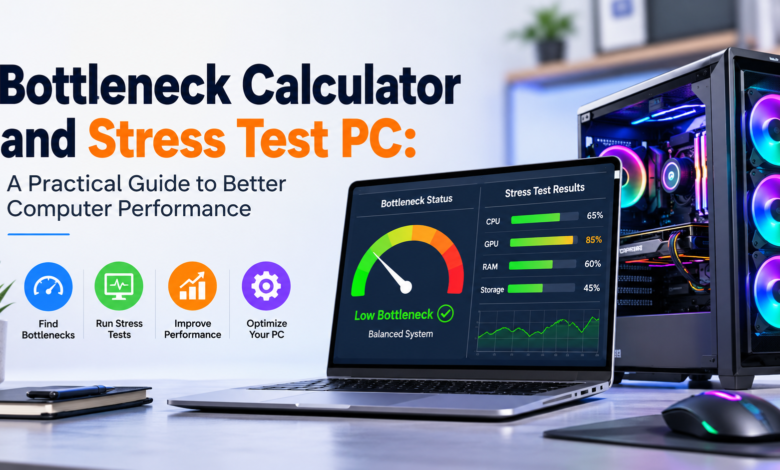
Building or upgrading a PC can be exciting, but choosing compatible hardware is not always straightforward. A powerful graphics card may look like a great upgrade, yet another component could prevent it from reaching its full potential. Similarly, a computer may appear stable during normal use but become unreliable when running demanding games or professional applications.
Two useful concepts for understanding and testing computer performance are a bottleneck calculator and a stress test PC. The first can help users identify possible hardware performance limitations, while the second can reveal how a computer behaves under heavy workloads. Used correctly, these approaches can make PC upgrades and troubleshooting much easier.
What Is a PC Bottleneck?
A bottleneck occurs when one component limits the performance of another component. Every computer has a performance balance between its processor, graphics card, memory, storage, and other hardware.
For example, pairing a high-end GPU with an older entry-level processor may prevent the graphics card from being used efficiently in certain games. In another situation, a powerful CPU and GPU may be installed, but insufficient RAM could affect multitasking and application performance.
A bottleneck does not automatically mean that something is wrong with the computer. The effect depends on the workload. A component that limits performance in one game may have little impact on another game or application.
How a Bottleneck Calculator Can Help
A bottleneck calculator is an online tool that estimates whether two or more major PC components may have a significant performance imbalance. Users generally select hardware such as a CPU and GPU, along with other system information, and receive an estimated bottleneck result.
These calculators can be useful before purchasing new hardware. Instead of selecting a graphics card based only on its price or specifications, users can compare it with their existing processor and determine whether the combination is likely to be balanced.
However, calculator results should be treated as estimates rather than absolute measurements. Real-world performance depends on resolution, game engine, software optimization, RAM configuration, cooling, drivers, background processes, and many other factors.
CPU Bottleneck vs. GPU Bottleneck
The two most common types of bottlenecks are CPU and GPU limitations.
A CPU bottleneck can occur when the processor cannot prepare or process information quickly enough for the graphics card. It is more noticeable in CPU-intensive games, simulation software, large multiplayer environments, and applications that depend heavily on processor performance.
A GPU bottleneck occurs when the graphics card becomes the primary performance limitation. This is common when playing graphically demanding games at higher resolutions or quality settings.
Neither situation is necessarily undesirable. In fact, many gaming systems are intentionally designed so that the GPU is the main limiting component because graphics quality can often be adjusted to match the available hardware.
Why You Should Test Your PC
A calculator can provide an estimate before an upgrade, but testing your actual system can provide more useful information about its current behavior.
A stress test PC process places a computer under a heavy workload for a specific period. This can help users evaluate stability, temperatures, cooling performance, and hardware behavior.
Stress testing is particularly useful after building a new computer, upgrading a CPU or GPU, changing cooling hardware, or troubleshooting unexpected crashes and shutdowns.
What Happens During a PC Stress Test?
During normal computer use, the CPU and GPU may operate at relatively low or moderate utilization. A stress test increases the workload to push selected components closer to their limits.
Depending on the software being used, a test may focus on the CPU, GPU, RAM, or the entire system.
During the test, users can monitor several important measurements:
- CPU temperature
- GPU temperature
- CPU utilization
- GPU utilization
- Clock speeds
- Fan speeds
- System stability
- Power consumption
Monitoring these values can reveal problems that might not appear during basic tasks such as web browsing or document editing.
How to Stress Test a PC Safely
Before starting a stress test, make sure the computer has adequate airflow and that fans and cooling components are working correctly. Close unnecessary applications and save important work.
Start with a moderate test rather than immediately running an extremely demanding workload for a long period. Monitor temperatures throughout the process.
If the computer becomes unusually hot, crashes, freezes, shuts down unexpectedly, or produces other abnormal behavior, stop the test and investigate the cause.
A stress test is designed to create heavy workloads, so temperatures will generally be higher than during everyday usage. The important thing is whether the system remains within safe operating limits recommended for its hardware.
Stress Testing Different Components
Different tests can reveal different problems.
CPU Testing
CPU-focused testing can determine whether the processor remains stable under sustained workloads. It can be helpful after installing a new CPU, adjusting processor settings, or changing a cooling solution.
GPU Testing
GPU-focused testing places a heavy graphics workload on the system. It can help identify graphics instability, overheating, driver problems, or inadequate cooling.
RAM Testing
Memory testing can be useful when a PC experiences random crashes, application errors, or unexpected system behavior. Faulty or unstable RAM may not always cause problems immediately, so dedicated memory testing can help identify potential issues.
Full-System Testing
A combined workload can put significant demand on multiple components at once. This type of test can provide a broader picture of system stability, although it can also produce substantial heat and power consumption.
Combining Bottleneck Analysis With Stress Testing
Using a bottleneck calculator and a stress test together can provide a better understanding of PC performance.
Suppose someone plans to install a new high-performance GPU into a computer with an older processor. A bottleneck calculator may indicate that the CPU could limit performance in certain workloads. After installing the new hardware, real-world monitoring and stress testing can then help determine how the system actually behaves.
Similarly, if a computer experiences performance problems, checking CPU and GPU utilization during demanding workloads can help identify which component is reaching its limit.
This combination is more informative than relying on a single percentage or benchmark score.
Bottlenecks Can Change With Resolution
One important factor often overlooked when discussing bottlenecks is screen resolution.
At lower resolutions, the CPU may become more important because the GPU has fewer pixels to process. At higher resolutions, the graphics card generally has more work to do, which can shift the performance limitation toward the GPU.
Game settings also matter. Reducing graphical quality can increase the workload placed on the CPU in some situations, while increasing visual quality can put more pressure on the GPU.
Therefore, a bottleneck estimate should always be considered in the context of how the PC will actually be used.
Should You Upgrade the CPU or GPU?
A bottleneck analysis can help answer this question, but it should not be the only factor.
If the GPU is consistently operating at very high utilization while the CPU has available capacity, a graphics upgrade may provide the greatest benefit. If the CPU is consistently limiting frame rates while the GPU is underutilized, upgrading the processor may make more sense.
Users should also consider RAM capacity, storage speed, cooling, power supply capacity, and motherboard compatibility before purchasing new hardware.
Final Thoughts
Understanding PC performance is easier when you combine estimates with real-world testing. A bottleneck calculator can help identify possible hardware imbalances before an upgrade, while a stress test PC routine can help evaluate stability and thermal behavior after hardware changes.
Neither method should be viewed as a perfect measurement of performance. Instead, they are useful tools that can support better decisions when building, upgrading, or troubleshooting a computer.
By checking component compatibility, monitoring real-world utilization, and testing system stability carefully, PC users can create a more balanced system and get better results from the hardware they already own.