What Is Bamboo Toilet Roll?
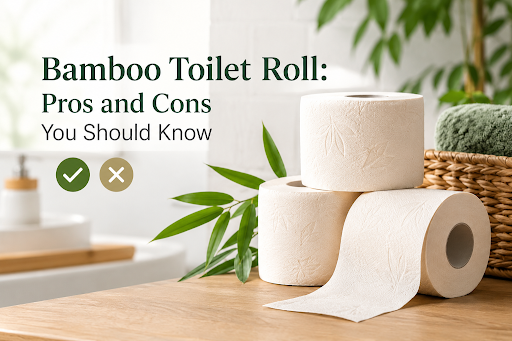
Bamboo toilet roll is a type of toilet tissue made using pulp derived from bamboo fibres rather than relying entirely on conventional wood pulp. Manufacturers process the raw material into pulp, form it into thin paper sheets, and convert those sheets into rolls suitable for everyday bathroom use. Depending on the product, manufacturers may use different processing methods, fibre blends, ply constructions and finishing techniques, so the final tissue can vary considerably.
Bamboo has attracted attention because it grows rapidly and can provide a renewable source of fibre when managed responsibly. However, the finished product’s environmental credentials depend on more than the plant itself. Sourcing, pulp processing, manufacturing energy, transportation and packaging all contribute to its overall impact.
It is also important to check what a product actually contains. In March 2024, consumer organisation Which? reported that independent testing of five bamboo toilet paper brands found three samples contained relatively little bamboo fibre, despite claims about their composition. This highlights why transparent product information and credible supply-chain verification matter when shopping for bamboo toilet paper.
Pros of Bamboo Toilet Roll
1. Bamboo Is a Rapidly Growing Plant
One of bamboo’s main attractions is its growth rate. Certain bamboo species grow quickly and can be harvested for fibre without necessarily requiring the plant to be replanted after every harvest. When producers manage plantations responsibly, bamboo can provide a renewable raw material for products such as toilet tissue, kitchen rolls and other household paper goods.
However, rapid growth does not automatically make every bamboo product environmentally preferable. Land management, biodiversity protection, harvesting practices and the risk of replacing natural ecosystems with plantations all matter. Look for credible sourcing information rather than relying solely on words such as “natural” or “green” on the packaging.
2. An Alternative to Conventional Wood-Pulp Paper
Traditional toilet paper commonly uses virgin wood pulp, although recycled fibres are another option. Bamboo toilet roll offers an alternative fibre source that may reduce reliance on virgin wood, particularly when the bamboo is responsibly sourced and the product’s composition is accurately disclosed.
For households trying to make more considered purchasing decisions, this provides another option to compare. Nevertheless, bamboo is not automatically better than recycled toilet paper in every environmental category. The most appropriate choice depends on how each product is sourced, manufactured, transported and packaged.
3. Comfort, Softness and Strength
Nobody wants toilet tissue that feels rough or tears too easily. Fortunately, bamboo toilet tissue is available in different constructions, including products designed to balance softness, strength and absorbency. Its performance depends on fibre quality, pulp processing, sheet thickness and the number of plies, rather than simply the material’s name.
For example, a two-ply roll may suit everyday household needs, while someone who prefers thicker tissue might choose a three-ply alternative. Reading product descriptions and trying a small pack before purchasing in bulk can help you determine whether the texture and strength meet your expectations.
4. Options for Different Household Preferences
Bamboo loo roll comes in different formats, allowing shoppers to compare roll sizes, sheet counts, ply options and packaging. Some products also offer unbleached toilet tissue, which may appeal to consumers who prefer a less whitened appearance.
However, unbleached does not automatically mean chemical-free, and a brown colour alone does not prove that a product has a lower environmental impact. Check the manufacturer’s explanation of its processing methods if these details influence your purchasing decision.
5. Potentially More Considerate Packaging
Packaging is another reason consumers explore alternative household paper products. Some bamboo toilet roll brands use paper wrappers, cardboard packaging or other reduced-plastic formats instead of individually plastic-wrapped rolls. Depending on the materials and local waste facilities, these choices may help reduce plastic packaging waste.
Still, packaging claims deserve the same scrutiny as fibre claims. Check whether the entire multipack uses paper packaging, whether any plastic components remain and how the manufacturer recommends disposing of them. Small improvements become more meaningful when the information is clear and the packaging genuinely supports the intended waste-reduction goal.
Cons of Bamboo Toilet Roll
1. Price Differences
Bamboo toilet rolls can cost more than some conventional toilet paper products. Manufacturing scale, sourcing arrangements, packaging choices, distribution and brand positioning can all influence the final price. However, prices vary, and bamboo products are not always more expensive than premium conventional alternatives.
Rather than comparing pack prices alone, calculate the cost per sheet or compare equivalent rolls with similar ply and sheet counts. A larger pack may offer better value, but only if the tissue performs well and you can store it properly.
2. Differences in Product Quality
Not every bamboo toilet roll delivers the same experience. Some options feel soft and sturdy, while others may be thinner, less absorbent or less comfortable for individual preferences. These differences can make it difficult to judge a product from its name or packaging alone.
Customer reviews can help identify recurring comments about softness, tearing and roll size. Nevertheless, reviews reflect individual experiences, so they work best alongside clear specifications and a manufacturer’s transparent product information.
3. Environmental Impact Depends on Production
Bamboo still requires land, processing and energy before it becomes toilet tissue. Pulping methods, bleaching, factory energy sources, transport and disposal can all affect the finished product’s environmental footprint. A product made from rapidly renewable material may still have significant impacts elsewhere in its supply chain.
The UK government’s Competition and Markets Authority advises businesses to substantiate environmental claims and consider relevant impacts across a product’s life cycle. Consequently, a claim such as “eco-friendly” should not be treated as proof that a toilet roll is better in every respect.
4. Availability and Consumer Choice
Although bamboo toilet tissue is becoming easier to find through specialist retailers and online shops, availability still varies by retailer and location. You may have fewer choices in certain supermarkets, particularly if you prefer a specific ply, unbleached finish or larger pack size.
Online shopping can make comparisons easier, but remember to check delivery costs, pack dimensions and the number of sheets per roll before ordering. This helps you avoid paying more than expected for a product that initially appears affordable.
Bamboo Toilet Roll vs Traditional Toilet Paper
The best option depends on your household priorities. Conventional toilet paper can be made from virgin wood pulp or recycled fibres, while bamboo products use bamboo pulp, sometimes alongside other materials. Neither category guarantees superior quality or lower environmental impact in every situation.
| Factor | Bamboo toilet roll | Traditional toilet paper |
| Main fibre source | Bamboo pulp, depending on the product | Virgin wood pulp, recycled fibres or a blend |
| Comfort | Varies by brand, ply and processing | Varies by brand, ply and processing |
| Strength | Depends on construction and fibre quality | Depends on construction and fibre quality |
| Price | Varies; some options cost more | Ranges from budget to premium |
| Packaging | Paper-wrapped and other formats available | Plastic-wrapped and paper-packaged options available |
| Environmental considerations | Bamboo sourcing, processing, energy and transport | Forestry, recycled content, processing and packaging |
Bamboo may appeal to shoppers seeking an alternative to virgin wood pulp. Recycled toilet paper may appeal to those who want to make use of recovered fibres. Comparing specific products is more useful than assuming either material is always the winner.
What Should You Look for When Buying Bamboo Toilet Roll?
Choosing a suitable bamboo toilet roll becomes easier when you look beyond the packaging and consider what you will actually use at home. A few practical checks can help you balance comfort, cost and environmental considerations.
- Ply and strength: Compare two-ply and three-ply options based on your preferences. More plies do not automatically guarantee better quality, so consider the overall construction.
- Softness and absorbency: Read product descriptions and customer reviews to understand how the tissue performs during everyday use.
- Roll length and sheet count: Check the number of sheets and their dimensions. A roll that looks large may not contain as much usable tissue as you expect.
- Cost per sheet: Divide the pack price by the total number of sheets to compare value more accurately.
- Unbleached options: If you prefer unbleached toilet tissue, check whether the manufacturer explicitly identifies the product as unbleached and explains its processing.
- Packaging materials: Look for clear information about paper wrappers, cardboard boxes and any remaining plastic components.
- Sourcing transparency: Check the stated fibre composition and whether credible certification or supply-chain documentation supports the manufacturer’s claims.
Certification can provide useful information, but it is important to understand what it covers. The Forest Stewardship Council (FSC), for example, has investigated misleading certification claims and discrepancies involving bamboo toilet paper supply chains. A label should therefore be checked against the product’s actual claims and supporting information.
If you want to compare options for your bathroom and kitchen, explore Tiboo eco-friendly toilet and kitchen rolls. Review the available product specifications, packaging details and prices to identify an option that fits your household’s needs.
Is Bamboo Toilet Roll Worth Considering?
Bamboo toilet roll is worth considering if you want to explore alternatives to conventional virgin wood-pulp tissue. Its rapidly renewable raw material, range of product formats and availability in reduced-plastic packaging make it an interesting option for households seeking to rethink everyday purchases.
However, the right choice depends on your priorities. If price is your main concern, compare the cost per sheet with budget and recycled alternatives. If environmental impact matters most, investigate fibre composition, responsible sourcing, manufacturing processes and packaging rather than relying on broad sustainability claims.
You should also consider comfort and practical performance. A product that suits your household, lasts as expected and meets your budget is more useful than one chosen purely because its packaging sounds environmentally responsible.
Conclusion
The pros and cons of bamboo toilet roll show why it is worth looking beyond simple claims about sustainability. Bamboo can provide a rapidly renewable alternative to virgin wood pulp, and some products offer comfortable tissue and reduced-plastic packaging. On the other hand, prices, quality, sourcing practices and manufacturing impacts vary between products.
Before buying, compare sheet counts, ply, cost, fibre composition and packaging. Look for credible evidence behind environmental claims, and consider recycled alternatives as well. By evaluating the complete product rather than just its main material, you can choose toilet tissue that better matches your household’s needs and environmental priorities.
Frequently Asked Questions
1. Is bamboo toilet roll better for the environment?
It can be a useful alternative to virgin wood-pulp tissue, particularly when responsibly sourced. However, its overall environmental impact depends on production methods, energy use, transportation and packaging. Recycled toilet paper may also be worth considering.
2. Is bamboo toilet paper as soft as regular toilet paper?
It can be. Softness depends on the quality of the fibres, manufacturing methods, ply and sheet construction. Compare product specifications and customer feedback to find a texture that suits your preferences.
3. Is bamboo toilet roll more expensive?
Some bamboo toilet rolls cost more than budget conventional options, although prices vary between brands and pack sizes. Comparing cost per sheet rather than price per pack provides a more useful indication of value.
4. Is bamboo toilet tissue biodegradable and safe for septic systems?
Bamboo-based paper may break down under suitable conditions, but you should not assume every finished product is suitable for every disposal system. Follow the manufacturer’s disposal instructions and check with your septic-system provider if necessary. Never flush toilet rolls or their packaging.
5. What should I check before buying bamboo loo roll?
Check the fibre composition, ply, sheet count, price, packaging and sourcing information. If environmental credentials are important to you, look for credible certification and transparent manufacturing details rather than relying on unverified claims.