Michael Howard: The Welsh-Born Politician Who Led the Conservatives
From a childhood in South Wales to the top of British opposition politics, Michael Howard's career includes legal success, major government jobs and some memorable political battles.

Introduction
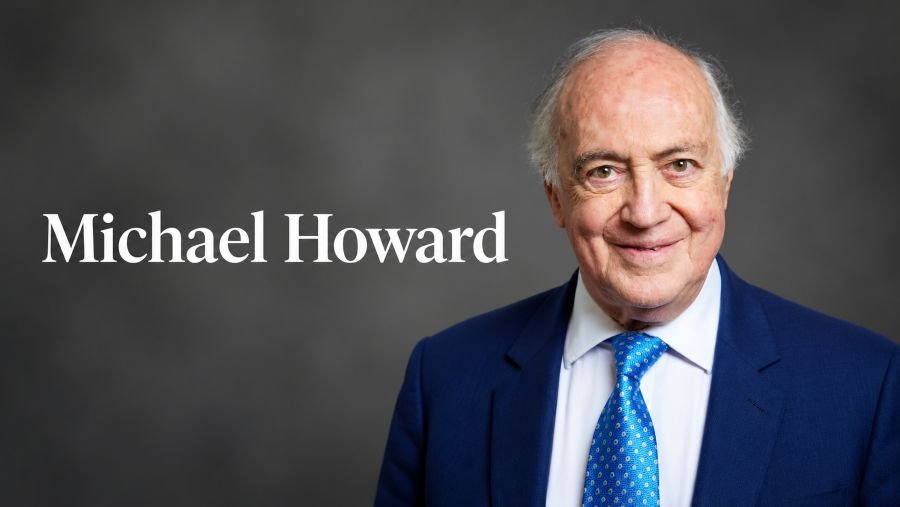
Michael Howard is a British politician and former barrister. He led the Conservative Party from 2003 to 2005. Before that, he served as Home Secretary under John Major.
His journey began in Wales. He later studied at Cambridge University, built a legal career and entered Parliament in 1983.
Politics brought him national attention. It also brought difficult questions. His decisions on crime, immigration and public policy attracted both support and criticism.
Today, he sits in the House of Lords as Baron Howard of Lympne. He also holds several registered business positions.
Quick Facts
| Detail | Information |
|---|---|
| Full name | Michael Howard |
| Birth name | Michael Hecht |
| Date of birth | 7 July 1941 |
| Age in 2026 | 85 years |
| Birthplace | Gorseinon, South Wales |
| Nationality | British |
| Education | Peterhouse, University of Cambridge |
| Profession | Politician and barrister |
| Political party | Conservative Party |
| Wife | Sandra Howard |
| Marriage year | 1975 |
| Children | Two |
| Former constituency | Folkestone and Hythe |
| Member of Parliament | 1983–2010 |
| Home Secretary | 1993–1997 |
| Conservative Party leader | 2003–2005 |
| Current title | Baron Howard of Lympne |
| Current parliamentary role | Member of the House of Lords |
Early Life and Family Background
Michael Howard was born on 7 July 1941. His birthplace was Gorseinon, near Swansea.
His birth surname was Hecht.
His family had Jewish roots. His father, Bernard Hecht, came from Romania and settled in Britain before the Second World War.
The family later adopted the surname Howard.
His father worked in the clothing business. Growing up in South Wales gave Howard a childhood far removed from the government offices he would later occupy.
His family history later entered political discussion, particularly during debates about immigration.
In February 2005, Howard publicly discussed uncertainty surrounding his grandfather’s immigration history. He explained that his father had supplied incorrect information about his parents when applying for British citizenship.
Howard said he could only speculate about the reason.
School Years and University Education
Howard attended Llanelli Grammar School in Wales.
He performed well academically. His education eventually took him to Peterhouse, Cambridge.
There, he studied law and became involved in student debating.
He served as president of the Cambridge Union in 1962.
Public speaking mattered to him. He was already learning to defend arguments, answer challenges and take part in formal debates.
Those skills later became part of his legal and political work.
Legal Career Before Politics
Howard entered the legal profession in 1964.
He was called to the Bar at the Inner Temple and began working as a barrister.
His legal career developed over nearly two decades. He worked in areas including employment and planning law.
In 1982, he became a Queen’s Counsel, now called King’s Counsel.
That appointment recognised his standing in the legal profession.
But politics remained an ambition.
Howard had already attempted to enter Parliament before his successful legal career reached that stage.
First Steps Into British Politics
Howard joined the Conservative political movement while young.
His first parliamentary campaigns were unsuccessful.
He contested Liverpool Edge Hill in the 1966 general election. He stood there again in 1970.
Both attempts ended in defeat.
Still, he continued.
The next major opportunity came in 1983. He stood as the Conservative candidate for Folkestone and Hythe in Kent.
This time, he won.
He entered the House of Commons on 9 June 1983.
Howard would represent that constituency until 2010.
Rising Through Margaret Thatcher’s Government
His promotion came fairly quickly.
In September 1985, Howard became Parliamentary Under-Secretary of State at the Department of Trade and Industry.
He later held several ministerial posts dealing with local government, planning and housing.
These appointments placed him inside Margaret Thatcher’s government during a period of major economic and public-sector policy changes.
His work also brought experience in handling government departments.
In January 1990, he moved into the Cabinet.
He became Secretary of State for Employment, serving first under Thatcher and then under John Major.
Employment law was a major political issue.
Howard supported Conservative policies that sought to limit trade union powers and change labour-market regulation.
He also opposed the introduction of a statutory national minimum wage.
Supporters of that position argued that wage regulation could threaten jobs. Labour politicians and trade union representatives disputed those claims.
Environment Secretary Under John Major
After the 1992 general election, Howard became Secretary of State for the Environment.
His appointment began on 11 April 1992.
The department handled issues such as housing, local government and planning.
It was a broad job.
He remained in that position until May 1993, when John Major appointed him Home Secretary.
That move would make him a much more familiar name across Britain.
Home Secretary and His Tough Approach to Crime
Howard became Home Secretary on 27 May 1993.
The Home Office was responsible for major areas of domestic policy, including policing, prisons and immigration.
Crime policy became closely associated with him.
He strongly supported imprisonment as part of the criminal justice system.
At the Conservative Party conference in 1993, he made a short declaration that became widely known:
“Prison works.”
The phrase represented his belief that prison sentences could protect the public and deter criminal activity.
His approach caused disagreement.
Supporters wanted tougher penalties and stronger public protection. Critics questioned whether expanding imprisonment would reduce crime effectively.
The debate continued throughout his years at the Home Office.
He held the post until Labour won the 1997 general election.
The Famous Jeremy Paxman Interview
One television interview stayed with him for years.
On 13 May 1997, Howard appeared on the BBC programme Newsnight.
Journalist Jeremy Paxman questioned him about a disagreement involving Derek Lewis, the former director-general of the Prison Service.
The dispute concerned the handling of a prison governor’s proposed suspension.
Paxman repeatedly pressed Howard about whether he had threatened to overrule Lewis.
The question was repeated 12 times.
Howard’s answers did not settle the matter during the interview.
The exchange became famous for the persistence of the questioning and the distinction between actually overruling someone and threatening to do so.
It remains a frequently cited example of confrontational British political interviewing.
Life After the 1997 Conservative Defeat
Labour returned to power in May 1997.
Tony Blair became Prime Minister. The Conservatives moved into opposition.
Howard sought the Conservative leadership that year but did not win.
William Hague became party leader.
Howard later served as Shadow Foreign Secretary.
He then became Shadow Chancellor of the Exchequer in January 2001.
That role involved responding to the government’s economic and financial policies.
His experience in government made him a familiar figure on the Conservative front bench.
By 2003, another leadership opportunity was approaching.
Becoming Conservative Party Leader
The Conservatives faced another leadership change in 2003.
Iain Duncan Smith lost a vote of confidence among Conservative MPs.
Howard then emerged as the candidate to replace him.
No other candidate stood against him.
On 6 November 2003, he became Leader of the Conservative Party.
He also became Leader of the Opposition.
His main political opponent was Labour Prime Minister Tony Blair.
Howard’s leadership focused on Conservative proposals covering taxation, public services, crime and immigration.
He sought to challenge Labour after its general election victories in 1997 and 2001.
The 2005 General Election Campaign
The 2005 general election was his biggest test as party leader.
Voting took place on 5 May 2005.
The Conservatives campaigned on issues including taxation, public service standards, policing and immigration.
Some messages attracted criticism, especially those concerning immigration.
Howard argued that the party was entitled to debate immigration policy. Critics challenged both the wording and political emphasis of the campaign.
The election results were mixed for the Conservatives.
They increased their parliamentary seats from 165 in 2001 to 198 in 2005.
Yet Labour remained in government.
Tony Blair secured another term as Prime Minister.
Howard accepted the defeat and announced plans to leave the party leadership.
David Cameron succeeded him on 6 December 2005.
His Marriage and Family Life
Howard married Sandra Paul in 1975.
She later became widely known as Sandra Howard.
Before her marriage, she had worked as a fashion model. She later developed a career as a novelist.
The couple have two children, Nicholas and Larissa.
His family occasionally appeared in media coverage during his political career.
Still, Howard generally remained publicly associated with his government posts rather than his private life.
Leaving the House of Commons
Howard remained an MP after stepping down as Conservative leader.
He continued representing Folkestone and Hythe.
He chose not to contest the 2010 general election.
His Commons career had lasted nearly 27 years.
The departure did not end his parliamentary involvement.
In July 2010, he entered the House of Lords as a life peer.
His title became Baron Howard of Lympne.
In 2011, he was appointed a Companion of Honour in recognition of his public service.
Business Roles and Charity Work
Howard worked outside front-line party politics after leaving the Commons.
His activities included charity involvement and appointments to company boards.
He has been associated with Hospice UK.
He also joined the Independent Commission on Freedom of Information in 2015.
His parliamentary Register of Interests lists several business roles, including non-executive chairman of South West Strategic Developments Limited and Earth Source Hydrogen Limited.
He is also registered as deputy chairman of Direct Special Metals Group Limited and non-executive chairman of Direct Special Metals (Partners) Limited.
These are declared business positions, not estimates of personal wealth.
Current Life and Activities in 2026
Michael Howard remains a Conservative member of the House of Lords as of October 2026.
His membership began on 13 July 2010.
The official parliamentary register continues to record his financial and business interests.
It also records overseas parliamentary activity.
For example, Howard visited Ukraine between 20 and 25 February 2026 as part of a parliamentary delegation meeting officials and parliamentarians.
He remains involved in parliamentary life long after leaving the Conservative leadership.
Political Views and Public Debates
Howard’s political career was closely connected with Conservative policies on law, public spending and government reform.
His Home Office years drew particular attention.
Supporters valued his support for firm criminal sentencing.
Critics raised concerns about prison policy and the treatment of people within the justice system.
His 2005 election campaign also attracted debate over immigration.
These disagreements form part of the public record.
Looking at his career means considering both his policy choices and the objections raised by political opponents.
Net Worth and Personal Wealth
Howard has held senior political offices and several business appointments.
His parliamentary financial register records certain outside roles and interests.
However, those disclosures do not establish his total personal wealth.
There is no reliable public figure that confirms his complete net worth in 2026.
Exact estimates published without supporting financial evidence should be treated with care.
Final Thought
Michael Howard’s life covers an important period of modern British politics.
He began in South Wales. He studied law at Cambridge, built a successful legal career and spent decades in Parliament.
His government service included three Cabinet positions.
He later became Conservative Party leader and challenged Tony Blair in the 2005 general election.
His political decisions brought praise and criticism.
Even after leaving the House of Commons, Howard continued his public work through the House of Lords.
His career remains part of the history of the Conservative Party and British government.
Frequently Asked Questions
1. Who is Michael Howard?
Michael Howard is a British Conservative politician and former barrister. He served as Home Secretary and Conservative Party leader.
2. How old is Michael Howard?
He is 85 years old in October 2026. He was born on 7 July 1941.
3. Where was he born?
He was born in Gorseinon, near Swansea, South Wales.
4. Who is his wife?
His wife is Sandra Howard, a former fashion model and novelist. They married in 1975.
5. Does he have children?
Yes. He has two children with Sandra Howard, named Nicholas and Larissa.
6. Was he ever Prime Minister?
No. He was Leader of the Opposition from 2003 to 2005 but never served as Prime Minister.
7. When did he become Home Secretary?
He became Home Secretary on 27 May 1993 and remained in office until May 1997.
8. Why did he leave Conservative leadership?
He announced his departure following the Conservatives’ defeat in the 2005 general election. David Cameron succeeded him.
9. What is his current parliamentary position?
He remains a Conservative member of the House of Lords, holding the title Baron Howard of Lympne.
10. What is his net worth?
His exact net worth has not been reliably verified through public financial records.