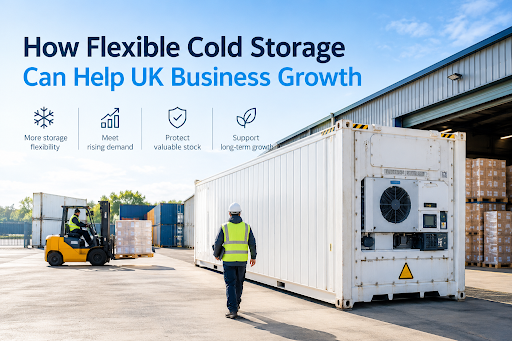
Understanding the Growing Need for Flexible Cold Storage
UK businesses that handle chilled and frozen goods must keep their products at suitable temperatures throughout storage and distribution. However, their storage needs can change quickly. A food producer may experience a busy harvest season, a retailer may prepare for Christmas trading, or a catering company may receive a large event booking with little notice.
In these situations, flexible cold storage offers a practical way to manage additional stock without making major changes to existing facilities. Instead of building a new cold room or expanding a warehouse, businesses can explore temporary cold storage that meets their immediate operational requirements.
Changing Demands Across UK Industries
The UK economy includes many businesses that depend on reliable refrigerated storage. Food manufacturers, wholesalers, supermarkets, restaurants, florists and pharmaceutical distributors may all need temperature-controlled environments for certain products.
However, their requirements aren’t always consistent throughout the year.
For example, a farm supplying fresh produce may need extra chilled capacity during harvesting. A bakery supplying supermarkets might experience higher demand during festive periods. Similarly, a seafood distributor may need additional storage when deliveries increase or customer orders become larger.
These businesses need enough space to protect their stock without paying for unused capacity during quieter periods.
Flexible cold storage helps address this challenge. Businesses can arrange additional capacity when necessary and review their requirements as trading conditions change. This approach can make planning easier, particularly for growing companies that don’t yet know how much permanent storage they’ll need in the future.
Why Permanent Storage Isn’t Always Practical
Building permanent cold storage can involve construction work, insulation, refrigeration equipment, electrical installations and ongoing maintenance. Depending on the site, businesses may also need planning checks, building approvals or changes to existing facilities.
These investments can make sense for organisations with stable, long-term storage requirements. However, they may be less suitable for businesses facing short-term demand increases or uncertain growth.
A flexible alternative allows companies to add storage without immediately committing to a large construction project.
For instance, a regional food wholesaler could use temporary refrigerated space while testing a new product range. If sales remain strong, the company could later assess whether permanent expansion would be worthwhile.
This approach gives decision-makers more time to understand actual demand before making substantial investments.
It also supports better financial planning. Rather than committing significant capital to infrastructure straight away, businesses can assess storage costs against sales forecasts, operating expenses and expected growth.
Managing Seasonal Demand with Temporary Cold Storage
Seasonal demand can place considerable pressure on businesses that store perishable goods. During busy periods, stock levels often rise faster than existing facilities can accommodate. Without sufficient capacity, companies may struggle to receive deliveries, organise inventory or meet customer deadlines.
Temporary cold storage provides additional space when businesses need it most. It can support planned seasonal activity as well as unexpected increases in demand.
Food Producers and Agricultural Businesses
Agricultural businesses often experience changes in production throughout the year. Fruit, vegetables and other perishable products may arrive in large quantities during harvesting periods. Producers must then store, sort and distribute their goods efficiently.
When existing facilities reach capacity, additional refrigerated space can help businesses manage incoming stock while maintaining suitable storage conditions.
For example, a vegetable producer supplying several supermarkets may experience a substantial increase in harvested produce over a short period. Extra chilled capacity can provide more room to organise stock and coordinate deliveries.
Food processors can also benefit from temporary storage when production schedules change. Additional space may help separate incoming ingredients from finished products or support stock waiting for collection.
Nevertheless, refrigerated storage alone doesn’t guarantee product quality. Businesses must also consider the product’s condition before storage, the required temperature, humidity where relevant, packaging and expected storage duration.
Retailers, Restaurants and Catering Companies
Retailers often need extra storage before busy trading periods such as Christmas, Easter and summer holidays. Restaurants may experience increased demand during local festivals, wedding seasons and school holidays.
Catering companies face a similar challenge when they prepare for large events. They may need additional space for chilled ingredients, prepared food or other temperature-sensitive supplies.
A refrigerated container for hire can help provide this extra capacity near a suitable preparation, distribution or storage area.
Consider a catering business preparing meals for several large events in one week. Its existing refrigeration equipment may be sufficient for normal operations but unable to accommodate the additional ingredients and prepared items. Temporary storage can create extra capacity without requiring the business to move to a larger kitchen.
Likewise, a food retailer can use additional storage to support increased deliveries during peak trading periods.
Businesses should plan these arrangements early. Waiting until existing refrigeration is completely full can create avoidable pressure on staff, deliveries and stock management.
Planning for Peak Trading Periods
A simple seasonal storage plan can help businesses prepare before demand rises.
| Planning stage | Recommended action |
| Forecast demand | Review previous sales, seasonal trends and confirmed orders. |
| Estimate stock | Calculate the additional chilled or frozen capacity required. |
| Arrange storage | Organise suitable temporary capacity before peak trading begins. |
| Prepare the site | Check access, power, positioning and security. |
| Monitor usage | Review stock levels and temperature records throughout the period. |
| Scale down | Reduce hired capacity when demand returns to normal, subject to the agreement. |
The key is to plan around actual business requirements rather than automatically choosing the largest available storage option.
By matching capacity to demand, companies can reduce pressure on their main facilities while maintaining a more organised supply chain.
Supporting Business Continuity During Operational Changes
Businesses don’t always need additional refrigeration because sales have increased. Sometimes, they need temporary storage because their normal facilities aren’t available or can’t operate at full capacity.
Warehouse renovations, equipment repairs, relocations and unexpected delivery delays can all disrupt storage operations. In these situations, temporary cold storage can help businesses maintain continuity while they resolve the underlying issue.
Warehouse Renovations and Relocations
Renovating a warehouse can improve efficiency, increase capacity and create a better working environment. However, construction work may affect access to existing cold rooms or temporarily reduce the space available for stock.
Moving to a new facility creates similar challenges. Equipment may need to be installed, tested and commissioned before the new premises can accommodate normal operations.
During this transition, a refrigerated container can provide a separate storage area for suitable products.
For example, a food wholesaler upgrading its refrigeration equipment may need somewhere to store chilled products while contractors complete the work. A temporary unit positioned in an appropriate location could help bridge the gap.
However, businesses must coordinate the arrangement carefully. They should confirm that the temporary equipment can maintain the required conditions and that moving products won’t compromise food safety or disrupt delivery schedules.
Relocation planning should also cover transport, loading access, stock identification and the timing of transfers between facilities.
A well-planned arrangement can reduce disruption and give staff a clearer process to follow throughout the change.
Handling Unexpected Capacity Shortages
Unexpected events can place pressure on even well-managed operations.
A refrigeration unit might fail, a supplier could deliver more stock than expected, or a sudden increase in customer orders could fill available space. Businesses may also experience temporary delays when planned deliveries arrive earlier than anticipated.
When this happens, extra cold storage can provide a practical contingency, provided it can be arranged quickly enough and meets the relevant requirements.
Companies should identify potential storage options before an emergency occurs. Knowing whom to contact, what equipment is required and where a unit could be positioned can save valuable time.
An effective contingency plan should include:
- A list of products requiring temperature-controlled storage.
- The minimum additional capacity needed to manage an interruption.
- Suitable alternative storage locations.
- Procedures for transferring and checking stock.
- Emergency contacts for refrigeration support and equipment hire.
- A plan for dealing with temperature failures or power interruptions.
This preparation is particularly useful for businesses that handle high-value or highly perishable products.
Although temporary storage can’t prevent every operational problem, it can provide another option when existing facilities are under pressure.
Maintaining Customer Service During Disruption
Storage problems can quickly affect customers. A business that can’t receive or preserve incoming stock may struggle to fulfil orders on time.
Additional refrigerated capacity can help create a buffer between receiving goods and dispatching them. This may give warehouse teams more time to organise deliveries and manage changing schedules.
For instance, a restaurant supplier dealing with an unexpected refrigeration repair could use suitable temporary capacity to keep eligible products under controlled conditions while the main facility is restored.
The business must still follow appropriate food safety procedures and verify that the alternative arrangement is suitable.
Ultimately, continuity planning isn’t simply about having more space. It’s about maintaining safe storage, reliable stock movement and clear communication with customers when normal operations change.
Scaling Storage Capacity as Your Business Grows
Growth is rarely perfectly predictable. A company may win a large contract, expand into a new region or introduce products that need different storage conditions. However, it may not yet have enough information to justify a permanent expansion.
Flexible storage gives businesses more room to respond while they evaluate their next steps.
Matching Storage to Changing Demand
A growing business needs storage capacity that reflects its real operating requirements.
Too little capacity can cause congestion, delayed deliveries and poor stock organisation. Too much capacity can increase costs without delivering enough value.
Temporary storage allows companies to review their requirements as sales, production and stock levels change.
For example, a regional food distributor might start with a small customer base and gradually secure contracts with additional retailers. Rather than immediately building a larger cold store, the company could assess whether extra refrigerated capacity would support the next stage of growth.
If demand continues to increase, the business can compare longer-term options based on actual usage.
This approach also helps companies manage short-term changes. A seasonal increase might justify temporary capacity, whereas sustained growth could make a permanent facility more economical over time.
The right decision depends on factors such as hire costs, installation requirements, expected demand, transport needs and the length of time extra capacity will be required.
Controlling Costs and Avoiding Unnecessary Investment
Permanent cold storage requires more than the initial construction or installation expense. Businesses may also need to account for maintenance, repairs, energy consumption, inspections and future equipment replacement.
Flexible cold storage can reduce the need to commit to permanent infrastructure before the business understands its longer-term requirements.
However, hiring isn’t automatically the cheapest option. Businesses should compare the total cost of hiring with the cost of owning and operating suitable equipment.
Supporting New Products and Business Opportunities
Flexible capacity can also help companies test new opportunities.
A food producer considering a new product line may need extra space while assessing customer demand. A distributor entering a new region might require additional storage before deciding whether to establish a permanent local facility.
Temporary cold storage can provide a practical way to support these changes.
Businesses should still evaluate transport distances, customer delivery times, temperature requirements and stock turnover. Extra capacity only creates value when it fits into a workable supply chain.
By reviewing performance regularly, companies can decide whether to extend their storage arrangements, reduce capacity or invest in a more permanent solution.
This makes flexible storage a useful part of business planning rather than simply an emergency measure.
Choosing the Right Refrigerated Storage Solutions
The benefits of temporary cold storage depend on selecting equipment that suits the products, location and operating conditions.
Before committing to a unit, businesses should assess the space available, access arrangements, electrical supply, security requirements and expected storage volume.
A careful assessment can help prevent delays and ensure the selected arrangement supports daily operations.
Space, Access and Site Preparation
A refrigerated container needs an appropriate location with sufficient space for installation and use. Businesses should check the proposed position before arranging delivery.
The site must accommodate the container itself, any required clearance around equipment and enough room for staff or vehicles to access it safely.
Delivery access is especially important. A suitable unit may be difficult to install if the entrance is narrow, the turning area is restricted or overhead obstacles prevent safe positioning.
Ground conditions also matter. The surface should be suitable for the container’s weight and comply with the supplier’s installation requirements.
Businesses should consider how staff will move stock between the container and their main facility. A unit that is difficult to access could increase handling time and create unnecessary disruption.
Before delivery, check:
- Whether the site has enough space for the container and safe access.
- Whether the ground is level and suitable for the equipment.
- Whether delivery vehicles can reach the proposed location.
- Whether staff can move stock safely between storage areas.
- Whether any site permissions or operational restrictions apply.
These checks can make installation and day-to-day use more straightforward.
Power Supply, Security and Maintenance
Refrigerated containers generally rely on a suitable electrical supply to operate their cooling systems. Businesses should confirm the unit’s power requirements with the supplier and arrange an appropriate connection before installation.
They shouldn’t assume that an existing socket or power connection will be sufficient. Electrical work should be assessed and carried out by a suitably qualified professional where required.
Companies should also consider the effect of a power interruption. Depending on the products stored and the operating conditions, a loss of cooling could put stock at risk.
A contingency plan might include temperature alarms, regular checks and an agreed response process for equipment faults. Backup power may be appropriate for some operations, depending on the risk and cost.
Security deserves equal attention. Businesses should assess the risk of unauthorised access, theft and tampering. Suitable measures may include secure locks, controlled access, lighting and monitoring systems.
Finally, establish who is responsible for maintenance and repairs. The hire agreement should explain how faults are reported, what support is available and how urgent problems will be handled.
Selecting a Suitable Container Size
Choosing the right size involves more than calculating the volume of stock expected to arrive.
Businesses should consider packaging, pallet dimensions, handling equipment, access routes and the space needed for suitable airflow. They should also account for future deliveries and the expected time products will remain in storage.
A unit that is too small can quickly become overcrowded. Conversely, a much larger unit may increase hire and running costs without offering enough benefit.
A practical assessment should include current stock levels, peak inventory forecasts and expected stock turnover.
It is also important to consider whether the business needs chilled or frozen storage. Not every refrigerated unit is designed for every temperature requirement, so the equipment specification must match the intended use.
The supplier can help identify suitable options once the business provides clear details about its products, required temperatures and site conditions.
How Refrigerated Container Hire Supports Business Growth
For UK businesses that need additional chilled or frozen capacity, refrigerated container hire can provide a practical alternative to expanding an existing building. It allows companies to explore additional storage without immediately committing to permanent infrastructure.
A refrigerated container can be particularly useful when businesses face seasonal peaks, temporary shortages of space or operational changes. Depending on the equipment specification and site arrangements, it may provide additional storage close to a production facility, warehouse or distribution area.
Businesses exploring this option can review Conrail refrigerated container hire to understand the available storage solutions and assess which arrangement may suit their operational needs.
Questions to Ask Before Hiring
Before choosing a provider, businesses should establish exactly what they need from the storage arrangement.
The following questions can help guide the decision:
- What products will be stored? Identify the goods, their temperature requirements and any special handling needs.
- How much capacity is required? Estimate normal stock levels and the additional space needed during peak periods.
- How long will the unit be needed? Confirm the minimum hire period, extension options and collection arrangements.
- Can the site accommodate the unit? Check ground conditions, access, electrical supply and positioning requirements.
- What support is available? Clarify maintenance responsibilities, emergency contact arrangements and response times.
- What will the full cost be? Include hire charges, delivery, collection, electricity and any additional site costs.
- How will stock be monitored? Confirm the arrangements for temperature checks, records and responding to equipment problems.
Answering these questions makes it easier to compare suppliers and avoid unexpected costs.
Making Temporary Storage Part of a Long-Term Plan
Flexible storage works best when it forms part of a wider operational strategy.
Businesses should review storage requirements regularly, particularly when sales volumes, production schedules or customer expectations change. This helps them decide whether to maintain their current arrangement, adjust capacity or invest in permanent facilities.
For example, a company that initially hires refrigerated storage for a three-month peak season might discover that demand remains high throughout the year. At that point, it can compare the cost of continuing to hire with the potential benefits of investing in a permanent cold store.
Alternatively, a business experiencing only occasional demand increases may prefer to retain a flexible approach.
The important point is that storage decisions should follow business needs rather than assumptions about future growth.
Conclusion: Build a Flexible Cold Storage Strategy
Flexible cold storage can help UK businesses manage changing demand, protect perishable stock and maintain operations during periods of uncertainty. Whether a company is preparing for a seasonal rush, renovating a warehouse or expanding into new markets, additional refrigerated capacity can provide valuable operational flexibility.
The most effective approach starts with a clear understanding of current and future requirements. Businesses should assess their stock volumes, product temperatures, available site space, power supply, security and expected storage duration before selecting a solution.
They should also compare the full cost of hiring with the long-term cost of permanent infrastructure. This helps ensure that the chosen arrangement offers practical value rather than simply adding capacity.
Refrigerated containers for hire can be a useful option when additional storage is needed without an immediate commitment to permanent expansion. By planning ahead and choosing capacity that matches actual demand, businesses can support reliable operations today while keeping their options open for future growth.