Joan Child: The Trailblazing Woman Who Changed Australian Parliament
From raising five sons as a young widow to becoming the first woman Speaker of Australia's House of Representatives, Joan Child built a political career around fairness, hard work and public service.

Introduction
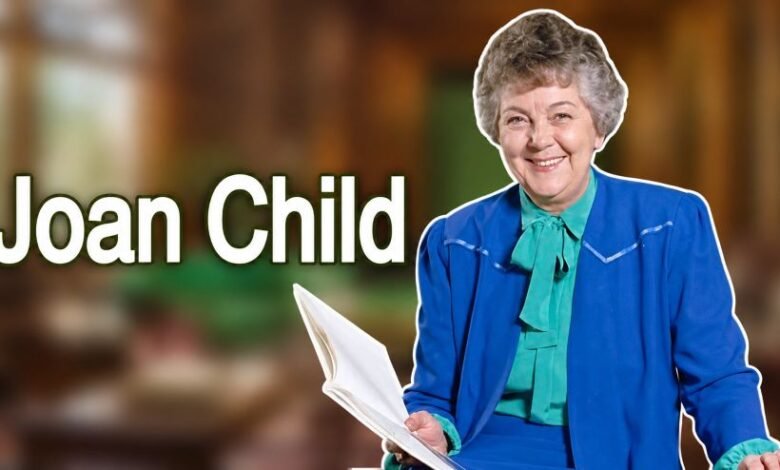
Joan Child was a pioneering Australian Labor politician who made history as the first woman Speaker of the House of Representatives. Her journey from raising five sons as a widow to serving in one of Australia’s highest parliamentary roles remains a remarkable story of determination and public service.
Quick Facts About Joan Child
- Full name: Gloria Joan Liles Child
- Known as: Joan Child
- Born: 3 August 1921
- Birthplace: Kew, Melbourne, Victoria, Australia
- Died: 23 February 2013
- Age at death: 91
- Political party: Australian Labor Party
- Federal electorate: Henty, Victoria
- First elected to the House of Representatives: 1974
- Returned to Parliament: 1980
- Deputy Speaker/Chairman of Committees: 1984–1986
- Speaker of the House of Representatives: 1986–1989
- First woman Speaker: Yes
- Order of Australia: AO, 1990
- Centenary Medal: 2001
- Children: Five sons
Joan Child’s story did not begin inside Parliament.
It began much earlier, with work, family and financial pressure. After becoming a widow with five sons, she had to work in a range of jobs to support her family. Years later, that experience would help shape the way she approached politics.
Then came a historic election.
In 1974, Child became the first woman from the Australian Labor Party elected to the Australian House of Representatives. Twelve years later, she reached another first. On 11 February 1986, she became the first woman elected Speaker of the House.
Her career was never simply about holding a title. Child wanted Parliament to work properly, and she had strong ideas about fairness, parliamentary conduct and the treatment of people who had little power.
Who Was Joan Child?
Joan Child was an Australian Labor politician who represented the Victorian electorate of Henty in the House of Representatives.
Her birth name was Gloria Joan Liles Olle. Parliamentary records and biographical sources identify her as Gloria Joan Liles Child. She was born in Victoria in 1921 and spent part of her childhood in Yackandandah and Beechworth before her family moved to Melbourne.
She later became one of Australia’s best-known women in federal parliamentary history.
The reason is simple.
She broke barriers that had stood for decades.
Her election in 1974 made her the first female Labor member elected to the federal House of Representatives. Her election as Speaker in 1986 then placed her at the head of the chamber.
Joan Child’s Early Life
Child was born on 3 August 1921.
Her parents were Warren Arthur Liles Olle, a postmaster, and Hilda Cary Olle, née Seedsman. She grew up with her sister Sarah and brother Warren.
The family lived in several Victorian locations. Child spent time in Yackandandah and Beechworth before moving to East St Kilda in Melbourne in 1932.
Her early surroundings also exposed her to different political views. Her siblings had left-leaning political interests, while her father held conservative views.
That contrast gave Joan an early taste of political disagreement.
She later attended Camberwell Girls’ Grammar School after winning a scholarship. She left school at 15 and started work as a receptionist.
Marriage and Family Life
On 18 February 1942, Joan married Harold Lindsey Child, commonly known as Hal.
He was serving in the Australian Army at the time and later served with the Royal Australian Air Force.
After the war, the family lived in Melbourne. Hal worked as a salesman, and four sons were born there. The family later moved near Launceston in Tasmania, where Hal worked as state manager for Nylex. Their fifth son was born in Tasmania.
Family remained a major part of Child’s life.
But tragedy changed everything.
Joan Child Became a Widow
In 1963, Hal Child died of a heart attack.
Joan was left with five sons. Her eldest was only 17.
She also had to deal with serious financial pressure. The pension available to her was not enough to support the family, so she began taking whatever work she could find.
She cleaned houses.
She cooked in a nursing home.
She worked in a knitwear factory.
These were not short-term political talking points. This was her daily life.
Those years helped shape her concern about poverty and social welfare. The experience of raising five children alone also strengthened her determination and independence.
Joan Child and the Labor Party
Child had already become involved in Labor campaigning while living in Tasmania, though she had not initially taken out party membership.
After returning to Melbourne, she joined the Australian Labor Party in 1964.
She also became active in the Union of Australian Women, including campaigns connected with equal pay.
Her path inside the Labor movement was not always easy. She encountered resistance because she was a woman, especially when she tried to take part in policy discussions.
She did not back away.
Instead, she kept pushing to be heard.
The 1972 Election Campaign
Child first stood as a federal political candidate in 1972, contesting the Victorian seat of Henty.
It was a difficult seat for Labor.
Child nevertheless ran a strong campaign and produced a substantial swing toward Labor. She lost by only 308 votes.
That result showed that Henty was no longer beyond Labor’s reach.
Child kept working.
She later served as an adviser to Trade Minister Jim Cairns, with a focus on manufacturing. This gave her further experience outside the immediate world of electoral campaigning.
Joan Child Wins Henty in 1974
The breakthrough came at the 1974 federal election.
Child won Henty.
At the time, this was a major moment for Australian women in politics. She became the first woman elected to the House of Representatives for the Australian Labor Party. She was also the first Labor candidate to win Henty.
Her first period in Parliament did not last long.
The 1975 election produced a major defeat for Labor, and Child lost Henty.
She was out of federal Parliament.
But she was not finished.
Life Outside Parliament
After her 1975 defeat, Child continued working.
From 1976 to 1978, she was Executive Officer of the Victorian State Colleges’ Staff Association.
She also worked as a private secretary to Labor politician Clyde Holding and later to Victorian MP Gerard Vaughan.
These roles kept her connected to politics while she prepared for another attempt at federal office.
Joan Child Returns to Parliament
Child contested Henty again in 1980.
This time, she won.
She returned to the House of Representatives and remained the member for Henty until her parliamentary career ended in 1990.
Her second parliamentary career would prove far more lasting than her first.
She became increasingly involved in parliamentary procedure and administration.
In 1984, she became Chairman of Committees and Deputy Speaker. She served in that role until becoming Speaker in 1986.
Joan Child Becomes Australia’s First Female Speaker
This was the moment that made Child a national political figure.
On 11 February 1986, Joan Child became the first woman elected Speaker of the Australian House of Representatives.
It was a major constitutional and parliamentary milestone.
She was not simply the first woman to occupy the Speaker’s chair. She was the first woman to become a presiding officer of either house of the Australian federal Parliament.
Her election followed the resignation of Speaker Harry Jenkins because of ill health.
Child already had experience in the chair as Deputy Speaker, which helped prepare her for the demanding job.
She Refused the Traditional Wig
One of the most remembered details about Child’s Speakership concerns the traditional Speaker’s clothing.
There was a suggestion that she wear the traditional wig and ceremonial robes.
Child refused.
The Parliamentary Education Office records her memorable response: “I don’t put my dignity on with them.”
Her decision was more than a fashion choice.
Child believed the authority of the office should come from the person doing the job rather than from ceremonial clothing.
She preferred to be known as Speaker Child.
Her Style in the Speaker’s Chair
Child was physically small and generally soft-spoken.
That did not mean she was weak.
Quite the opposite.
She could become very firm when she felt she was being ignored. The Australian Dictionary of Biography records that she developed a reputation for being assertive when parliamentary members failed to respect her rulings.
Question Time could be especially difficult.
Australian federal politics in the 1980s was often loud and combative. Child had to control a chamber containing politicians such as Prime Minister Bob Hawke and Treasurer Paul Keating.
She was sometimes accused of bias.
Her response was practical: when a team is losing, the umpire often gets the blame.
That attitude tells you a lot about her.
She knew the Speaker could make nobody completely happy.
Joan Child and Parliamentary Reform
Child also cared about how Parliament functioned outside the chamber.
She introduced an orientation day for new Members because she remembered how difficult it could be for a new parliamentarian to understand the institution.
She wanted Members from opposing parties to interact more as people.
She also took an interest in parliamentary staff and argued that ability should be given proper weight in promotion decisions.
These were practical changes.
No grand speeches were needed.
Just better working habits.
Joan Child and Parliamentary Privileges
Child was involved in the development of the Parliamentary Privileges Bill.
She worked with the President of the Senate on the legislation, which was passed in May 1987.
The bill dealt with important questions surrounding parliamentary privileges, powers and immunities.
Her role here is easy to overlook because it lacks the drama of becoming the first female Speaker.
Still, parliamentary administration was a major part of her work.
Re-Elected as Speaker
After Labor won the 1987 federal election, Child was elected Speaker again.
She returned to the office on 14 September 1987 and remained Speaker until 28 August 1989.
Her total period as Speaker was therefore divided into two terms:
- 11 February 1986 – 5 June 1987
- 14 September 1987 – 28 August 1989
The break came with the 1987 election and the formal re-election of the Speaker.
Joan Child and the New Parliament House
Child has another unusual place in Australian parliamentary history.
She was the last Speaker to serve in the old Parliament House and the first Speaker to preside in the new Parliament House when the federal Parliament moved in 1988.
That gave her a unique perspective.
She preferred the old building.
For Child, its smaller and more confined spaces encouraged Members to interact more closely. The new building was bigger, but she felt that some of the old sense of proximity had been lost.
The move became one of the defining events of her time as Speaker.
The Queen and the Opening of Parliament House
Child also had an important ceremonial role when the new Parliament House opened in 1988.
As Speaker, she represented the House during the formal proceedings involving Queen Elizabeth II.
Her position mattered because the Speaker is the representative and presiding officer of the House.
It was another unusual chapter in her career.
A woman who had once been working multiple jobs to raise five sons was now presiding over Australia’s House of Representatives as the country opened its new federal Parliament House.
Joan Child’s Political Beliefs
Child’s political views were closely connected with her own experiences.
She knew what it meant to live with limited money.
She knew what it meant to raise children alone.
She had worked in factories and as a cleaner.
She had also experienced the barriers faced by women inside political organisations.
Her parliamentary interests included social welfare, housing, education, healthcare, women’s issues and poverty.
She did not approach these subjects as distant policy questions.
She had lived through difficult circumstances herself.
Why Joan Child Was Different
Child did not fit the traditional image of a powerful political figure.
She was not physically imposing.
She was often quiet.
She had left school at 15.
She had spent years working ordinary jobs.
Then she entered federal politics and eventually became Speaker.
That contrast is part of what makes her story so memorable.
Her authority came gradually.
She earned it.
Awards and Honours
Child’s public service was formally recognised after her parliamentary career.
In 1990, she was appointed an Officer of the Order of Australia (AO).
She also received the Centenary Medal in 2001.
She was also inducted into the Victorian Honour Roll of Women in 2001. The Victorian Government recognises her for her work in politics, equal pay campaigning and her historic parliamentary roles.
Retirement From Parliament
Child retired from Parliament in 1990.
The seat of Henty was abolished in an electoral redistribution, and this brought her federal political career to an end.
She had served in the House during two separate periods:
1974–1975
and
1980–1990.
Her parliamentary career therefore covered some of the major political changes of the 1970s and 1980s.
Life After Politics
Retirement did not mean complete withdrawal from public life.
Child continued to have links with community and political organisations.
She was also a patron of the Epileptic Society and maintained interests outside politics, including gardening, detective novels, Elvis Presley and knitting.
Her life after Parliament was quieter.
But her reputation continued to grow.
Joan Child’s Death
Joan Child died in Melbourne on 23 February 2013.
She was 91 years old.
She was survived by her five sons.
At the time of her death, Australia had already seen another woman serve as Speaker, Anna Burke.
Burke had taken the position in 2012 and remembered Child as a major example to follow. Child had called Burke after her election as Speaker and told her to “hang tough.”
That small detail says plenty.
Child knew the job could be hard.
She also knew women had to stay in the fight.
Joan Child’s State Funeral
A state funeral for Child was held on 5 March 2013 at the Monash University Religious Centre.
Former Prime Minister Julia Gillard was among those who paid tribute to her.
Gillard described herself as one of the women who had walked through the door Child had opened.
The tribute was fitting.
Child had entered federal politics when women were still rare in the House.
She left behind a Parliament in which women had begun taking senior positions.
Joan Child’s Portrait
Child’s portrait was painted by Australian artist Charles William Bush in 1988.
The portrait forms part of the Historic Memorials Collection at Australian Parliament House.
It records her as Speaker during the year Parliament moved into the new building.
The portrait remains part of Australia’s parliamentary history.
Joan Child’s Legacy
Joan Child’s career is remembered for several major firsts.
She was the first woman elected to the House of Representatives for the Australian Labor Party.
She was the first woman Speaker of the House.
She was the first woman to serve as a federal parliamentary presiding officer.
She was also Speaker during the move from Old Parliament House to the new Parliament House in Canberra.
But her legacy is not limited to those milestones.
Her life also tells another story.
A woman can enter public life after years of ordinary work. She can raise a family, face financial pressure, lose elections and still return. Then, years later, she can occupy one of the most important chairs in the national Parliament.
That was Joan Child.
She kept going.
Joan Child Timeline
1921: Gloria Joan Liles Olle is born in Victoria.
1942: She marries Harold “Hal” Child.
1963: Her husband dies of a heart attack, leaving her to raise five sons.
1964: She joins the Australian Labor Party.
1972: She first contests Henty federally.
1974: She wins Henty and becomes the first female Labor member of the House of Representatives.
1975: She loses Henty after Labor’s federal election defeat.
1976–1978: She serves as Executive Officer of the Victorian State Colleges’ Staff Association.
1980: She wins Henty again and returns to federal Parliament.
1984: She becomes Chairman of Committees and Deputy Speaker.
1986: She becomes Australia’s first female Speaker of the House of Representatives.
1987: She is re-elected Speaker after the federal election.
1988: She serves as Speaker when Parliament moves into the new Parliament House.
1989: She leaves the Speakership on 28 August.
1990: She retires from Parliament and is appointed an Officer of the Order of Australia.
2001: She receives the Centenary Medal and is inducted into the Victorian Honour Roll of Women.
2013: She dies in Melbourne aged 91.
Final Thoughts
Joan Child’s story is unusually grounded.
There was no easy route into politics.
She left school young, worked for a living, raised five sons after becoming a widow and entered public life after experiencing financial pressure herself. She lost an election, went back to work, returned to the contest and won.
Then she reached the Speaker’s chair.
Her first election as Speaker in 1986 changed Australian parliamentary history. Yet perhaps the most interesting part of her story is what happened before that famous moment.
Child understood ordinary problems.
She had faced them herself.
That experience stayed with her in Parliament, where she pushed for fair treatment, better parliamentary practice and a more respectful political culture.
Her career also opened a door.
Other women followed.
Anna Burke later became the second woman Speaker, while generations of Australian women entered federal politics in greater numbers. The Parliamentary Education Office specifically recognises Child’s place in that progression.
Joan Child died in 2013.
Her firsts remain.
FAQ About Joan Child
Who was Joan Child?
Joan Child was an Australian Labor politician who represented Henty in Victoria. She became the first woman elected to the Australian House of Representatives for the Australian Labor Party and later became the first woman Speaker of the House.
When was Joan Child born?
Joan Child was born on 3 August 1921 in Kew, Melbourne, Victoria, Australia.
What was Joan Child’s real name?
Her birth name was Gloria Joan Liles Olle. She later became known as Joan Child after marrying Harold Child.
When did Joan Child become Speaker?
She became Speaker of the Australian House of Representatives on 11 February 1986. She was the first woman to hold the position.
How long was Joan Child Speaker?
Her Speakership ran from 11 February 1986 to 5 June 1987, and again from 14 September 1987 to 28 August 1989.
Was Joan Child the first female Speaker of Australia?
Yes. Joan Child was the first woman elected Speaker of the Australian House of Representatives.
How many children did Joan Child have?
Joan Child had five sons. After her husband’s death, she raised them herself while working to support the family.
When did Joan Child die?
Joan Child died on 23 February 2013 in Melbourne at the age of 91.
What awards did Joan Child receive?
She was appointed an Officer of the Order of Australia (AO) in 1990 and received the Centenary Medal in 2001.
What electorate did Joan Child represent?
She represented Henty in Victoria. She served there from 1974 to 1975 and again from 1980 until 1990.
Why is Joan Child important in Australian history?
She broke two major parliamentary barriers: she became the first female Labor member elected to the House of Representatives and later the first woman Speaker of the House. She also presided during the move into Australia’s new Parliament House in 1988.