Teresa Niccoli Biography: Inspiring Dementia Scientist
From cell biology and fruit-fly experiments to important dementia research at University College London

Introduction
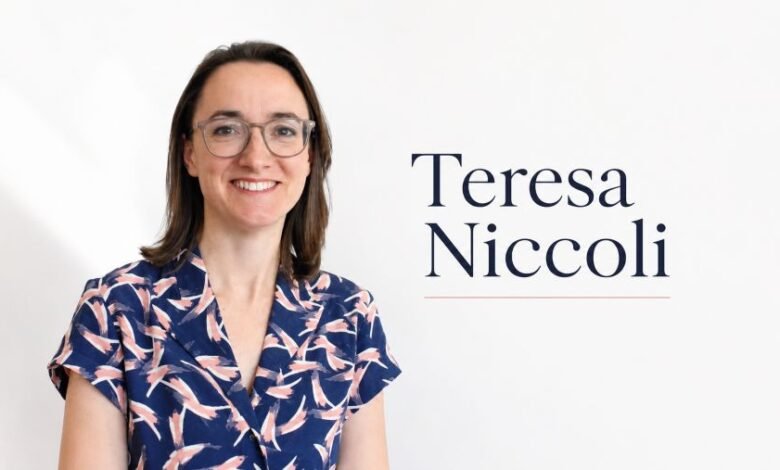
Teresa Niccoli is an Italian molecular biologist, cell biologist, neuroscientist and university researcher. She is best known for studying dementia through fruit-fly models. Her work explores why certain brain cells become damaged while others remain strong when exposed to disease-related changes.
She is an Associate Professor at the Institute of Healthy Ageing at University College London. Her research covers Alzheimer’s disease, frontotemporal dementia, amyotrophic lateral sclerosis, ageing, cellular metabolism and neuronal resilience. Like other experts working in neuroscience research, she studies complex brain conditions by examining the biological processes happening inside individual cells.
Teresa Niccoli is famous for using fruit flies to discover mechanisms that may help protect human nerve cells from dementia.
Teresa Niccoli Quick Bio
| Field | Information |
|---|---|
| Full Name | Teresa Niccoli |
| Professional Name | Dr Teresa Niccoli |
| Gender | Female |
| Nationality | Italian |
| Profession | Molecular biologist, cell biologist, neuroscientist and academic |
| Current Position | Associate Professor |
| Institution | University College London |
| Department | Institute of Healthy Ageing |
| Education | Natural Sciences, University of Cambridge |
| Doctorate | PhD in Cell Biology, University College London |
| Additional Qualification | Master’s in Medical Ethics and Law, King’s College London |
| Known For | Dementia research using fruit-fly models |
| Main Research Areas | Alzheimer’s disease, frontotemporal dementia, ALS, ageing and metabolism |
| Research Group | Niccoli Lab |
| Spouse | Sir Demis Hassabis |
| Children | Two sons |
Who Is Teresa Niccoli?
Teresa Niccoli is a laboratory scientist whose work is focused on the biological causes of neurodegenerative disease. Her research asks an important question: why do some nerve cells die during dementia while other cells survive?
Finding an answer could help scientists identify natural defence systems within the brain. These systems may later guide the development of medicines that slow down or prevent damage linked with Alzheimer’s disease, frontotemporal dementia and ALS.
Her work combines genetics, molecular biology, metabolism, cell biology and modern sequencing technology. It connects basic laboratory experiments with wider questions about human ageing and brain health.
Why Teresa Niccoli Is Famous
Teresa Niccoli is famous because she uses the fruit fly, scientifically known as Drosophila melanogaster, to study dementia. Fruit flies have short lives, well-understood genetics and brain cells that share important biological features with human nerve cells.
This allows researchers to observe disease development across the complete life of an organism. Genetic changes linked to human illness can also be introduced into flies, helping scientists study their effects more quickly.
Her research stands beside wider work in brain and behaviour science, where researchers examine how cells, genes, stress and biological pathways influence the brain.
Early Life in Italy
Teresa Niccoli comes from the Brescia area of northern Italy. She attended Liceo Scientifico Annibale Calini in Brescia, where she received a strong education in scientific subjects.
Her school studies included chemistry, physics, mathematics and biology. This background helped prepare her for the demanding Natural Sciences course at the University of Cambridge.
She later moved from Italy to the United Kingdom to continue her education. The move became an important turning point because most of her university training and scientific career would develop in Britain.
University of Cambridge Education
Niccoli entered Queens’ College at the University of Cambridge in 1994. She studied Natural Sciences, a broad programme that allowed her to develop knowledge across several areas of biology and physical science.
She completed her BA in Natural Sciences in 1997. Cambridge records also show that she received academic recognition during her undergraduate studies.
Her time at Cambridge gave her a strong scientific foundation. It also introduced her to an academic environment built around laboratory work, independent thinking and careful testing of evidence.
Researchers from different fields often follow similarly demanding academic paths. The career of Qilei Song, for example, also shows how focused university training can lead to specialised scientific research.
PhD and Early Laboratory Training
After Cambridge, Teresa Niccoli completed a PhD in Cell Biology at University College London. She conducted her research with Paul Nurse at the Cancer Research UK London Research Institute.
Paul Nurse is a respected cell biologist who shared the 2001 Nobel Prize in Physiology or Medicine. Working in his research environment gave Niccoli experience with advanced laboratory methods and fundamental questions about cell growth.
Her doctoral research examined cell polarity and microtubule dynamics in the fission yeast Schizosaccharomyces pombe. Cell polarity explains how cells organise their internal parts and create different regions for growth, movement or specialised activity.
This early work was not directly focused on dementia. However, it taught her how cells organise themselves, respond to signals and control their internal structures.
Postdoctoral Research at the Gurdon Institute
Following her doctorate, Niccoli joined Daniel St Johnston’s laboratory at the Gurdon Institute in Cambridge.
There, she continued studying cell polarity but moved from yeast to fruit-fly egg cells. She investigated how internal cell structures help organise development in Drosophila.
This stage gave her valuable experience with fruit-fly genetics and biology. The same model organism later became central to her research into ageing and neurodegenerative disease.
Her journey reflects the wider value of biomedical research, where techniques developed in one field can later help answer questions in another area of health science.
Five-Year Career Break and Medical Ethics Degree
Teresa Niccoli took a five-year career break to care for her two sons. Career breaks can create major difficulties for researchers because laboratory methods, technology and scientific knowledge continue to change.
During this period, she completed a Master’s degree in Medical Ethics and Law at King’s College London in 2009. This qualification added a different layer to her scientific education.
Medical ethics examines questions involving patient welfare, research responsibility, consent, new treatments and the correct use of medical knowledge. These subjects are especially important in dementia research because patients may gradually lose the ability to make complex decisions.
Her return to academic research also made her an encouraging example for scientists who take time away from work because of childcare or family responsibilities.
Return to Scientific Research
In 2010, Niccoli returned to laboratory science by joining Linda Partridge’s research group at UCL.
Her work began focusing on fruit-fly models of ageing and neurodegeneration. She studied how age-related biological changes increase the risk of brain disease and make nerve cells more vulnerable to damage.
She later continued related work in Adrian Isaacs’ laboratory at the UK Dementia Research Institute at UCL. This research included genetic forms of frontotemporal dementia and ALS.
Returning after a long break required technical learning, patience and professional confidence. Her successful return shows that an interrupted academic career does not have to be a finished career.
Teresa Niccoli’s Career Timeline
| Year or Period | Career Event |
|---|---|
| 1994 | Entered Queens’ College, University of Cambridge |
| 1997 | Completed Natural Sciences degree |
| Early 2000s | Completed PhD research with Paul Nurse |
| After PhD | Joined Daniel St Johnston’s laboratory at the Gurdon Institute |
| Five-year period | Took a career break to care for her two sons |
| 2009 | Completed Master’s in Medical Ethics and Law |
| 2010 | Joined Linda Partridge’s laboratory at UCL |
| Later career | Conducted research with Adrian Isaacs at the UK Dementia Research Institute |
| 2019 | Joined the Institute of Healthy Ageing as an Alzheimer’s Research UK Senior Research Fellow |
| Current | Associate Professor and leader of the Niccoli Lab at UCL |
Niccoli Lab at University College London
In 2019, Teresa Niccoli joined UCL’s Institute of Healthy Ageing as an Alzheimer’s Research UK Senior Research Fellow. She established an independent research group devoted to neurodegeneration.
The official Niccoli Lab studies the molecular processes that cause nerve-cell death in dementia. The group uses fruit-fly genetics, cellular experiments, metabolic analysis and sequencing technology.
The team investigates why particular populations of neurons become vulnerable to toxic proteins while other populations remain resistant.
Niccoli is currently listed as an Associate Professor. Readers can also view her official UCL academic profile for her institutional position and research information.
How Fruit Flies Help Dementia Research
Fruit flies may look very different from people, but many important biological systems are shared across species. Flies have neurons, genes, metabolic processes and protein-control systems that can be studied in detail.
Their short lifespan allows researchers to observe ageing and disease progression much faster than would be possible in humans. Scientists can also make carefully controlled genetic changes and compare the results.
Niccoli’s group creates fruit-fly models carrying changes linked to dementia. The researchers then study movement, lifespan, brain-cell survival, metabolism and the build-up of harmful proteins.
The results do not prove that a treatment will work in humans. Instead, they help identify the most promising mechanisms for later testing in human cells and mammals.
Official Video: How Fruit Flies Can Teach Us About Dementia
Place this video directly after the “How Fruit Flies Help Dementia Research” section. In this official UCL lecture, Teresa Niccoli explains how tiny fruit flies can reveal why some brain cells resist dementia-related damage.
Research on Alzheimer’s Disease
One important area of Niccoli’s work is Alzheimer’s disease. This condition involves memory decline and changes in thinking, behaviour and daily function.
Her research has examined amyloid-beta, a protein strongly connected with Alzheimer’s disease. Harmful forms of this protein can build up and damage nerve cells.
A study involving her work found that increasing glucose transport into fruit-fly neurons could reduce amyloid-beta toxicity. This suggested that the way brain cells obtain and use energy may influence their ability to survive disease-related stress.
Frontotemporal Dementia and ALS Research
Niccoli also studies changes in the C9orf72 gene. These changes are a major genetic cause of frontotemporal dementia and amyotrophic lateral sclerosis.
Frontotemporal dementia often affects brain areas connected with language, personality, judgement and behaviour. ALS damages motor neurons that control voluntary movement.
C9orf72 changes can cause harmful proteins to collect inside nerve cells. Niccoli’s team uses fruit flies to study how this process alters cell metabolism and why some neurons become more vulnerable than others.
Why Some Nerve Cells Survive
A major 2025 study from Niccoli’s research group examined why some nerve cells resist C9orf72-related damage.
The researchers found that resistant fly neurons were better at removing harmful protein waste. These surviving neurons showed stronger activity involving Xbp1, a protein connected with cellular stress and protein control.
When researchers increased Xbp1 activity in the flies, it improved protection against toxic protein build-up. The finding is promising, but it still needs testing in human nerve cells and mammal models.
This work may eventually help scientists develop treatments that improve the brain’s own waste-removal and stress-management systems.
Major Scientific Contributions
Teresa Niccoli’s career includes contributions to several areas of biological science.
Her early work helped improve understanding of cell polarity, microtubules and organised cell growth. Her postdoctoral research examined the internal organisation of fruit-fly egg cells.
Later, she contributed to research on ageing, glucose metabolism, amyloid toxicity, C9orf72-linked disease, insulin signalling and nerve-cell resilience.
She has also supervised younger researchers and built an independent laboratory. Her work adds to the achievements of the wider British scientific community, where university researchers combine basic science with real-world challenges.
Marriage, Husband and Children
Teresa Niccoli is married to Sir Demis Hassabis, the British artificial intelligence researcher, neuroscientist and co-founder of Google DeepMind.
Both studied at Queens’ College, Cambridge, and entered the college in 1994. Their careers later developed in different but sometimes connected areas of science. Niccoli focuses on biological mechanisms of dementia, while Hassabis is known for artificial intelligence and protein-structure prediction.
They have two sons. Niccoli has discussed taking a five-year career break to care for them before returning to scientific research.
The names and private lives of their children are not included because they are not necessary for understanding her professional biography.
Work Style and Public Image
Teresa Niccoli’s public image is centred on careful science, resilience and clear communication.
Her career shows patience because progress in dementia research usually requires many years of experiments, failed tests, repeated analysis and independent confirmation.
She has also spoken about the challenge of returning to science after motherhood. Her experience supports the idea that research institutions should provide better routes for skilled people coming back after caregiving breaks.
As a speaker, she explains difficult scientific ideas through simple examples. Comparing the brain’s protein-removal system with a city’s rubbish collection is one example of how she makes complex biology easier to understand.
Current Status
As of June 2026, Teresa Niccoli is an Associate Professor at the Institute of Healthy Ageing at University College London.
She continues to lead research into dementia, cellular metabolism, protein clearance and selective neuronal vulnerability. Her group is working to understand whether protective mechanisms found in fruit flies can also protect human nerve cells.
She is also involved in teaching, research supervision and public communication about ageing and brain disease.
Interesting Facts About Teresa Niccoli
- She grew up in Italy before moving to Britain for university.
- She studied Natural Sciences at Queens’ College, Cambridge.
- Her PhD research was completed in Paul Nurse’s laboratory.
- She has researched both yeast cells and fruit flies.
- She took five years away from laboratory work to care for her children.
- She completed a degree in Medical Ethics and Law during her career break.
- She returned to research in 2010 and later established her own laboratory.
- Her research studies Alzheimer’s disease, frontotemporal dementia and ALS.
- She uses fruit flies to examine why some nerve cells survive harmful genetic changes.
- She is married to Nobel Prize-winning scientist Sir Demis Hassabis.
Conclusion
Teresa Niccoli’s biography presents an inspiring story of scientific education, career change, motherhood, professional return and research leadership. She began by studying basic cell organisation before moving into one of medicine’s most difficult fields: dementia.
Her work shows why simple organisms can be powerful tools for understanding human disease. By studying fruit flies, metabolism, protein waste and neuronal resilience, she is helping scientists identify possible ways to protect brain cells.
Her career is also important beyond the laboratory. Her successful return after a five-year break shows that caregiving does not have to end a scientific journey. Today, she continues to lead meaningful dementia research at University College London.
Frequently Asked Questions
Who is Teresa Niccoli?
She is an Italian molecular biologist, neuroscientist and Associate Professor at University College London.
What is Teresa Niccoli famous for?
She is famous for using fruit-fly models to investigate dementia and nerve-cell survival.
Where does she work?
She works at the Institute of Healthy Ageing at University College London.
What did she study?
She studied Natural Sciences, Cell Biology, Medical Ethics and Law.
Why does she use fruit flies?
She uses them because they have useful genetic similarities, short lifespans and easily studied brains.
What diseases does she research?
She researches Alzheimer’s disease, frontotemporal dementia, ALS and other forms of neurodegeneration.
Who is Teresa Niccoli’s husband?
She is married to British AI scientist and Google DeepMind co-founder Sir Demis Hassabis.
Does Teresa Niccoli have children?
She has two sons and previously took a five-year career break to care for them.