Carrie Johnson: Political Communications, Conservation and a Public Life Beyond Downing Street
The former Conservative communications chief became widely known as Boris Johnson’s wife, but her public record also includes environmental campaigning, animal welfare work and a long involvement in the John Worboys case.

Introduction
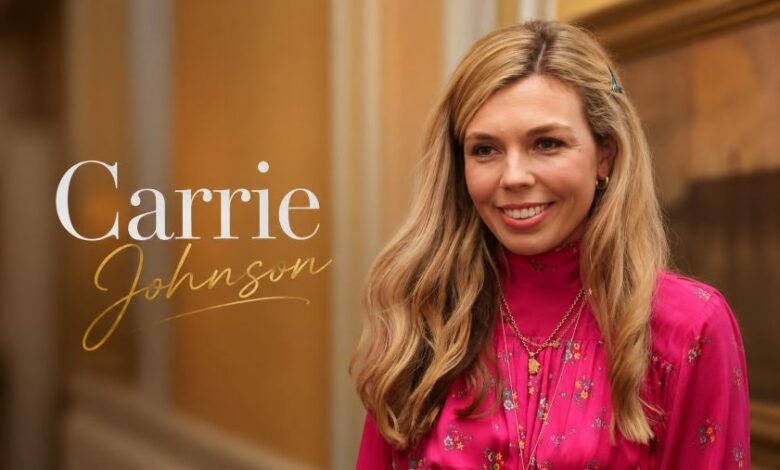
Carrie Johnson spent several years working inside British politics before most of the public knew her name. She advised senior Conservative politicians, worked in party communications and eventually reached one of the Conservative Party’s leading communications positions. Yet much of the coverage that followed reduced her to something simpler: Boris Johnson’s partner, then his wife.
That description is accurate, but incomplete.
Her career stretches from Conservative Party headquarters to marine conservation and animal welfare. She has also spent years speaking publicly about her experience as one of the women targeted by serial sex offender John Worboys. That part of her life returned to attention in 2026, when ITV dramatised the case in Believe Me and the Parole Board again refused Worboys’s release.
Her years in Downing Street remain the most controversial part of her public story. Reports repeatedly questioned how much influence she exercised over Boris Johnson’s government. Some former insiders alleged that she affected personnel and policy decisions. Others argued that the coverage often crossed from legitimate scrutiny into sexist caricature.
The evidence supports a more careful picture. Carrie Johnson had political experience, powerful connections and unusual access to a serving prime minister. She did not, however, hold an official position in his government.
Quick Facts About Carrie Johnson
| Fact | Details |
|---|---|
| Full name | Carrie Johnson, née Symonds |
| Date of birth | 17 March 1988 |
| Birthplace | London, England |
| Education | University of Warwick |
| Degree | Theatre Studies and History of Art |
| Political career | Former Conservative Party communications professional |
| Previous political roles | Worked with senior Conservatives including John Whittingdale and Sajid Javid |
| Conservation work | Worked with Oceana and other environmental initiatives |
| Animal welfare | Patron of the Conservative Animal Welfare Foundation since 2017 |
| Husband | Boris Johnson |
| Marriage | 29 May 2021 |
| Children with Boris Johnson | Four |
| Other public work | Survivor advocacy connected with the John Worboys case |
Carrie Johnson Had a Political Career Before Boris Johnson Entered Downing Street
The political side of Carrie Johnson’s story began well before Boris Johnson became prime minister.
After studying Theatre Studies and History of Art at the University of Warwick, she entered Conservative politics and communications. Her career included work connected with Conservative campaigns and roles advising senior politicians.
The Conservative Animal Welfare Foundation’s published biography records that she worked as a special adviser to cabinet ministers John Whittingdale and Sajid Javid. She later became a senior communications figure at Conservative Campaign Headquarters.
That history matters because it changes how her later Downing Street years should be understood.
Johnson was not a politically inexperienced spouse suddenly placed next to power. She already understood political messaging, media management and the workings of Westminster. That background partly explains why journalists, advisers and political opponents took such interest in whether she had influence over decisions inside No. 10.
It does not prove that she controlled those decisions.
The distinction became increasingly important during Boris Johnson’s premiership.
From Conservative Communications to Environmental Campaigning
Johnson left Conservative headquarters in 2018 and moved increasingly into environmental and animal welfare work.
Her interest in those issues was not created by her relationship with Boris Johnson. The Conservative Animal Welfare Foundation says she has served as one of its patrons since 2017 and links her with campaigns concerning animal welfare, including issues such as trophy hunting and marine protection.
Her environmental work later extended beyond Conservative campaigning.
A 2020 publication from marine conservation organisation Oceana directly identified her as an Oceana Senior Advisor, providing primary-source evidence of her professional involvement in ocean conservation.
She was also associated with Bloomberg’s Vibrant Oceans initiative.
Taken together, those roles show a consistent theme. Marine protection and animal welfare became a significant part of her professional identity after she moved away from full-time Conservative Party communications.
This is easy to miss in profiles dominated by Downing Street politics.
The John Worboys Case Became One of the Most Important Parts of Her Public Life
Carrie Johnson’s involvement in the John Worboys case began years before she became a nationally recognised political figure.
Worboys, later convicted of sexual offences against women, targeted Johnson when she was 19. She subsequently gave evidence and became one of the women who spoke publicly about the case.
Her role became especially visible in 2018, when the Parole Board decided that Worboys could be released.
The decision caused widespread anger among victims and raised serious questions about the information considered during the parole process. Johnson supported the campaign challenging his release.
The High Court eventually quashed the Parole Board’s decision.
The consequences went beyond Worboys himself. The controversy prompted changes around the transparency of parole decisions and the way victims could obtain information about how decisions were reached.
That makes the case one of the clearest examples of Carrie Johnson participating in a public campaign with effects extending beyond her own circumstances.
Why the Worboys Case Returned to Attention in 2026
The case became prominent again in 2026.
ITV produced Believe Me, a four-part drama about women targeted by Worboys and the institutional failures surrounding his crimes. Carrie Johnson participated in publicity connected with the programme, with actress Miriam Petche portraying her.
In a statement released through ITV, Johnson argued that failures did not rest only with individual procedures. She focused more broadly on the treatment of women reporting sexual violence by institutions including police, prosecutors and the parole system.
The timing was significant.
On 14 May 2026, the Parole Board formally refused Worboys’s release and also declined to recommend moving him to an open prison. According to the official Parole Board decision published by the UK government, the panel was not satisfied that his risk could be safely managed in the community.
Johnson welcomed the result.
She later suggested publicly that Worboys could have had far more victims than officially established. That claim requires careful handling. Her suggestion that the number could reach 1,000 was an estimate, not an official finding.
Established reporting has identified more than 100 potential victims over the years, while evidence discussed around the 2026 parole proceedings concerned a smaller confirmed or admitted number.
The distinction matters because survivor testimony and verified criminal statistics are not the same thing.
Boris Johnson and Carrie Johnson’s Move Into Downing Street
Carrie Symonds’s relationship with Boris Johnson became public while his political career was moving toward its most powerful stage.
When Boris Johnson became prime minister in July 2019, the couple moved into Downing Street together. Their situation drew attention because they were the first unmarried couple openly to live together in the prime ministerial residence.
They later announced their engagement.
Their first child together was born in 2020.
Carrie and Boris Johnson married on 29 May 2021 in a private ceremony at Westminster Cathedral.
By 2025, they had four children together. Their fourth child, Poppy Eliza Josephine, was born in May 2025.
Family life inevitably became part of public coverage, but it was Johnson’s perceived political role that produced the greater controversy.
Did Carrie Johnson Really Influence Boris Johnson’s Government?
Few questions surrounding Carrie Johnson generated more headlines than the claim that she exercised political influence inside No. 10.
There were reasons the question arose.
She understood Conservative politics. She had worked professionally with ministers and party officials. She knew advisers inside government. Most importantly, she had direct personal access to the prime minister.
During disputes inside Downing Street, particularly around the departures of Dominic Cummings and communications director Lee Cain in 2020, reports suggested Johnson had expressed opinions about appointments and personnel.
Cummings later made much stronger claims about her involvement.
Those allegations received extensive media coverage, but they should not be converted into established facts without qualification.
Carrie Johnson was never a minister, civil servant or formally appointed government adviser during Boris Johnson’s premiership. Britain also has no official equivalent of the American “First Lady” position.
She therefore had no constitutional or governmental authority attached to being the prime minister’s wife.
Johnson herself rejected portrayals of her as a hidden political operator. In 2022 she described herself as a private individual who played no role in government.
The most defensible interpretation sits between the extremes.
It would be unrealistic to assume that a politically experienced spouse never discussed politics with the prime minister. It would be equally unjustified to treat every policy decision disliked by an adviser or newspaper as evidence that Carrie Johnson secretly controlled the government.
Why the “First Lady” Label Can Be Misleading
Carrie Johnson was frequently described informally as Britain’s “First Lady.”
That wording creates a misleading impression if taken literally.
The UK does not provide the prime minister’s spouse with an official office, formal duties, government salary or constitutional responsibilities. A prime minister’s husband or wife may attend public events, support causes and attract substantial media attention, but the position itself carries no defined governmental power.
Johnson’s situation was unusual because her own professional background was political.
That created a grey area between private influence and public authority.
It also made her an unusually attractive target for political stories. Some raised legitimate questions about access and accountability. Others focused heavily on personality, clothing, domestic choices or unattributed claims about her behaviour.
Several political figures argued at the time that parts of the coverage were sexist.
Both aspects can be true: informal influence around a head of government deserves scrutiny, while scrutiny should still meet ordinary standards of evidence.
The Downing Street Flat Controversy Needs Precise Wording
The refurbishment of the prime ministerial residence became another issue closely associated with Carrie Johnson.
Media coverage frequently described the controversy through details about décor and Johnson’s reported preferences. The official regulatory finding, however, concerned something more technical.
The UK Electoral Commission investigated how the Conservative Party handled and reported money connected with the refurbishment.
It found that the party had inaccurately reported a donation worth £67,801.72, of which £52,801.72 was connected with refurbishment costs. The Conservative Party was fined £17,800.
That was a finding against the party’s reporting and accounting arrangements.
It was not a regulatory finding that Carrie Johnson personally committed financial wrongdoing.
That distinction is often lost when the episode is shortened into a story about “Carrie’s Downing Street refurbishment.”
Carrie Johnson and Partygate
Carrie Johnson was directly involved in one part of the Covid-era Downing Street gatherings controversy.
In April 2022 she received a fixed-penalty notice connected with the gathering held in the Cabinet Room for Boris Johnson’s birthday on 19 June 2020.
Her spokesperson said she accepted the finding, paid the penalty and apologised.
The wider Sue Gray investigation documented extensive problems surrounding gatherings in Downing Street and government buildings during periods when Covid restrictions applied to the wider population.
Gray’s final report referred to failures of leadership and judgment inside No. 10 and the Cabinet Office.
Carrie Johnson’s own confirmed legal consequence should still be stated narrowly: she received one fixed-penalty notice relating to the birthday gathering.
Broader allegations about other gatherings should not be treated as equivalent to a formal finding against her.
Her Work With the Aspinall Foundation Became Entangled With a Separate Charity Investigation
Carrie Johnson joined the Aspinall Foundation in January 2021 in a senior communications role.
The conservation charity is known for work involving endangered species and animal conservation.
Its regulatory history later created difficult headlines for Johnson because the Charity Commission was conducting a serious investigation into the organisation.
The chronology is essential.
The Charity Commission began examining concerns relating to the foundation in July 2020. Johnson did not join until January 2021.
A formal statutory inquiry was opened on 31 March 2021. According to the regulator, its concerns included governance, financial management, conflicts of interest and transactions involving related parties.
Opening a statutory inquiry is not itself a finding that wrongdoing occurred.
More importantly for Johnson’s biography, the original regulatory concerns predated her employment.
The Charity Commission’s register continued to carry an inquiry alert into 2026.
There is no evidence in the material reviewed that Carrie Johnson herself is the subject of the Charity Commission investigation.
Writing that she “worked for a charity under investigation” is supportable.
Writing that she “was investigated by the Charity Commission” would not be.
What Does Carrie Johnson Do Now?
This is one area where certainty becomes weaker.
Her previous roles are well documented. Her work with Conservative Party communications, CAWF, Oceana and the Aspinall Foundation can all be supported by institutional or established journalistic sources.
Her exact current employment position in August 2026 is less clear.
The Conservative Animal Welfare Foundation continues to list her among its patrons, supporting the conclusion that animal welfare remains part of her public work.
Her participation in Believe Me and her comments around the 2026 Worboys parole decision also show that survivor advocacy remains an active public issue for her.
What should not be done is assume that a job title reported several years ago necessarily remains current.
A careful biography can therefore describe the organisations she has worked with without assigning her a present-day professional title that has not been clearly verified.
Carrie Johnson’s Public Image Is More Complicated Than the Headlines Suggest
Carrie Johnson became famous during one of the most turbulent periods in recent British politics.
That alone guaranteed intense scrutiny.
Yet the conventional version of her story often begins too late. It starts with Boris Johnson, Downing Street and reports of influence.
Her earlier career helps explain what came later.
She already understood political communications. She had worked alongside senior Conservative figures. She later redirected much of her professional attention toward environmental and animal-welfare causes.
Her involvement with the Worboys case adds another dimension that cannot be explained through party politics or marriage. It began when she was a teenager and continued long after Worboys’s original conviction, eventually connecting her personal experience with broader questions about victim rights and parole transparency.
None of that removes legitimate questions about life inside Downing Street.
It does, however, make clear why a useful account of Carrie Johnson requires more than repeating stories about Boris Johnson’s wife.
Final Thoughts
Carrie Johnson occupies an unusual place in recent British public life.
She was politically experienced but held no government position. She lived at the centre of power but repeatedly described herself as a private citizen. She became associated with some of Boris Johnson’s largest political controversies while also building a record in animal welfare, marine conservation and survivor advocacy that existed independently of his premiership.
Some aspects of her public influence remain difficult to measure because informal access leaves fewer records than formal authority. Allegations from former Downing Street insiders therefore need to remain allegations unless evidence independently establishes them.
Other parts of her record are much clearer.
Her Conservative communications career is documented. Her environmental work is documented. Her involvement in challenging John Worboys’s release is documented. So are her fixed-penalty notice during Partygate and the fact that she had no official government position.
That distinction between evidence and assumption is central to understanding Carrie Johnson. Her biography is most useful when it neither turns her into a hidden political mastermind nor reduces her to a former prime minister’s wife.
Frequently Asked Questions
Who is Carrie Johnson?
Carrie Johnson is a British communications professional, conservation campaigner and the wife of former UK prime minister Boris Johnson. She previously worked in senior Conservative Party communications.
How old is Carrie Johnson?
Carrie Johnson was born on 17 March 1988. She is 38 years old as of August 2026.
What was Carrie Johnson’s job before marrying Boris Johnson?
She worked in Conservative political communications, including roles advising senior politicians and a senior communications position at Conservative Party headquarters.
Is Carrie Johnson a conservationist?
She has worked with environmental organisations including Oceana and has served as a patron of the Conservative Animal Welfare Foundation since 2017.
Did Carrie Johnson work for Boris Johnson’s government?
No. She did not hold a formal government position during Boris Johnson’s premiership.
When did Carrie Johnson marry Boris Johnson?
Carrie and Boris Johnson married on 29 May 2021 at Westminster Cathedral.
How many children do Boris and Carrie Johnson have?
They have four children together.
What was Carrie Johnson’s connection to John Worboys?
Worboys targeted her when she was 19. She later spoke publicly about the case and supported efforts challenging the decision to release him on parole.
Did Carrie Johnson receive a Partygate fine?
Yes. She received and paid a fixed-penalty notice relating to Boris Johnson’s birthday gathering on 19 June 2020.
Was Carrie Johnson investigated by the Charity Commission?
The evidence reviewed does not show that she personally was investigated. The Charity Commission opened an inquiry into the Aspinall Foundation, where she had worked, but regulatory concerns about the charity began before she joined it.