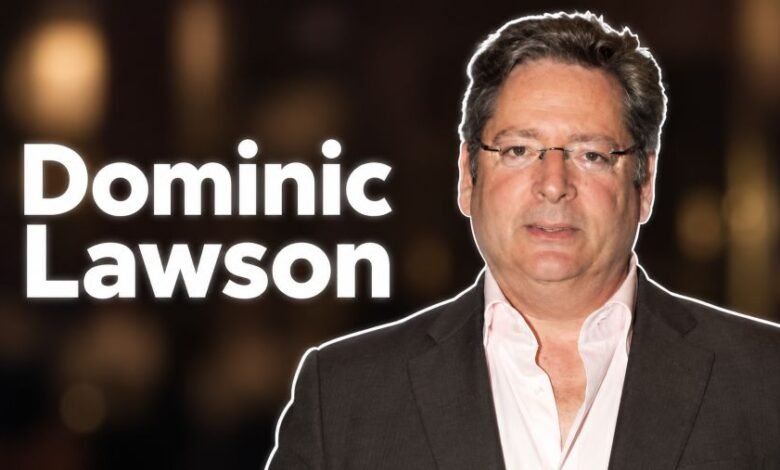
Dominic Lawson: The Editor Who Built a Life Around News and Chess
From the Financial Times and The Spectator to The Sunday Telegraph, Dominic Lawson has spent decades inside British journalism while keeping a serious connection with competitive chess.

Introduction
Dominic Lawson is a British journalist, editor, columnist, broadcaster and chess enthusiast. His career stretches across several major UK publications.
He has edited two famous titles. He has written political commentary for decades. And, actually, chess has remained a big part of his public life too.
Lawson served as editor of The Spectator from 1990 to 1995 and The Sunday Telegraph from 1995 to 2005. In September 2026, he returned to The Telegraph as a twice-weekly columnist covering politics and current affairs.
Quick Facts About Dominic Lawson
| Fact | Detail |
|---|---|
| Full Name | Dominic Ralph Campden Lawson |
| Date of Birth | 17 December 1956 |
| Nationality | British |
| Profession | Journalist, editor, columnist and broadcaster |
| School | Westminster School; he also spent a period at Eton |
| University | Christ Church, Oxford |
| Father | Nigel Lawson |
| Mother | Vanessa Salmon |
| Sister | Nigella Lawson |
| Wife | Rosa Monckton |
| Children | Savannah Lawson and Domenica Lawson |
| Former Role | Editor of The Spectator |
| Former Role | Editor of The Sunday Telegraph |
| Current Media Role | Telegraph columnist |
| Chess Role | President of the English Chess Federation |
| Known Book | The Inner Game |
Who Is Dominic Lawson?
Dominic Lawson is one of the better-known names in British political journalism.
His work has covered newspapers, magazines, financial reporting, broadcasting and opinion writing. He first built experience at the BBC and Financial Times before moving into newspaper leadership.
That changed his career.
By the 1990s, Lawson was no longer only reporting stories. He was deciding which stories major publications would run.
He later became known for newspaper columns dealing with politics, economics, public policy and social issues.
Early Life and Family
Dominic Ralph Campden Lawson was born on 17 December 1956.
He grew up in a family already strongly connected with British public life.
His father was Nigel Lawson, who began his career in journalism before moving into politics. Nigel Lawson later became Chancellor of the Exchequer under Prime Minister Margaret Thatcher and was made Baron Lawson of Blaby.
His mother was Vanessa Salmon.
Vanessa came from the family behind the J. Lyons food and restaurant business.
Dominic grew up alongside siblings who would also become publicly known.
The most famous is his sister Nigella Lawson, the food writer and television presenter.
His other full sisters were Thomasina Lawson and Horatia Lawson.
Thomasina died in 1993.
Through Nigel Lawson’s later marriage, Dominic also has half-siblings including Tom Lawson and Emily Lawson.
School Years
Lawson spent a period at Eton College.
He later wrote publicly that he disliked his time there and asked his parents to remove him.
He then attended Westminster School.
That suited him better.
After Westminster, he studied at Christ Church, Oxford.
Some published sources disagree about the exact subject of his Oxford degree. So the safest verified fact is simple: Dominic Lawson attended Christ Church, Oxford.
His First Journalism Jobs
Lawson’s professional media career started at the BBC.
He worked there from around 1979 to 1981.
His early BBC work included the programme Reputations. He later worked on BBC Radio’s The World Tonight.
These were serious journalism jobs.
They gave him early experience with political reporting, research and broadcasting.
Journalist and broadcaster Anthony Howard also became an important influence during this period.
Financial Times Career
In 1981, Lawson joined the Financial Times.
This was another major step.
He worked in financial and economic journalism, including time as an energy correspondent. He was also connected with the newspaper’s well-known Lex column.
His Financial Times period lasted until 1987.
That year brought recognition.
Lawson won the Harold Wincott Prize for Financial Journalism in 1987.
So, before he became widely known as a political newspaper editor, he already had years of experience covering money, energy and business.
Joining The Spectator
Lawson joined The Spectator in 1987.
At first, he worked under editor Charles Moore.
Then came the bigger job.
In 1990, Lawson became editor of The Spectator.
He remained there until 1995.
His father, Nigel Lawson, had also edited the publication years earlier, giving the family another unusual connection with the magazine.
During Dominic’s editorship, The Spectator’s circulation grew.
His period there also produced one of the most famous political interviews of his career.
The Nicholas Ridley Interview
In July 1990, Lawson interviewed Conservative cabinet minister Nicholas Ridley.
Ridley made controversial remarks about Germany and European integration during the interview.
The comments caused a major political storm.
Ridley resigned from the Cabinet soon afterwards.
Lawson later made clear that the interview had been recorded and that Ridley had agreed to speak on the record.
The episode became closely linked with Lawson’s years at The Spectator.
It also showed how much influence a single newspaper or magazine interview could carry at the time.
Editor of The Sunday Telegraph
In 1995, Lawson left The Spectator and became editor of The Sunday Telegraph.
He succeeded Charles Moore.
Lawson stayed in the job for almost ten years.
That is a long run.
He edited the Sunday newspaper from 1995 until 2005, covering major political changes in Britain and abroad.
His years there included elections, changes of government, international conflicts and big shifts in the British newspaper business.
In June 2005, his period as editor ended.
He then moved back towards something he had done throughout his career: writing.
Life as a Newspaper Columnist
In 2006, Lawson began writing regularly for The Independent.
He also contributed to the Mail on Sunday.
Writing columns gave him a different role.
An editor manages a whole publication. A columnist gets to put a personal argument directly in front of readers.
Lawson did plenty of that.
In 2008, he joined The Sunday Times as a columnist.
His writing over the years has covered politics, economics, government, science, social questions, media and public policy.
His columns often take a firm position.
That has kept his work visible, and sometimes controversial.
Dominic Lawson Returns to The Telegraph
A major career change arrived in September 2026.
The Telegraph announced that Lawson was returning to the publication as a twice-weekly columnist.
His new columns focus mainly on politics and current affairs.
He also contributes to The Daily T, The Telegraph’s podcast.
This means his newest major media role brings him back to the newspaper group where he once spent nearly a decade running The Sunday Telegraph.
Quite a return.
Broadcasting Work
Lawson’s media career has never been limited to print.
Remember, he started at the BBC.
Years later, he also presented programmes including Across the Board for BBC Radio.
The idea mixed interviews with chess.
That combination made sense for Lawson because chess has been one of his strongest interests outside journalism.
Dominic Lawson and Chess
Chess is not a small side hobby for Lawson.
He has played the game seriously for many years.
He learned its basic rules when he was young, then became strongly interested again during his teenage years.
The rise of American chess player Bobby Fischer played a part in that interest.
Lawson went on to compete at club and county level.
He played for Sussex and took part in chess events.
Then his role became bigger.
In October 2014, Dominic Lawson was elected President of the English Chess Federation.
He was elected again unopposed in 2024.
The English Chess Federation continues to list him as its president.
So, yes, this is a real organisational role, not simply a label attached to a famous chess fan.
His Chess Writing
Lawson also turned his chess knowledge into books and journalism.
One of his best-known books is The Inner Game.
The book covers the famous 1993 World Chess Championship between Garry Kasparov and Nigel Short.
Lawson had close access to Nigel Short’s side during the match.
A US edition appeared under the title End Game: Kasparov vs. Short.
He also wrote Britain in the Eighties, published in 1989.
Lawson later edited and introduced Snake Oil and Other Preoccupations, a collection of writing by his late brother-in-law, journalist John Diamond.
Dominic Lawson’s Wife
Dominic Lawson is married to Rosa Monckton.
The couple married in 1991.
Rosa is a British businesswoman and campaigner.
She also became publicly known through her close friendship with Diana, Princess of Wales.
In 2024, Rosa Monckton entered the House of Lords.
She was created Baroness Monckton of Dallington Forest and became a Conservative life peer.
The couple have remained connected with several public causes, especially work linked to people with learning disabilities.
Dominic Lawson’s Children
Dominic Lawson and Rosa Monckton have two daughters:
Savannah Lawson and Domenica Lawson.
Savannah was born in 1992.
Domenica was born in 1995.
Domenica has Down syndrome and was a goddaughter of Diana, Princess of Wales.
Her experiences later helped inspire Rosa Monckton’s work supporting people with learning disabilities.
Rosa founded Team Domenica, an organisation created to help young people with learning disabilities find employment and gain workplace experience.
Lawson has also written publicly about becoming Domenica’s father.
Connection With Nigella Lawson
Dominic’s sister Nigella Lawson has built her own major public career.
She is known internationally as a food writer, cookbook author and television presenter.
Their father was Nigel Lawson, but Dominic and Nigella followed very different professional paths.
Nigella became closely associated with food and television.
Dominic stayed mainly inside journalism, newspapers, politics and chess.
Still, both became well-known British media figures in their own right.
The MI6 Claim
One claim about Lawson needs careful handling.
At one point, media reports suggested that he had been connected with MI6, Britain’s foreign intelligence service.
The allegation should not be presented as fact.
The Independent later published a correction stating that the claim was false.
Lawson denied it.
Then Foreign Secretary Robin Cook also denied the allegation.
For that reason, any accurate profile should treat the MI6 story as a rejected claim rather than part of Lawson’s career history.
Dominic Lawson’s Writing Style and Public Image
Lawson is known for strong opinion writing.
He does not usually write as a neutral news reporter anymore.
His columns make arguments.
Sometimes sharply.
His long career also means he brings several different backgrounds into his commentary: political reporting, financial journalism, newspaper editing and competitive chess.
That mix gives his work a distinctive angle.
Readers may agree with him or strongly disagree.
Either way, his name has stayed visible in British newspaper commentary for decades.
Dominic Lawson’s Career Timeline
| Year | Event |
|---|---|
| 1956 | Born on 17 December |
| 1979–1981 | Worked at the BBC |
| 1981 | Joined the Financial Times |
| 1987 | Won the Harold Wincott Prize |
| 1987 | Joined The Spectator |
| 1990 | Became editor of The Spectator |
| 1990 | Published his Nicholas Ridley interview |
| 1993 | Published The Inner Game |
| 1995 | Became editor of The Sunday Telegraph |
| 2005 | Left The Sunday Telegraph |
| 2006 | Began writing regularly for The Independent |
| 2008 | Joined The Sunday Times as a columnist |
| 2014 | Became President of the English Chess Federation |
| 2024 | Re-elected ECF president |
| 2026 | Returned to The Telegraph as a twice-weekly columnist |
Why Dominic Lawson Remains a Recognisable Media Figure
Lawson has spent decades around major British institutions.
The BBC.
The Financial Times.
The Spectator.
The Sunday Telegraph.
The Independent.
The Sunday Times.
And now The Telegraph again.
Few journalists move between reporting, editorships, broadcasting and national opinion writing for that long.
Chess adds another side.
Basically, his public career has followed two tracks for years: newspapers and chess.
Both are still active parts of his life.
Final Thought
Dominic Lawson’s career stretches from late-1970s BBC journalism to national newspaper commentary in 2026.
He worked in financial reporting first. Then editing took over.
The Spectator made him a nationally recognised editor, while his decade at The Sunday Telegraph placed him near the centre of British political journalism.
He later returned to regular column writing.
Chess never disappeared either.
His continuing presidency of the English Chess Federation shows just how seriously he has stayed connected with the game.
Now back at The Telegraph, Lawson remains active in the same field where he has spent most of his working life: British journalism.
Frequently Asked Questions
Who is Dominic Lawson?
Dominic Lawson is a British journalist, former newspaper editor, columnist, broadcaster and President of the English Chess Federation.
When was Dominic Lawson born?
He was born on 17 December 1956.
Who is Dominic Lawson’s father?
His father was Nigel Lawson, former UK Chancellor of the Exchequer.
Is Nigella Lawson related to Dominic Lawson?
Yes. Nigella Lawson is his sister.
Who is Dominic Lawson’s wife?
He is married to Rosa Monckton, Baroness Monckton of Dallington Forest.
Does Dominic Lawson have children?
Yes. He and Rosa Monckton have two daughters, Savannah and Domenica.
Which newspapers has Dominic Lawson edited?
He edited The Spectator from 1990 to 1995 and The Sunday Telegraph from 1995 to 2005.
What does Dominic Lawson do now?
As of September 2026, he writes twice weekly for The Telegraph, mainly on politics and current affairs.
Is Dominic Lawson involved in chess?
Yes. He is a long-time chess player and serves as President of the English Chess Federation.