Piçada Meaning: What the Word Really Means and Why It Gets Confused With Picada
Portuguese slang, food confusion, regional meanings, and the real difference between Piçada, Picada, and Pisada

Introduction
Search for Piçada online and things get messy fast.
One page may call it food. Another may connect it with a trail. Someone else may describe a drink, a footprint, or a cultural tradition. Sounds confusing? It is.
The main reason is simple.
Piçada, Picada, and Pisada are different words.
They look close. Very close. But their established meanings are not the same.
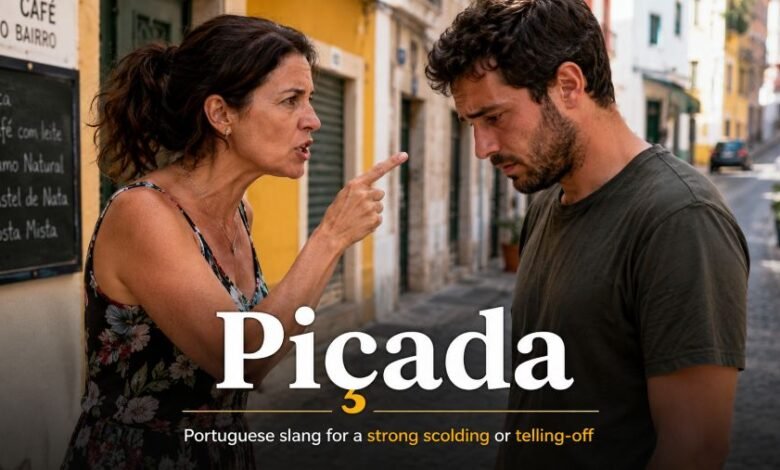
Portuguese dictionaries such as Priberam and Infopédia record Piçada as an informal or vulgar Portuguese word. One of its main figurative meanings is a strong reprimand, scolding, or telling-off. The word also carries a vulgar sexual meaning, which explains why it should be used carefully.
The food stories people often find online mostly belong to Picada, without the cedilla.
That one letter changes a lot.
Quick Facts About Piçada
| Fact | Details |
|---|---|
| Word | Piçada |
| Language | Portuguese |
| Main everyday meaning | A strong reprimand, scolding, or telling-off |
| Language level | Informal, slang, and potentially vulgar |
| Other dictionary meaning | A vulgar sexual meaning |
| Common confusion | Picada |
| Another confused word | Pisada |
| Is Piçada a standard Brazilian dish? | No reliable dictionary or major culinary source confirms this |
| Does Piçada mean a trail? | Major Portuguese dictionaries associate trail/path meanings with Picada instead |
| Does Piçada mean a footprint? | No; stepping and footprint meanings are linked more closely with Pisada |
| Key references | Priberam, Infopédia, ASALE, official regional food and cultural sources |
What Does Piçada Mean?
Let us start with the actual word.
Piçada appears in established Portuguese dictionaries as slang. Priberam records a sense connected with a strong reprimand or telling-off. Infopédia gives a similar meaning.
So, in ordinary English, Piçada can mean a severe scolding, harsh rebuke, or strong verbal telling-off.
Picture somebody getting firmly corrected after doing something wrong. That is the sort of figurative meaning these dictionaries record.
It is not formal language.
You would not normally pick piçada for a professional email, formal speech, academic paper, or polite workplace conversation. The word carries slang baggage, and its literal background is vulgar.
That part matters.
Both Priberam and Infopédia also connect the term with vulgar language relating to male genitalia. This older or literal sense helps explain why the word can sound rough even when someone uses it figuratively for a reprimand.
Basically, context changes how it lands.
Still, calling Piçada a simple synonym for “advice” would be too soft. A reprimand is stronger. It suggests criticism, correction, or being sharply told off.
Where Does the Word Piçada Come From?
The spelling gives us a clue, but the dictionaries give us something better.
Infopédia connects piçada with piça + -ada. Priberam gives an etymological connection through a closely related vulgar base form.
The suffix -ada appears in many Portuguese words and can help form nouns describing an action, blow, quantity, or result connected with the root word.
Here, though, the root itself belongs to vulgar vocabulary.
That is why the word has a very different tone from neutral terms for criticism.
You may see it written casually online, in jokes, slang-heavy conversations, or informal speech. But readers learning Portuguese should know the register before copying it.
Use care.
A dictionary meaning tells you what a word means. It does not always tell you that using it with the wrong person may sound rude.
Piçada is one of those words.
Piçada vs Picada: One Letter, Very Different Meanings
This is where most of the confusion starts.
Piçada contains ç.
Picada uses a normal c.
They may look almost identical to someone who does not speak Portuguese or Spanish, but they belong to different meaning groups.
In Portuguese, picada can refer to things such as an insect bite or sting, a prick, a sharp pain, or a narrow path through vegetation.
That last meaning explains why searches for Piçada sometimes lead to articles about trails.
The trail meaning belongs to Picada, not the standard dictionary definition of Piçada.
Then Spanish adds another layer.
Across Spanish-speaking countries, picada can describe food, a path, a small restaurant, chopped ingredients, a race, or other regional ideas.
So search engines receive several languages and several meanings under nearly identical spellings.
No wonder things get mixed up.
The clean distinction is this:
Piçada = Portuguese slang, commonly a harsh reprimand.
Picada = a separate word with several Portuguese and Spanish meanings.
Piçada vs Pisada: Does Piçada Mean Footprint?
Another common mix-up involves Pisada.
The words sound and look close again.
But pisada comes from ideas connected with stepping or treading. Portuguese dictionary definitions link it with the act of stepping and the mark made by a foot.
That means a footprint or footstep-related explanation fits Pisada far better than Piçada.
This matters because some web pages combine all three spellings as though they were variants of one cultural word.
They are not.
Think about it this way.
Piçada → slang reprimand.
Picada → bite, sting, trail, food, and several regional meanings.
Pisada → stepping, tread, or footprint-related meanings.
Simple once separated.
Is Piçada a Brazilian Food?
This question appears often because food content dominates many searches around similar spellings.
Based on major Portuguese dictionaries and established regional food references, there is no solid basis for calling Piçada with ç a standard traditional Brazilian dish.
The food keyword people usually mean is Picada.
And even Picada is not one single dish.
Its meaning changes from country to country.
That is probably where much of the online confusion began. Someone sees picada in a food article, another page changes or misspells the word as piçada, and soon the two terms start appearing side by side.
But spelling matters here.
Calling Piçada a famous Brazilian platter would create a false definition.
Brazil does have related Portuguese food words, including picadinho, which refers to chopped or cut-up food preparations. Yet picadinho is another word again.
So readers should not merge them.
What Is an Argentine Picada?
Now we reach the food people are often looking for.
In Argentina, a picada is a social sharing platter, usually served before a larger meal or enjoyed with drinks among friends and family.
It often includes cured meats, cheeses, olives, bread, peanuts, chips, and other small bites. Exact contents vary.
That is normal.
A picada is less about one strict recipe and more about shared eating.
Argentina’s tourism materials connect picadas with social gatherings and the wider food culture surrounding occasions such as an asado.
Regions known for cheese and cured meats may put their own local touch on the platter.
Tandil, for example, is widely associated with cheeses and cured meat products.
The experience can feel similar to antipasti or a charcuterie board, but calling it exactly the same thing would miss its local identity.
Argentine picada has its own social setting.
People gather. Food sits in the middle. Everyone takes a little.
Pretty straightforward.
Picada in Uruguay
Uruguay shares many food traditions with Argentina, especially around the Río de la Plata.
A Uruguayan picada may include cheeses, salami, longaniza, olives, peanuts, bread, chips, and similar snacks.
Again, there is no fixed universal plate.
One family may keep it basic. A restaurant may make it much larger.
The main idea stays familiar: a collection of small foods meant for sharing.
This is why searches for “Piçada food” may lead users toward South American platters even though the spelling is wrong.
The food exists.
The spelling is usually Picada.
What Is a Colombian Picada?
Colombia changes the picture.
A picada colombiana is quite different from the cold meat-and-cheese style commonly associated with Argentina and Uruguay.
Colombian versions often bring together cooked meats and filling sides on one large platter.
Common ingredients can include beef, pork, chicken, chorizo, chicharrón, potatoes, yuca, plantain, arepas, or other regional items.
Portions can be big.
Sharing is common.
This is a heavier meal than the snack-style Argentine version.
So saying “Picada is a platter of cheese and salami” works in one regional context but fails in another.
Country matters.
Catalan Picada Is Something Else Again
Catalan cooking gives picada another meaning.
Here, picada is generally a pounded mixture used during cooking, rather than a platter placed on the table for people to snack from.
Traditional versions may contain ingredients such as nuts, garlic, parsley, bread, saffron, or other seasonings.
A mortar is commonly associated with its preparation.
The mixture can be added toward the later stages of cooking to give flavour, body, or texture to dishes such as stews, meat dishes, fish preparations, soups, legumes, or rice dishes.
Catalan cultural sources describe picada as a long-established part of local cooking.
So now we have another sharp distinction.
Argentine picada? Sharing food.
Colombian picada? Large cooked platter.
Catalan picada? Cooking mixture.
Same spelling. Different food idea.
Mexican Picadas and Picaditas
Mexico adds another regional use.
In parts of Veracruz, picadas or picaditas refer to small thick corn-based preparations with pinched edges.
They may be topped with salsa, onion, cheese, beans, meat, egg, or other local ingredients depending on the recipe.
They can look somewhat similar to other Mexican masa-based foods, but local names and preparation styles matter.
Again, this has nothing to do with the Portuguese slang word Piçada.
A person searching only by sound could easily land on the wrong meaning.
That happens a lot.
What Does Picada Mean in Chile?
Chile gives the word a fun social meaning.
A picada can refer to a local eating place known for good food, reasonable prices, and a less formal atmosphere.
Think of a small restaurant people recommend because the food is good and the bill is fair.
A local favourite.
Maybe even a hidden gem, though the exact cultural meaning is broader than that English phrase.
Chile’s Regional Heritage Thesaurus records this restaurant-related sense.
So if a Chilean says someone knows a great picada, they may be talking about the place where they want to eat, not a platter of food.
Context saves the day again.
Carne Picada Is Not the Same Thing
You may also come across carne picada.
That phrase usually means minced meat or ground meat in Spanish.
It does not automatically mean an Argentine sharing platter.
The adjective picada here relates to meat being chopped or minced.
So:
carne picada = minced or ground meat.
picada argentina = shared snack platter.
picada colombiana = mixed cooked food platter.
Piçada = Portuguese slang with a different meaning.
Keeping these separate clears up most search confusion.
Why Is There So Much Confusion Around Piçada Online?
The answer is mostly spelling and language overlap.
A cedilla can disappear during typing.
Someone may copy a word incorrectly. Another article may repeat that spelling. Search engines may also connect similar queries because users themselves search for different versions of the same-looking term.
Then regional meanings pile up.
Portuguese has Piçada, Picada, and Pisada.
Spanish has Picada with many country-specific meanings.
Catalan cooking uses picada too.
Food blogs add recipes. Travel sites talk about local restaurants. Dictionaries talk about bites and trails.
It becomes noisy fast.
That is why a reliable explanation should start with the exact spelling before discussing anything else.
Check the ç first.
It changes the answer.
Is Piçada Offensive?
It can be.
Major Portuguese dictionaries classify the word within informal, slang, or vulgar usage.
That does not mean every use carries the strongest possible insult. Context changes tone. But it does mean learners should avoid treating the word as neutral Portuguese.
If you want to say “reprimand” in a polite or formal setting, safer standard vocabulary would usually make more sense.
Piçada belongs more comfortably in slang-heavy contexts.
So yes, know it.
But use it carefully.
FAQ About Piçada
What does Piçada mean in English?
Piçada is Portuguese slang that can mean a strong reprimand, scolding, or telling-off. Dictionaries also record a vulgar sexual meaning.
Is Piçada a Portuguese word?
Yes. Piçada appears in major Portuguese dictionaries including Priberam and Infopédia.
Is Piçada a Brazilian dish?
Reliable Portuguese dictionary and major culinary references do not establish Piçada as a standard Brazilian dish. Food-related search results generally involve the different word Picada.
What is the difference between Piçada and Picada?
Piçada is Portuguese slang and may mean a harsh reprimand. Picada has many other meanings, including a bite, sting, trail, food platter, cooking mixture, or regional food term depending on language and country.
What is the difference between Piçada and Pisada?
Pisada relates to stepping or treading and can refer to a footprint or step. Piçada has a different slang meaning.
Does Piçada mean a trail?
Major Portuguese dictionaries associate narrow trail or path meanings with Picada, not Piçada.
What is Picada food?
It depends on the region. In Argentina and Uruguay, picada commonly means a sharing platter with small foods such as cheeses and cured meats. Colombia uses the term for a larger cooked mixed platter. Catalan cuisine uses picada for a pounded cooking mixture.
What is a Colombian Picada?
A Colombian picada is usually a shared platter containing combinations of cooked meats and sides such as chorizo, pork, beef, potatoes, yuca, plantain, or arepas.
What is an Argentine Picada?
An Argentine picada is a social sharing platter that may include cheese, cured meats, olives, bread, nuts, peanuts, chips, and other snacks.
What does Picada mean in Chile?
In Chile, a picada can refer to a good-value local eating place known for tasty, authentic food.
Is Carne Picada the same as Picada?
No. Carne picada normally means minced or ground meat. A regional food called picada may be an entirely different preparation.
Why do websites give different meanings for Piçada?
Many pages mix up Piçada, Picada, and Pisada. Similar spelling, regional language differences, and repeated online errors appear to be the main reasons.
Final Thought
Piçada looks simple.
It is not.
The safest definition comes from established Portuguese dictionaries: Piçada is an informal or vulgar Portuguese word that can mean a strong reprimand or telling-off, while also carrying a vulgar literal meaning.
Most food, trail, bite, restaurant, and cooking explanations belong to Picada instead.
And footprints?
That points more toward Pisada.
One small spelling change can completely change the meaning. So if you see “Piçada” connected with Argentine cheese boards, Colombian meat platters, Catalan cooking mixtures, Mexican corn dishes, or Chilean restaurants, check the spelling before accepting the definition.
That single check clears up almost everything.