Henry Marsh: The Brain Surgeon Who Wrote Honestly About Life, Death and Medical Mistakes
From operating on the human brain to writing bestselling books, the British neurosurgeon's story includes difficult choices, personal struggles, international medical work and a lasting connection with Ukraine.

Introduction
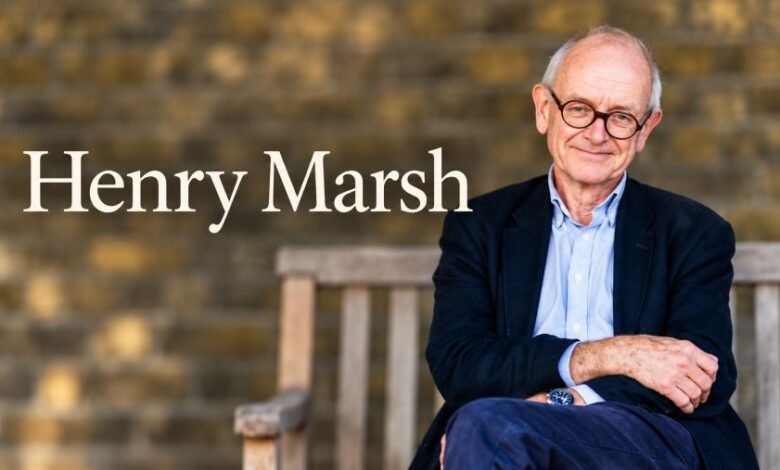
Henry Marsh is a British neurosurgeon, author and medical charity worker. He is best known for his work in brain surgery and his bestselling book Do No Harm.
His career has been remarkable. But not always easy.
For decades, Marsh treated patients with serious brain conditions. Some operations saved lives. Others brought painful outcomes. Rather than hide these experiences, he wrote about them openly.
He also spent many years helping Ukrainian doctors. After retiring from full-time NHS work, he continued teaching and supporting medical teams abroad.
Today, his story reaches far beyond operating theatres. His books have helped ordinary readers understand what doctors face when medical decisions carry enormous risks.
Quick Facts
| Detail | Information |
|---|---|
| Full name | Henry Thomas Marsh |
| Date of birth | 5 March 1950 |
| Age | 76 years (as of October 2026) |
| Birthplace | Oxford, England |
| Nationality | British |
| Profession | Neurosurgeon and author |
| Speciality | Brain surgery |
| University education | University College, Oxford |
| Medical education | Royal Free Hospital Medical School, London |
| Professional qualification | Fellow of the Royal College of Surgeons |
| Consultant appointment | 1987 |
| Main workplace | Atkinson Morley’s/St George’s Hospital, London |
| Retirement from full-time NHS work | 2015 |
| Wife | Kate Fox |
| Children | Yes |
| Best-known book | Do No Harm |
| Other books | Admissions, And Finally |
| National honour | CBE, 2010 |
| Charity involvement | Hospice Ukraine |
| Current occupation | Retired neurosurgeon, writer and medical charity trustee |
Early Life and Family Background
Henry Thomas Marsh was born on 5 March 1950 in Oxford, England.
He grew up in an academic family. His father, Norman Stayner Marsh, was a legal scholar and law reformer. His mother, Christiane Marsh, was born in Germany and worked as a bookseller.
His mother had left Nazi Germany in 1939. Her experiences were part of the family’s history, and Henry grew up with strong connections to both British and European life.
He was the youngest of four children.
Education mattered in his household. So did questions about human behaviour, society and responsibility.
Yet medicine was not his first choice.
As a young man, he was interested in philosophy and politics. His route into surgery took several turns before he found the work that would define his career.
Education and University Years
Marsh attended the Dragon School in Oxford and Westminster School in London.
He later studied Philosophy, Politics and Economics at University College, Oxford.
His early university years were difficult. In a 2025 personal account published by The Independent, he described leaving Oxford during a period of depression.
He then worked as a hospital porter.
That experience gave him a different view of hospital life. Instead of studying medicine from a distance, he could see patients, staff and everyday clinical work.
He eventually pursued medical training at the Royal Free Hospital Medical School in London.
The change was important.
His interests in philosophy never disappeared. In fact, they later became part of how he wrote about the human brain, consciousness and medical responsibility.
How Did He Become a Brain Surgeon?
A serious family experience influenced his choice of speciality.
His young son, William, was diagnosed with a brain tumour.
The child underwent surgery, and the tumour was successfully removed. Marsh later described the fear and helplessness he felt as a parent.
He was no longer simply observing medicine.
His own family needed it.
The experience helped push him towards neurosurgery. It also changed how he thought about the relationship between doctors and patients.
Years later, he continued discussing that period in interviews and his books.
For Marsh, surgery was never simply a technical job. It involved families waiting for news, patients facing uncertainty and doctors making choices without guaranteed outcomes.
Starting His Medical Career
After completing his medical education, Marsh trained in surgery and developed an interest in conditions affecting the brain.
He became a Fellow of the Royal College of Surgeons in 1984.
Three years later, in 1987, he was appointed consultant neurosurgeon at Atkinson Morley’s/St George’s Hospital in London.
It was a major career step.
He went on to work as a consultant neurosurgeon there for approximately three decades.
His clinical work included treating brain tumours and other serious neurological conditions.
The risks were considerable.
An operation could remove dangerous tissue. But the same procedure might damage an area responsible for speech, movement or another important function.
This reality shaped his professional outlook.
He believed doctors should explain uncertainty clearly, listen to patients and acknowledge mistakes when they happen.
His Work at St George’s Hospital
St George’s Hospital became the centre of Marsh’s professional life.
He treated patients with complex conditions and trained younger surgeons. He also became known for discussing the emotional pressure of neurosurgery.
Some cases went well.
Others stayed with him for years.
Brain operations can involve difficult decisions. A surgeon may need to decide whether removing more of a tumour is worth the increased risk of permanent injury.
These choices have no simple answer.
Marsh often wrote about the difference between what doctors hope to achieve and what treatment can realistically provide.
He retired from full-time NHS work in 2015.
But retirement did not end his connection with medicine. He continued operating, teaching and lecturing internationally.
His Role in Awake Brain Surgery
One area closely associated with Marsh is awake craniotomy.
This is a surgical technique used in selected brain operations. During certain stages, the patient remains awake and can respond to instructions.
Why would doctors do this?
Because the brain controls speech, movement and many other functions. By asking the patient to speak or perform simple tasks, the surgical team can monitor those functions during the procedure.
That information may help reduce the risk of damage.
Marsh became an experienced practitioner of awake brain surgery and helped share knowledge about the technique.
He did not invent the procedure.
Still, the Romodanov Neurosurgery Institute in Ukraine has recognised him as one of its pioneers.
His work also helped ordinary readers understand why brain surgery demands such careful decisions.
A Long Medical Connection With Ukraine
Marsh began working with Ukrainian medical colleagues in 1992.
Ukraine had recently become independent, and some hospitals faced serious shortages of medical equipment and resources.
He developed relationships with local neurosurgeons and began supporting their work.
That support continued for decades.
He helped doctors gain surgical experience, shared specialist knowledge and assisted with medical equipment.
His international work was later documented in the film The English Surgeon.
After Russia’s full-scale invasion of Ukraine in 2022, Marsh continued supporting healthcare professionals in the country.
His connection with Ukraine became one of the defining parts of his career outside Britain.
Recognition From Ukrainian Medical Professionals
On 26 September 2025, the Academic Council of the Romodanov Neurosurgery Institute awarded him the title of Honorary Professor.
The institute recognised his long cooperation with Ukrainian doctors, clinical contributions and work in medical education.
For someone who had been visiting and helping Ukrainian hospitals since the early 1990s, it marked more than thirty years of professional collaboration.
Medical Work Beyond Britain
Ukraine was not the only country where Marsh worked after leaving full-time NHS employment.
His publishers also identify Nepal and Albania among the countries where he continued operating or lecturing.
These experiences exposed him to hospitals with different resources, working conditions and medical challenges.
He discussed some of them in his second memoir, Admissions.
Working abroad showed him how financial limitations and local healthcare systems can affect medical decisions.
A treatment available in one hospital may be difficult to provide elsewhere.
That was a recurring concern in his international work.
His Books and Writing Career
Marsh became widely known outside medicine through his books.
His writing is direct. Sometimes uncomfortable.
He describes operations, patients and professional mistakes without presenting surgeons as people who always know the right answer.
His books also discuss memory, family, ageing and death.
Do No Harm (2014)
Do No Harm: Stories of Life, Death and Brain Surgery was his first major memoir.
The book describes his experiences as a neurosurgeon and the difficult decisions involved in treating serious brain conditions.
Readers learn about successful operations, unexpected complications and the emotional burden of medical responsibility.
The book became an international bestseller.
It won the PEN Ackerley Prize and the South Bank Sky Arts Award. It was also shortlisted for several other literary prizes.
Its success introduced Marsh to a much wider audience.
Admissions (2017)
His second book, Admissions: A Life in Brain Surgery, followed in 2017.
This time, Marsh looked back on his medical career while considering retirement, ageing and his work in countries including Ukraine and Nepal.
The book discusses the limits of treatment and the difficulty of accepting that doctors cannot save every patient.
It became an international bestseller and was a finalist for the National Book Critics Circle Award.
And Finally (2022)
His third memoir, And Finally: Matters of Life and Death, was published in 2022.
It tells a more personal story.
After being diagnosed with prostate cancer, Marsh experienced medical care from the patient’s side.
He wrote about the fear of illness, his reactions to treatment and the uncertainty of facing serious disease.
The book also considers memory, personal identity and mortality.
According to Penguin Random House, his first two memoirs became Sunday Times number-one bestsellers and were translated into more than thirty languages.
Documentary Films and Television
Marsh’s work has appeared in several television and documentary productions.
Your Life in Their Hands followed his work as a surgeon. The programme received a Royal Television Society Gold Medal.
The English Surgeon showed his work with Ukrainian doctors. The documentary received an Emmy and brought greater attention to the medical conditions faced by Ukrainian hospitals.
In 2018, he also appeared on BBC Radio 4’s Desert Island Discs, discussing his personal life and medical career.
In August 2025, the BBC broadcast Confessions of a Brain Surgeon, in which Marsh reflected on difficult cases, medical mistakes and his experiences as a patient.
These productions gave viewers a rare chance to hear a surgeon discuss the results of difficult medical decisions.
Wife and Personal Life
Henry Marsh is married to Kate Fox, a British social anthropologist and writer.
She is known for Watching the English, a book about English social behaviour and cultural habits.
Their marriage is confirmed in published author biographies from Macmillan and Penguin Random House.
Marsh has also spoken publicly about having been married previously.
His family experiences appear throughout his books and interviews.
His son William’s childhood brain tumour was particularly influential in his decision to specialise in neurosurgery.
He has also written about his experiences as a father and grandfather.
Although parts of his family life are public, there is no need to guess about relatives who have chosen to remain outside public attention.
His Experience With Prostate Cancer
In 2021, Marsh was diagnosed with advanced prostate cancer.
The news changed his daily life.
For years, he had explained frightening medical conditions to patients. Now he was the person receiving difficult information.
He underwent treatment and later wrote about the experience in And Finally.
He also discussed it in interviews.
One theme appeared repeatedly: doctors do not always fully understand the fear and uncertainty of illness until they experience medical treatment themselves.
His 2025 interviews continued to address his cancer experience.
His precise current health status in October 2026 has not been independently confirmed, so older reports should not be used to make definite claims about his present condition.
Helping Patients Through Hospice Ukraine
Marsh’s work in Ukraine eventually extended beyond neurosurgery.
In January 2023, Hospice Ukraine was registered as a charity in England and Wales.
Marsh is a co-founder and trustee.
The charity supports palliative care for people living with terminal or incurable illnesses in Ukraine.
Its work includes supporting hospice teams, medical education and access to care.
The organisation was established after Marsh, palliative care doctor Rachel Clarke and Ukrainian neurosurgeon Andrii Myzak identified the need for further assistance.
Its early work supported hospice services in Kyiv and the Lviv region.
The UK Charity Commission confirms Marsh’s appointment as a trustee on 23 January 2023.
Awards and Professional Recognition
Marsh has received recognition for medicine, writing and international clinical work.
His confirmed achievements include:
- 1984: Fellow of the Royal College of Surgeons.
- 2010: Appointed Commander of the Order of the British Empire (CBE).
- 2015: PEN Ackerley Prize for Do No Harm.
- 2015: South Bank Sky Arts Award for Do No Harm.
- 2023: Society of British Neurological Surgeons Medal.
- 2025: Honorary Professor at the Romodanov Neurosurgery Institute in Ukraine.
His books also appeared on major literary award shortlists.
These honours reflect different parts of his career, from surgery and teaching to writing about medicine for the public.
Life After Retirement
Marsh retired from full-time NHS work in 2015.
Still, he remained professionally active.
He continued travelling abroad for medical work and took part in public talks and interviews.
Writing became a larger part of his life.
His later books considered ageing and the experience of serious illness.
His medical charity work also kept him connected with Ukraine.
In 2025, his career received fresh attention through the BBC documentary Confessions of a Brain Surgeon and an honorary professorship in Kyiv.
As of October 2026, he remains publicly recognised as a retired neurosurgeon, author and Hospice Ukraine trustee. His exact day-to-day activities have not been fully documented.
Why His Story Matters
There are many accounts of successful surgeons.
Marsh’s books take a different approach.
He talks openly about decisions that went wrong, cases that troubled him and the limits of medical knowledge.
That openness has become a recognisable part of his public reputation.
His story also shows how personal experience can change professional judgement.
His son’s illness influenced his choice of medical speciality. His own cancer diagnosis later changed how he understood the patient’s position.
Those experiences appear in his writing, along with years spent teaching and helping surgeons abroad.
Final Thought
Henry Marsh spent decades treating serious brain conditions. He became a respected surgeon, wrote bestselling books and built long professional ties with Ukrainian doctors.
But his story includes difficult moments, too.
He has spoken about medical errors, uncertainty, family illness and his own experience with cancer.
That makes his books worth reading.
They show what can happen inside an operating theatre, but they also explain the human experience behind serious medical decisions.
His work continues to interest readers who want to understand medicine from both the doctor’s and the patient’s perspective.
Frequently Asked Questions
1. Who is Henry Marsh?
Henry Marsh is a British retired neurosurgeon and author. He is known for brain surgery, medical work in Ukraine and his bestselling memoir Do No Harm.
2. How old is he?
He was born on 5 March 1950, making him 76 years old in October 2026.
3. Where was he born?
He was born in Oxford, England.
4. Who is his wife?
He is married to Kate Fox, a British anthropologist and author.
5. Does he have children?
Yes. He has spoken publicly about his son William, whose childhood brain tumour influenced his choice to become a neurosurgeon.
6. What is his most famous book?
His best-known book is Do No Harm, first published in 2014. It describes his work and experiences as a brain surgeon.
7. When did he retire?
He retired from full-time NHS practice in 2015. He continued medical work abroad after retirement.
8. What illness did he have?
He publicly disclosed a diagnosis of advanced prostate cancer in 2021 and wrote about his experience in And Finally.
9. What awards has he won?
His honours include a CBE, the PEN Ackerley Prize, the South Bank Sky Arts Award and the Society of British Neurological Surgeons Medal.
10. What is his connection with Ukraine?
He began working with Ukrainian doctors in 1992. He later co-founded Hospice Ukraine and received an honorary professorship from the Romodanov Neurosurgery Institute.